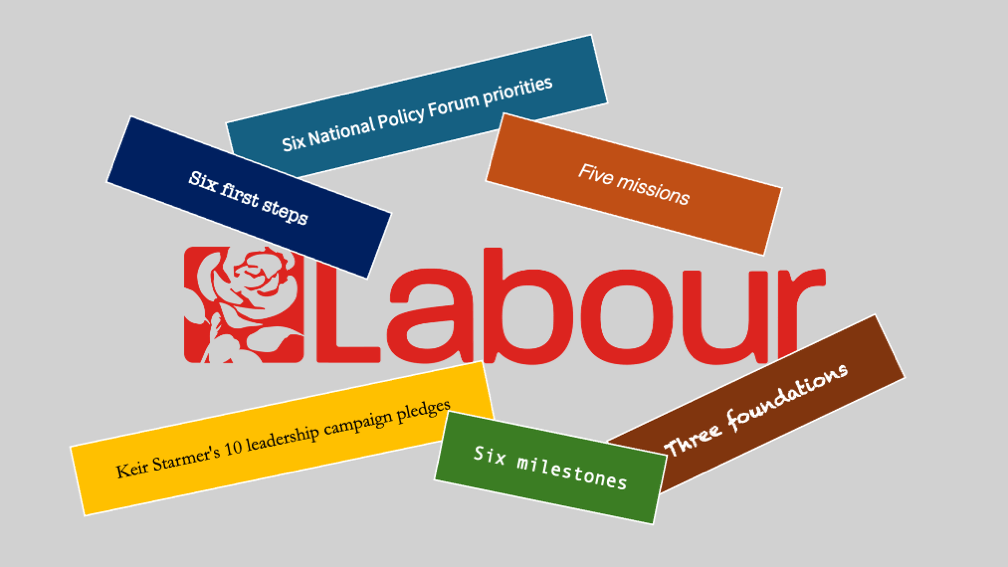
The Labour Party’s approach to communicating its priorities since coming to power has become a masterclass in how not to manage strategic messaging. The party’s proliferation of competing frameworks, constant revisions, and overlapping priorities has created widespread confusion that offers valuable lessons for UK businesses about the importance of clear, consistent communication strategies.
The Anatomy of Labour’s Communication Crisis
Labour’s communication difficulties stem from a fundamental misunderstanding of how audiences process information. Rather than presenting a clear, unified vision, the party has bombarded stakeholders with multiple overlapping frameworks that compete for attention and understanding[1][2].
The Numbers Game Gone Wrong
The scale of Labour’s messaging confusion is staggering. In just a few short years, the party has introduced an bewildering array of priorities:
- Six National Policy Forum priorities
- Keir Starmer’s 10 leadership campaign pledges
- Five missions
- Six first steps
- Three foundations, and most recently,
- Six milestones[1]
This proliferation of lists and numbers has created what communication experts call “cognitive overload” – a state where audiences become overwhelmed by too much information and consequently tune out entirely[1].
The party’s approach exemplifies what organisational communication research identifies as a critical error: believing that more information equals better communication[3]. As one analysis noted, “the sheer number of different numbers and lists of Labour priorities in recent years has raised many eyebrows and sometimes left even Westminster journalists struggling to keep up”[1].
The Revision Trap
Perhaps even more damaging than the multiplicity of frameworks has been Labour’s tendency to constantly revise and rebrand its messaging. The party’s growth mission, originally framed as achieving “the highest sustained growth in the G7,” was quietly downgraded to “kickstart economic growth” with language about “aiming to deliver” rather than actually achieving the target[1]. This kind of messaging fluidity signals uncertainty and undermines confidence in the organisation’s ability to deliver on its promises.
The Institute for Government has warned that such constant revisions can create “confusion and disappointment” as stakeholders struggle to understand what the organisation actually stands for[4]. When political scientist David Halpern argued that Labour needed a “practical theory of government,” he was highlighting precisely this problem…the absence of a clear, consistent framework that could guide decision-making and communication[4].
The Hierarchy Problem
A particularly acute issue has been Labour’s failure to establish a clear hierarchy among its various priorities. When everything is presented as equally important, nothing is actually important[3]. The party’s attempt to maintain five missions, six first steps, and three foundations simultaneously has created what organisational researchers call “strategic confusion” – a state where stakeholders cannot determine which objectives should take precedence[3].
Research by the organisational alignment firm LSA Global found that companies with clear strategies grow 72% faster and are 58% more profitable than those without[3]. Labour’s approach violates this fundamental principle by creating competing claims on attention and resources without providing clear guidance on prioritisation.
The Polling Consequences
The real-world impact of Labour’s communication failures has been measurable and severe. Market research firm Opinium found that Labour’s brand score plummeted from a positive 5% during the election campaign to minus 16% by their first party conference in power[5]. More troubling still, the party experienced “notable declines in public perception” not on policy matters but on fundamental questions of competence and trustworthiness[5].
This decline reflects what communication researchers identify as a core truth: audiences judge organisations not just on what they say, but on how they say it[6]. Labour’s chaotic messaging approach has undermined public confidence in the party’s ability to govern effectively, regardless of the actual merit of individual policies.
The party’s communication difficulties have been exacerbated by what appears to be internal dysfunction. Reports of “anonymous briefing” and office politics in Downing Street, combined with the high-profile departure of chief-of-staff Sue Gray, have created an impression of an organisation that cannot effectively manage its own internal communications, let alone external messaging[7].
Learning from Political Communication Failures
While Labour’s communication chaos may seem like a uniquely political problem, it reflects broader challenges that organisations across sectors face when trying to communicate complex strategies to diverse audiences. The lessons from Labour’s failures are particularly relevant for UK businesses operating in an increasingly complex and fast-paced environment.
The Principle of Cognitive Simplicity
Human cognitive psychology demonstrates that people can only effectively process a limited amount of information at any given time. Miller’s famous “magical number seven” suggests that working memory can hold approximately seven items, plus or minus two[8]. Labour’s approach of simultaneously maintaining multiple frameworks with dozens of individual priorities violates this fundamental constraint.
Successful organisations understand that simplicity is not about dumbing down complex ideas, but about presenting them in ways that audiences can actually absorb and act upon. As organisational communication expert Kevin Eikenberry notes, “sharing too many ideas doesn’t aid clarity, it reduces it”[8].
The Importance of Consistent Messaging
Labour’s tendency to constantly revise and rebrand its priorities illustrates a fundamental misunderstanding of how trust is built through communication. Consistency over time is crucial for establishing credibility and allowing audiences to develop confidence in an organisation’s direction[6].
Corporate communication research emphasises that successful strategies require what some experts call “strategic patience” – the willingness to stick with a clear message long enough for it to take root and influence behaviour[6]. Labour’s approach of constantly introducing new frameworks and revising existing ones has prevented any single message from achieving this kind of traction.
The Need for Clear Hierarchy
One of the most important lessons from Labour’s communication failures is the critical importance of establishing clear priorities. When organisations present multiple competing frameworks without establishing hierarchy, they force audiences to make their own judgments about what matters most[3]. This not only creates confusion but also wastes valuable attention and resources.
Effective organisational communication requires what researchers call “strategic discrimination” – the ability to clearly articulate what is included and what is excluded from the organisation’s focus[9]. Labour’s failure to make these distinctions has left both internal and external stakeholders unsure about where to direct their attention and energy.
Lessons for UK Business Communication
The Labour Party’s communication failures offer several specific lessons for UK businesses seeking to avoid similar pitfalls in their own strategic messaging.
Lesson 1: Embrace the Power of Focus
Research consistently shows that organisations with clear, focused strategies outperform those with scattered priorities. A study by organisational alignment firm LSA Global found that strategic clarity accounts for 31% of the difference between high and low-performing organisations[3]. For UK businesses, this means resisting the temptation to communicate about everything and instead focusing on a small number of key priorities that can be clearly articulated and consistently reinforced.
The most successful corporate communication strategies typically focus on no more than three to five key themes[6]. This allows organisations to create meaningful depth around each priority while avoiding the cognitive overload that comes from trying to communicate too many messages simultaneously.
Lesson 2: Invest in Message Consistency
Labour’s tendency to constantly revise its messaging demonstrates the importance of what communication professionals call “message discipline.” Successful organisations understand that changing messaging too frequently can undermine credibility and confuse stakeholders[6].
This doesn’t mean organisations should never adapt their communication, but rather that changes should be strategic, well-timed, and clearly explained. When companies do need to pivot their messaging, they should provide clear rationale for the change and help stakeholders understand how new messages connect to existing priorities.
Lesson 3: Create Clear Communication Hierarchies
One of the most practical lessons from Labour’s failures is the importance of establishing clear hierarchies in organisational communication. When everything is presented as equally important, audiences cannot effectively prioritise their attention or resources[3].
Successful organisations create what researchers call “communication architectures” – structured frameworks that help audiences understand how different messages relate to each other and to broader organisational goals[6]. This might involve distinguishing between core values (which rarely change), strategic priorities (which might shift annually), and tactical initiatives (which can be more flexible).
Lesson 4: Test Message Comprehension
Labour’s communication failures highlight the importance of testing whether messages are actually being understood by their intended audiences. Too often, organisations assume that because they understand their own strategy, others will as well[8].
Effective communication requires what organisational researchers call “feedback loops” – systematic ways of assessing whether messages are being received and understood as intended[8]. This might involve employee surveys, focus groups, or other methods of gauging comprehension and engagement.
Lesson 5: Align Communication with Organisational Capacity
Perhaps most importantly, Labour’s experience demonstrates the need to align communication strategies with organisational capacity. The party’s multiple frameworks and constant revisions have created demands on internal resources that appear to exceed what the organisation can effectively manage[4].
Successful organisations understand that every communication commitment requires ongoing resources to maintain and support. Before launching new messaging frameworks, companies should honestly assess whether they have the internal capacity to sustain them over time.
The Strategic Communication Framework for Business
Drawing on the lessons from Labour’s failures, UK businesses can develop more effective communication strategies by following a structured approach that prioritises clarity, consistency, and focus.
Phase 1: Strategic Foundation
The first phase involves establishing a clear strategic foundation that can guide all subsequent communication. This includes defining the organisation’s core purpose, identifying key stakeholders, and establishing a limited number of strategic priorities that can be consistently communicated over time[6].
Research suggests that the most effective strategic communications are built around what organisational theorists call “strategic coherence” – the alignment of vision, strategy, and communication in ways that reinforce each other[6]. This requires organisations to be disciplined about what they choose to emphasise and what they choose to de-emphasise.
Phase 2: Message Architecture
The second phase involves creating a clear message architecture that establishes hierarchy and relationships between different communication elements. This includes distinguishing between core messages (which should remain consistent over time), strategic messages (which might evolve with business conditions), and tactical messages (which can be more flexible and responsive)[6].
Successful message architectures typically include no more than three to five core themes, each supported by specific evidence and examples. This approach allows organisations to create meaningful depth around key priorities while avoiding the cognitive overload that comes from trying to communicate too many messages simultaneously.
Phase 3: Implementation and Feedback
The third phase involves implementing the communication strategy while building in systematic feedback mechanisms to assess effectiveness. This includes regular surveys of key stakeholders, analysis of communication metrics, and formal reviews of message comprehension and engagement[8].
Successful organisations understand that communication is not a one-way process but rather an ongoing dialogue that requires continuous adjustment and refinement. By building feedback loops into their communication strategies, companies can identify problems early and make necessary adjustments before they become major issues.
The Risk of Strategic Ambiguity
Labour’s communication failures also highlight the risks of what communication researchers call “strategic ambiguity” – the practice of deliberately crafting messages that can be interpreted in multiple ways by different audiences[10].
While strategic ambiguity can sometimes be useful in complex political environments, it can also backfire when audiences become confused about what an organisation actually stands for. Academic research suggests that strategic ambiguity is most effective when it provides “general direction” while allowing individuals to “fill in the blanks with their own, more specific values”[10].
Labour’s approach appears to have exceeded these boundaries, creating so much ambiguity that stakeholders cannot determine the organisation’s actual priorities or direction. For businesses, this suggests the importance of being clear about core values and strategic direction, even when allowing flexibility in tactical implementation.
Crisis Communication Lessons
Labour’s experience also offers important lessons about crisis communication and reputation management. The party’s declining poll numbers and public trust issues demonstrate how communication failures can quickly escalate into broader organisational crises[5].
Corporate communication research emphasises that organisations in crisis must respond quickly, transparently, and consistently[11]. Labour’s approach of constantly introducing new frameworks and revising existing messages has violated all three of these principles, creating an impression of an organisation that lacks clear direction and decisive leadership.
For UK businesses, this highlights the importance of having clear crisis communication protocols that can be activated quickly when organisational messaging becomes problematic. This includes having pre-approved messaging frameworks, designated spokespersons, and clear escalation procedures for addressing communication crises.
The Technology Factor
Labour’s communication difficulties have been compounded by the modern media environment, where messages can be instantly disseminated, analysed, and critiqued across multiple platforms simultaneously. This creates what communication researchers call “message velocity” – the speed at which organisational communications can spread and evolve beyond the organisation’s control[12].
For UK businesses, this emphasises the importance of having robust digital communication strategies that can effectively manage message distribution across multiple channels. This includes social media management, website content coordination, and employee communication platforms that ensure consistent messaging across all touchpoints.
Sector-Specific Implications
The lessons from Labour’s communication failures have different implications for different sectors of the UK economy.
Financial Services
For financial services firms, Labour’s experience highlights the particular importance of clear, consistent messaging about regulatory compliance and risk management. The sector’s complex regulatory environment requires communication strategies that can effectively explain technical requirements while maintaining stakeholder confidence[13].
Manufacturing
Manufacturing companies can learn from Labour’s failures about the importance of clear communication during periods of operational change. The sector’s ongoing digital transformation requires communication strategies that can help employees and stakeholders understand how new technologies and processes connect to broader business objectives[13].
Healthcare
Healthcare organisations face particular challenges in communicating complex clinical and operational information to diverse stakeholder groups. Labour’s experience suggests the importance of avoiding information overload while ensuring that critical messages reach their intended audiences[13].
Professional Services
Professional services firms can apply Labour’s lessons to their own client communication strategies. The sector’s emphasis on expertise and trust requires communication approaches that demonstrate clear thinking and consistent messaging over time[13].
Building Organisational Resilience
Perhaps most importantly, Labour’s communication failures highlight the connection between effective communication and organisational resilience. Organisations that cannot clearly articulate their priorities and direction are more vulnerable to external shocks and internal dysfunction[14].
Research by organisational development firm Culture Partners suggests that “organisational clarity” is one of the key factors that distinguish high-performing organisations from their peers[14]. This includes clarity about purpose, strategy, roles, and expectations – all areas where Labour’s communication approach has created confusion rather than understanding.
For UK businesses, this emphasises the importance of viewing communication not as a separate function but as a core organisational capability that affects every aspect of performance. Companies that invest in clear, consistent communication strategies are better positioned to navigate uncertainty and maintain stakeholder confidence during challenging periods.
The Path Forward
While Labour’s communication failures offer important lessons, they also suggest potential paths forward for organisations seeking to improve their strategic messaging. The key is to learn from these mistakes while adapting the lessons to specific organisational contexts and requirements.
Simplification Strategy
The most immediate lesson is the importance of simplification. Organisations should audit their existing communication frameworks and eliminate redundancies, contradictions, and unnecessary complexity. This might involve consolidating multiple messaging frameworks into a single, coherent approach that can be consistently applied across all communication channels[8].
Consistency Protocol
Organisations should also develop what might be called “consistency protocols” – systematic approaches to ensuring that all communication aligns with core strategic messages. This includes regular message reviews, cross-functional coordination, and clear approval processes for new communication initiatives[6].
Feedback Integration
Finally, organisations should build systematic feedback mechanisms into their communication strategies. This allows them to identify problems early and make necessary adjustments before they become major issues. Regular stakeholder surveys, focus groups, and other assessment tools can provide valuable insights into message comprehension and effectiveness[8].
Conclusion
Labour’s communication chaos serves as a powerful reminder of the importance of clear, consistent strategic messaging in today’s complex business environment. The party’s proliferation of competing frameworks, constant revisions, and lack of clear hierarchy has created widespread confusion that has undermined public trust and confidence.
For UK businesses, these failures offer valuable lessons about the importance of focus, consistency, and clarity in organisational communication. Companies that learn from Labour’s mistakes and apply these lessons to their own communication strategies will be better positioned to build stakeholder confidence, navigate uncertainty, and achieve long-term success.
The key insight is that effective communication is not about saying more, but about saying the right things in ways that audiences can understand, remember, and act upon. In an era of information overload and shortened attention spans, the organisations that succeed will be those that master the art of strategic simplicity – communicating complex ideas in clear, consistent, and compelling ways that create lasting understanding and engagement.
References and Further Reading
[1] ‘6 milestones, 5 missions, 3 foundations: Have Labour’s lists … https://labourlist.org/2024/12/keir-starmer-plan-for-change-milestones/
[2] Keir Starmer’s Plan for Change puts pressure on Whitehall to deliver https://www.instituteforgovernment.org.uk/comment/keir-starmer-plan-change-pressure-whitehall
[3] Strategic Confusion – 7 Strategy Warning Signs – LSA Global https://lsaglobal.com/blog/confusion-ambiguity-warning-signs/
[4] New ‘practical theory’ of government key to achieving Labour’s five … https://www.kcl.ac.uk/news/new-practical-theory-of-government-key-to-achieving-labours-five-missions-report-says
[5] Opinion: Fixing Labour’s communications missteps https://www.globalgovernmentforum.com/opinion-fixing-labours-communications-missteps/
[6] How to build a corporate communication strategy: a process https://www.finn.agency/how-build-corporate-communication-strategy-step-step-process/
[7] The private trials of Keir Starmer | The Observer https://observer.co.uk/news/politics/article/keir-starmers-deep-regret-over-island-of-strangers-speech
[8] Creating Organizational Clarity – The Kevin Eikenberry Group https://kevineikenberry.com/organizational-leadership/creating-organizational-clarity/
[9] 10 lessons for successfully restarting an industrial strategy https://www.instituteforgovernment.org.uk/comment/lessons-successfully-restarting-industrial-strategy
[10] Let me be perfectly unclear: strategic ambiguity in political … https://academic.oup.com/ct/article/35/2/96/8024232
[11] The Impact of Failed Corporate Communications Programs – 5WPR https://5wpr.net/the-impact-of-failed-corporate-communications-programs-lessons-from-the-mistakes-of-the-past/
[12] All Change! An Election 2024 Debrief – IPA https://ipa.co.uk/knowledge/ipa-blog/election-2024-debrief
[13] Addressing Geopolitical Risks In Your Corporate Communications https://www.bluechipcommunication.com.au/blog/geopolitical-risks-in-pr-and-corporate-communications
[14] Top 10 Strategies to Master the Organizational Clarity Framework for … https://culturepartners.com/insights/top-10-strategies-to-master-the-organizational-clarity-framework-for-better-team-alignment/
>>> The Shelf Life of Communications: Understanding Retention for Consumers and Businesses



Leave a Reply