Marketing education in the United Kingdom offers a diverse landscape of undergraduate and postgraduate qualifications that prepare professionals for dynamic careers in this rapidly evolving industry. The UK marketing degree market encompasses a broad spectrum of institutions, from prestigious Russell Group universities to specialised business schools, each offering distinctive approaches to marketing education[1][2].
Understanding UK Marketing Education Landscape
The Foundation of Marketing Education
Marketing degrees in the UK are structured around core business principles whilst incorporating contemporary digital strategies and consumer behaviour analysis[3]. Universities across the country offer comprehensive programmes that blend theoretical knowledge with practical application, ensuring graduates possess the skills necessary to navigate the complex marketing environment of the 21st century[1][2].
The Complete University Guide identifies 138 universities offering 934 undergraduate marketing courses across the UK[1]. This extensive provision demonstrates the significant demand for marketing education and the industry’s recognition of the need for well-qualified professionals[1][2].
BA versus BSc Marketing Degrees
The distinction between Bachelor of Arts (BA) and Bachelor of Science (BSc) marketing degrees reflects different educational approaches[4][5]. BA degrees typically emphasise social sciences and humanities aspects of marketing, focusing on consumer psychology, cultural influences, and communication strategies[3]. These programmes often incorporate modules on brand management, advertising creativity, and international marketing perspectives[4].
BSc marketing degrees adopt a more quantitative approach, emphasising statistical analysis, data interpretation, and scientific methodologies[3]. These programmes frequently include modules on marketing research methods, digital analytics, and performance measurement[4][5]. Both qualification types are equally valued by employers, with the choice often reflecting individual learning preferences and career aspirations[4].
Leading UK Universities for Marketing Education
Top-Ranked Institutions
The University of Bath consistently ranks first in marketing education according to the Complete University Guide 2026, achieving a perfect score of 100%[6][7]. The institution’s marketing programmes are renowned for their rigorous academic standards and strong industry connections[8].
Durham University occupies the second position with a score of 99.3%, followed closely by the University of Exeter at 97.6%[6][7]. These rankings reflect comprehensive assessment criteria including entry standards, student satisfaction, research quality, and graduate prospects[6][7].
The University of St Andrews, despite its prestigious reputation, ranks fourth with 97.6%, whilst Loughborough University secures the tenth position with strong graduate employment outcomes[6][7]. Lancaster University and the University of York also feature prominently in the top ten, demonstrating the geographical diversity of excellence in UK marketing education[6][7].
Russell Group Marketing Programmes
Several Russell Group universities offer distinguished marketing programmes[9][10]. The University of Cambridge, despite not offering dedicated undergraduate marketing degrees, provides business-related courses that many marketing professionals pursue[9][10]. University College London, the University of Manchester, and the University of Warwick all maintain strong reputations for marketing education[10].
Imperial College London’s Strategic Marketing MSc programme exemplifies the trend towards technology-integrated marketing education[11]. The programme combines traditional marketing fundamentals with cutting-edge technology and innovation, reflecting the industry’s digital transformation[11].
Undergraduate Marketing Degree Structures
Core Programme Components
Most undergraduate marketing degrees follow a three-year structure, though many institutions offer four-year programmes incorporating placement years or international study opportunities[12][13]. First-year modules typically cover marketing fundamentals, business environment understanding, and introductory accounting principles[13][3].
The University of Leicester’s BA Marketing programme exemplifies this structure, combining management studies with marketing analysis[14]. Students explore traditional advertising methods alongside digital techniques, developing comprehensive understanding of contemporary marketing practices[14].
Second-year studies generally advance to specialised areas including consumer behaviour, market research methodologies, and brand management[12][13]. Students at Loughborough University, for example, study global brand management, marketing research, and digital marketing analytics during their second year[12].
Specialisation Pathways
Many institutions offer specialised marketing pathways to cater for diverse career aspirations[3][15]. Digital marketing programmes have experienced significant growth, with 44 universities offering 135 undergraduate digital marketing courses[15]. The University of East Anglia leads in this sector, ranking 26th overall whilst achieving 19th position specifically for marketing[15].
International marketing specialisations prepare students for global careers, with institutions like the University of Leeds offering dedicated International Business and Marketing BSc programmes[16]. These courses combine core international business concepts with marketing specialisation, accredited by both the Chartered Institute of Marketing and the Institute of Export and International Trade[16].
Fashion marketing represents another growing specialisation area[17]. The Fashion Retail Academy in London offers specialist diplomas and accelerated undergraduate degrees specifically designed for fashion industry careers[17]. These programmes incorporate masterclasses and industry engagement with over 250 brand partners[17].
Entry Requirements and Academic Standards
Entry requirements for UK marketing degrees vary significantly across institutions[18][3]. UCAS points typically range from 96 to 188, with A-level requirements spanning from CCC to AAB[18][3]. The University of Bath, ranking first for marketing, requires AAB at A-level, whilst many institutions accept BBC or equivalent qualifications[18].
BTEC qualifications are widely accepted, with requirements ranging from MMP to DDM[18]. International Baccalaureate students need scores between 28 and 45 points depending on the institution[18]. Mathematics and English are commonly required subjects, reflecting the analytical and communication demands of marketing careers[18][3].
Postgraduate Marketing Qualifications
Masters Programme Diversity
UK universities offer extensive postgraduate marketing programmes catering for diverse professional development needs[19][20][21]. The University of Strathclyde’s MSc Marketing programme draws on over fifty years of internationally leading research and innovation[19]. This programme covers core marketing theory relating to strategy, consumers, research, and sustainability[19].
Loughborough University’s MSc Marketing programme is designed for both non-business graduates seeking career transitions and business graduates looking to expand their expertise[20]. The one-year full-time programme combines academic theory with practical consultancy projects, enabling students to work on live briefs for leading brands[20].
MBA Marketing Concentrations
Several institutions offer MBA programmes with marketing concentrations[22][23][24]. The University of Birmingham’s Online MBA in Marketing produces graduates who impact their industries through strategic implementation of contemporary marketing techniques[24]. This programme includes optional international residential modules and emphasises digital marketing and corporate communication[24].
The University of Greenwich offers MBA Marketing Management programmes designed for leadership roles in marketing[25]. These programmes combine traditional MBA subjects with marketing specialisation, preparing graduates for senior management positions[25].
Specialised Masters Programmes
Imperial College London’s MSc Strategic Marketing represents the premium end of postgraduate marketing education[11]. The programme teaches fundamental marketing concepts needed to navigate the digital landscape whilst offering opportunities for strategic marketing consulting projects[11]. Students can choose between Marketing Management or Marketing Analytics concentrations[11].
The University of Liverpool offers online Digital Marketing MSc programmes responding to the industry’s digital transformation[26]. These programmes encompass SEO strategy, pay-per-click advertising, content marketing, and public relations campaigns[26]. The curriculum combines essential digital marketing elements with core business skills including leadership and data management[26].
Professional Accreditation and Industry Recognition
Chartered Institute of Marketing Accreditation
The Chartered Institute of Marketing (CIM) plays a crucial role in UK marketing education through its accreditation programmes[27][28]. CIM accreditation provides students with exemptions from professional marketing qualifications upon graduation[12][28]. Loughborough University’s BSc Marketing, for example, offers CIM exemptions extending up to five years after graduation[12].
Leicester University’s BA Marketing programme is accredited by CIM, allowing graduates to claim module exemptions when pursuing professional qualifications[14]. This accreditation significantly enhances employability prospects and provides direct pathways into professional marketing careers[14][28].
Business School Accreditations
Many UK business schools hold prestigious international accreditations that enhance the value of their marketing programmes[29][30][31]. AMBA (Association of MBAs) accreditation is held by leading institutions including London Business School, Imperial College Business School, and Warwick Business School[30][32].
AACSB (Association to Advance Collegiate Schools of Business) accreditation is awarded to fewer than 6% of global business schools[33][34]. UK institutions holding this accreditation include the University of Birmingham, Bournemouth University, and the University of Dundee[35][33][34]. This accreditation ensures students receive education meeting the highest international standards[31].
Industry Integration and Graduate Outcomes
Graduate Employment Statistics
Marketing graduates demonstrate strong employment outcomes across the UK[36][37]. According to the Higher Education Statistics Agency, 89.3% of marketing graduates are in work or further study within 15 months of graduation[37]. This statistic reflects the strong demand for marketing professionals across various industries[36][37].
Graduate starting salaries in marketing have shown significant growth, with entry-level positions requiring marketing degrees increasing from £22,872 in 2021 to £25,877 in 2022, representing a 13% increase[38]. Marketing director salaries average £88,778, whilst brand managers earn approximately £44,163[38].
Top Graduate Employers
Leading UK marketing graduates secure positions with prestigious employers across diverse sectors[39][37]. Major graduate scheme providers include Volkswagen, Samsung, Nestlé, Lidl, and Virgin Media O2[39][36]. These programmes typically offer two-year rotational experiences covering multiple marketing disciplines[39][36].
Technology companies increasingly recruit marketing graduates, with employers including Adidas, Boeing, Johnson & Johnson, and Disney[37]. The diversity of employer sectors demonstrates the versatility of marketing qualifications and the broad applicability of marketing skills across industries[37][40].
Career Progression Pathways
Marketing career progression typically follows established pathways from assistant roles through to executive and management positions[40][41]. Entry-level positions include SEO Executive, Social Media Coordinator, and Graduate Marketing Assistant roles[40]. These positions provide foundational experience in campaign management, customer relations, and analytical reporting[40].
Mid-level positions encompass Marketing Manager, Digital Marketing Manager, and Market Researcher roles[41]. These positions require advanced strategic thinking, team leadership, and campaign optimisation capabilities[41]. Senior positions include Chief Marketing Officer and Marketing Director roles, demanding comprehensive business understanding and strategic leadership skills[40][38].
Regional Distribution and Accessibility
Geographic Spread of Marketing Education
Marketing education provision is distributed across all UK regions, ensuring accessibility for students nationwide[1][2]. London maintains the highest concentration of marketing programmes, with institutions including University College London, King’s College London, and the London School of Economics offering marketing-related courses[10].
Scotland features prominently through the University of Strathclyde, which ranks sixth in the Complete University Guide marketing league tables[19][6]. The institution’s marketing department represents one of the first established in the UK, drawing on over fifty years of research excellence[19].
Northern England contributes significantly through the University of Manchester, University of Leeds, and Durham University[6][10]. These institutions combine strong academic reputations with robust industry connections, providing excellent graduate employment prospects[6][10].
Access and Participation
UK marketing education demonstrates commitment to widening participation through diverse entry routes and flexible study options[18][3]. Many institutions accept BTEC qualifications alongside traditional A-levels, recognising different educational pathways[18]. Part-time and distance learning options accommodate working professionals seeking career development[21][42].
Foundation year programmes provide additional access routes for students not meeting standard entry requirements[3]. These programmes enable career changers and mature students to access marketing education, contributing to workforce diversity[3].
Contemporary Trends and Future Directions
Digital Transformation Impact
The digital transformation of marketing has significantly influenced UK degree programmes[43][44][26]. Universities have responded by integrating digital marketing modules into traditional programmes whilst developing specialist digital marketing degrees[43][15]. Birmingham City University’s two-year fast-track Digital Marketing BA exemplifies this trend, combining creative professionals with cutting-edge technology training[44].
The University of Creative Arts offers Digital Marketing and Social Media BA programmes specifically designed for creative industries[45]. These programmes prepare graduates for roles in digital marketing agencies, social media management, and content creation[45].
Sustainability and Ethics Integration
Contemporary marketing programmes increasingly emphasise sustainability and ethical considerations[19][42]. The University of London’s MSc Marketing includes Corporate Responsibility and Sustainability as core optional modules[21][42]. This reflects industry recognition of marketing’s role in promoting responsible consumption and sustainable business practices[19].
Strathclyde University’s MSc Marketing programme explicitly addresses ecological and societal issues, preparing graduates to tackle grand challenges in marketing and wider society[19]. This approach reflects growing employer expectations for ethically-informed marketing professionals[19].
International Perspectives
UK marketing programmes increasingly incorporate international perspectives to prepare graduates for global careers[16][46]. The University of Reading’s Henley Business School offers MSc Marketing with International Marketing specialisation, providing understanding of global marketing strategies and cross-cultural considerations[46].
These programmes often include field study opportunities, exposing students to international marketing challenges and diverse business environments[46]. Such experiences enhance graduates’ cultural competency and global market understanding[46].
Key Patterns and Commonalities
Curriculum Standardisation
Despite institutional diversity, UK marketing programmes demonstrate remarkable curriculum consistency[3]. Core modules typically include consumer behaviour, marketing research, brand management, and digital marketing[13][3]. This standardisation ensures graduates possess fundamental competencies expected by employers whilst allowing institutions to develop distinctive specialisations[3].
Assessment methodologies show similar patterns across institutions, combining traditional examinations with practical projects, case studies, and presentations[3]. This balanced approach ensures graduates develop both theoretical understanding and practical application capabilities[3].
Industry Partnership Integration
Successful marketing programmes consistently demonstrate strong industry partnerships[12][39][17]. These relationships manifest through guest lectures, live project work, placement opportunities, and graduate recruitment programmes[12][39]. The Fashion Retail Academy’s partnerships with over 250 brands exemplify this integration, providing students with direct industry exposure[17].
Loughborough University’s approach of working with leading brands on live briefs demonstrates how institutions bridge academic learning with practical application[20]. Such partnerships enhance employability whilst ensuring curriculum relevance to contemporary industry needs[20].
Professional Development Focus
UK marketing programmes increasingly emphasise professional development alongside academic achievement[14][12][28]. CIM accreditation provides clear pathways into professional marketing careers, whilst institutions offer career services, networking opportunities, and industry mentorship programmes[14][12][28].
This professional focus reflects employer expectations for work-ready graduates who can contribute immediately to organisational success[39][36]. Graduate scheme providers consistently report preference for candidates who demonstrate both academic excellence and professional awareness[39][36].
Image Credit
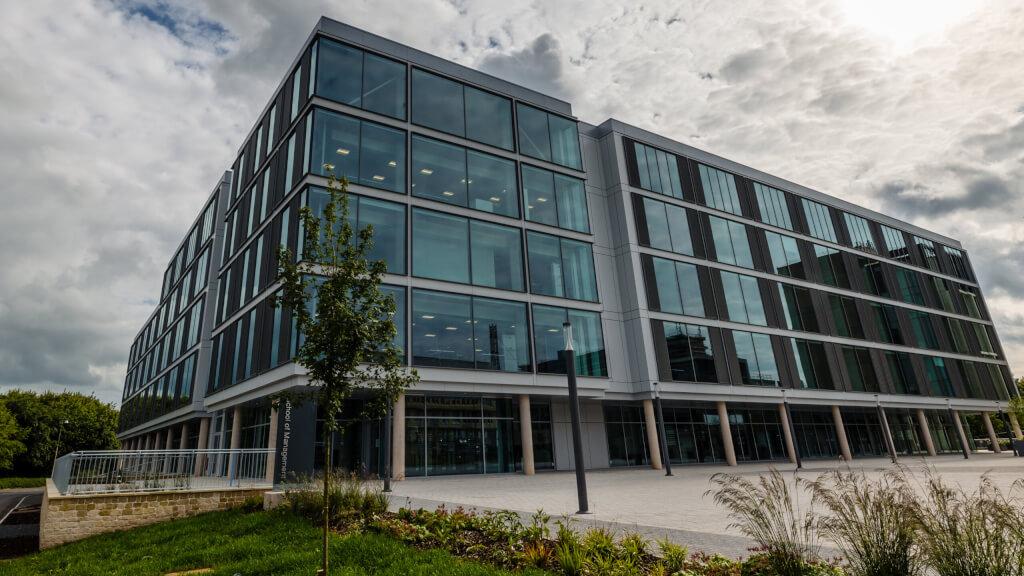
The image at the top of this page is the University of Bath School of Management. By BathSOM – Own work, CC BY-SA 4.0, https://commons.wikimedia.org/w/index.php?curid=119345430
References and Further Reading
[1] The Complete University Guide. (2025). Undergraduate Marketing Courses. Retrieved from https://www.thecompleteuniversityguide.co.uk/courses/search/undergraduate/marketing
[2] Whatuni. (2025). Marketing Undergraduate Degree Courses. Retrieved from https://www.whatuni.com/degree-courses/search?subject=marketing
[3] The Complete University Guide. (2025). Study Marketing, why & how to study. Retrieved from https://www.thecompleteuniversityguide.co.uk/subject-guide/marketing
[4] RCL. (2024). What is the difference between BA and BSc degrees? Retrieved from https://www.rcl.ac.uk/news/difference-between-ba-and-bsc/
[5] Aberystwyth University. (2024). BA, BSc, MA, MSc, PhD – What do they all mean? Retrieved from https://www.aber.ac.uk/en/study-with-us/ug-studies/study-advice/before-you-apply/ba-bsc-ma-msc-phd/
[6] The Complete University Guide. (2025). Marketing Rankings 2026. Retrieved from https://www.thecompleteuniversityguide.co.uk/league-tables/rankings/marketing
[7] The Complete University Guide. (2025). Marketing Rankings 2025 | Full Table. Retrieved from https://www.thecompleteuniversityguide.co.uk/league-tables/rankings/marketing?tabletype=full-table
[8] University of Bath. (2023). How to source subject ranking information from league tables. Retrieved from https://www.bath.ac.uk/guides/how-to-present-subject-ranking-information-from-university-league-tables/
[9] World Scholarship Forum. (2024). 10 Best Universities in the UK for Marketing in 2023. Retrieved from https://worldscholarshipforum.com/best-universities-in-the-uk-for-marketing/
[10] EduRank. (2025). Marketing in England: 100+ Best universities Ranked 2025. Retrieved from https://edurank.org/business/marketing/england/
[11] Imperial College London. (2025). MSc Strategic Marketing. Retrieved from https://www.imperial.ac.uk/business-school/masters/strategic-marketing/
[12] Loughborough University. (2025). Marketing BSc (Hons) degree. Retrieved from https://www.lboro.ac.uk/study/undergraduate/courses/marketing/
[13] University of Leeds. (2025). Business Management with Marketing BA. Retrieved from https://courses.leeds.ac.uk/i476/business-management-with-marketing-ba
[14] University of Leicester. (2025). Marketing BA. Retrieved from https://le.ac.uk/courses/marketing-ba/2025
[15] The Complete University Guide. (2025). Undergraduate Digital Marketing Courses. Retrieved from https://www.thecompleteuniversityguide.co.uk/courses/search/undergraduate/digital-marketing
[16] University of Leeds. (2025). International Business and Marketing BSc. Retrieved from https://courses.leeds.ac.uk/g295/international-business-and-marketing-bsc
[17] Fashion Retail Academy. (2025). Study Marketing & Communications. Retrieved from https://www.fashionretailacademy.ac.uk/marketing-and-communications
[18] Uni Compare. (2025). Marketing Degree Entry Requirements. Retrieved from https://universitycompare.com/advice/student/marketing-degree-entry-requirements
[19] University of Strathclyde. (2025). MSc Marketing Masters UK. Retrieved from https://www.strath.ac.uk/courses/postgraduatetaught/marketing/
[20] Loughborough University. (2025). Marketing Degree | Postgraduate study. Retrieved from https://www.lboro.ac.uk/study/postgraduate/masters-degrees/a-z/marketing/
[21] University of London. (2025). MSc Marketing. Retrieved from https://www.london.ac.uk/study/courses/postgraduate/msc-marketing
[22] University of Bedfordshire. (2025). Business Administration (Marketing) MBA. Retrieved from https://www.beds.ac.uk/courses/business-administration-marketing-masters/
[23] University of Sunderland. (2025). MBA Marketing. Retrieved from https://london.sunderland.ac.uk/study/master-business-administration/mba-marketing/
[24] University of Birmingham. (2025). Online MBA in Marketing. Retrieved from https://hub.birmingham.ac.uk/degrees/online-mba/marketing/
[25] University of Greenwich. (2025). Marketing Management, MBA. Retrieved from https://www.gre.ac.uk/postgraduate-courses/bus/mktmgt-mba
[26] University of Liverpool. (2025). Digital Marketing MSc | PGDip | PGCert – Online Course. Retrieved from https://online.liverpool.ac.uk/programmes/msc-digital-marketing/
[27] CIM. (2019). Level 7 Postgraduate Diploma in Professional Marketing. Retrieved from https://www.cim.co.uk/qualifications/postgraduate-diploma-in-professional-marketing/
[28] CIM. (2019). Level 6 Diploma in Professional Marketing. Retrieved from https://www.cim.co.uk/qualifications/qualifications-2019/diploma-in-professional-marketing/
[29] AMBA. (2025). AMBA Accredited Business Schools. Retrieved from https://www.amba-bga.com/amba/business-schools/accreditation/accredited-schools
[30] Wikipedia. (2025). List of institutions accredited by AMBA. Retrieved from https://en.wikipedia.org/wiki/List_of_institutions_accredited_by_AMBA
[31] University of Hull. (2023). AMBA and AACSB accreditation: Why it’s important. Retrieved from https://online.hull.ac.uk/blog/why-choose-a-business-school-accredited-by-amba-and-aacsb
[32] University of Sheffield. (2025). AMBA. Retrieved from https://www.sheffield.ac.uk/management/about/accreditations/amba
[33] Bournemouth University. (2025). AACSB accreditation. Retrieved from https://www.bournemouth.ac.uk/about/our-faculties/bournemouth-university-business-school/explore-business-school/business-school-accreditations/aacsb-accreditation
[34] University of Dundee. (2023). School of Business awarded AACSB accreditation. Retrieved from https://www.dundee.ac.uk/stories/school-business-awarded-aacsb-accreditation
[35] University of Birmingham. (2023). Birmingham Business School in the top 2% of business schools globally with AMBA re-accreditation. Retrieved from https://www.birmingham.ac.uk/news/2023/birmingham-business-school-in-the-top-2-of-business-schools-globally-with-amba-re-accreditation
[36] Prospects. (2025). Marketing graduate schemes 2025. Retrieved from https://www.prospects.ac.uk/jobs-and-work-experience/job-sectors/marketing-advertising-and-pr/marketing-graduate-schemes
[37] UWE Bristol. (2022). Marketing – Graduate destinations. Retrieved from https://www.uwe.ac.uk/study/career-development/graduate-destinations/marketing
[38] Campaign. (2023). Marketing graduate salaries climb 13% in a year. Retrieved from https://www.campaignlive.com/article/marketing-graduate-salaries-climb-13-year/1821693
[39] Developing a Student. (2025). Top Companies Hiring for Marketing Graduate Schemes in 2025. Retrieved from https://www.developingastudent.com/top-companies-hiring-for-marketing-graduate-schemes/
[40] Simply Marketing Jobs. (2019). The marketing career path – what route will you take? Retrieved from https://blog.simplymarketingjobs.co.uk/blog/the-marketing-career-path-what-route-will-you-take/
[41] Milkround. (2022). What jobs can you get with a Marketing degree in the UK? Retrieved from https://www.milkround.com/advice/what-jobs-can-you-get-with-a-marketing-degree-in-the-uk
[42] University of London. (2025). Programme Specification 2025-2026 – Marketing (MSc). Retrieved from https://www.london.ac.uk/sites/default/files/progspec-marketing-msc-2025-26.pdf
[43] Whatuni. (2025). Digital Marketing Undergraduate Degree Courses. Retrieved from https://www.whatuni.com/degree-courses/search?subject=digital-marketing
[44] Birmingham City University. (2025). Digital Marketing – BA (Hons). Retrieved from https://www.bcu.ac.uk/courses/digital-marketing-ba-hons-2025-26
[45] University for the Creative Arts. (2025). Digital Marketing & Social Media BA (Hons). Retrieved from https://www.uca.ac.uk/study/courses/ba-digital-marketing-social-media/
[46] Henley Business School. (2025). MSc Marketing (International Marketing). Retrieved from https://www.henley.ac.uk/study/masters/msc-in-marketing-international-marketing

Leave a Reply