A Personal Take on Unlocking Business Potential
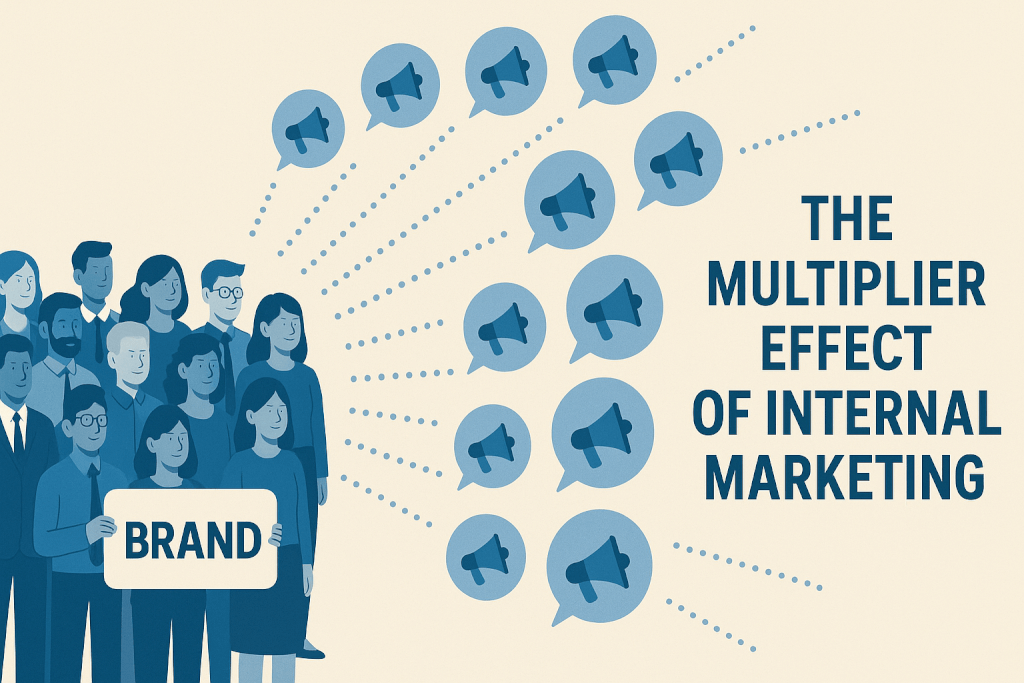
Think about your average company with 100 people. Out of those, there might be a marketing department of four. Those four work tirelessly to get your brand out there, cultivate leads, shape reputation, guide the narrative, and (not to mention) manage expectations of directors who always want quicker, better, cheaper campaigns. It’s intense work and frankly, it’s a lot to ask of such a small crew.
Now, imagine if you could multiply that marketing force by twenty, without increasing your wage bill, without recruiting anyone new, and without needing to convince the finance team to loosen the purse strings. What if I told you the most effective brand ambassadors are already on your payroll, sitting all around your business?
This is what I want to explore in this post: the tangible value of internal marketing, and why getting everyone in your company switched on to your brand, your values, and your purpose is the growth lever you’re probably underusing. It’s not buzzwords or theoretical chat – it’s practical, achievable, and it saves a fortune compared to hiring another twenty marketers.
The key phrase we’re developing here is internal marketing for business growth. My aim: show you the practical why and how, with real examples, and a truly people-focused approach.
What Is Internal Marketing? It’s Not Just HR’s Job
Let’s ground this. Internal marketing is all about how information, ideas, and dialogue flow inside an organisation. Think of it as your company’s “internal comms”, but done right. Top-down, bottom-up, or peer-to-peer, it covers everything from emails, newsletters, and internal chat apps, to informal team meetings and digital noticeboards.
If you’re picturing a dusty old intranet full of PDFs, stop! Done right, internal marketing is vibrant and central: it aligns objectives, builds culture, spreads organisational values, and – perhaps most importantly – turns employees into the strongest advocates for your brand.
What it’s not: a box-ticking exercise for HR or a nice-to-have for your comms team. It’s the backbone of successful, sustainable growth.
The Real Point: Why Bother With Internal Marketing?
I’ve lost count of the times someone grumbled, “But it’s not in my job description!” or “HR looks after this kind of thing.” Old habits die hard, and yes, people are busy. But consider these outcomes of genuine internal marketing:
- Greater employee engagement: When people genuinely feel aligned and included, they show up for the business in every way.
- Increased brand awareness: Your workforce knows the story and shares it – inside and out.
- Active company culture: Vibrant, communicative environments outperform siloed, silent ones.
- Empowered staff: Employees who feel informed are more likely to innovate and take ownership.
- Improved talent recruitment and retention: People want to work where they feel connected to something meaningful.
- Better public reputation and customer service: Internal unity shows on the outside, too.
And if stats help persuade, digest this: a Nielsen study showed 84% of people trust recommendations from friends, family, and colleagues more than standard marketing. Brand messages shared by employees reach 561% further than the same content coming from official channels (see MSLGroup). Content shared by employees gets eight times the engagement of that shared by the brand’s own account (see Social Media Today).
Let those numbers sink in: your people’s voices are your most trusted and powerful marketing asset.
Real Examples: Internal Marketing in Action

Let’s move beyond theories. Here’s how it actually looks in businesses:
1. Educating Employees on Goals and Values
It’s not enough to hang a vision statement in reception. Successful businesses embed their big-picture goals and lived values into everything they do, from onboarding to ongoing training. When people genuinely get the “why” behind your work, their decision-making shifts, and they stop viewing tasks as “just a job”.
2. Two-Way Dialogue
Ask for employee input on decisions, policies, and leadership approaches. Make it clear feedback is welcomed, and criticism won’t come back to bite. Open dialogue builds trust, and trust builds advocacy.
3. Celebrating Collaboration
Nurture communication between departments and teams, not just within them. Encourage project collaboration, skill-sharing sessions, or even idea swaps during the Friday coffee break. When ideas move freely, innovation follows.
4. Employee Product Experience
Let people use your products or services. Solicit honest feedback. The best product development comes from people who understand your offering inside out – from both sides of the desk.
5. Recognising Contribution
Remind everyone their efforts matter: not via generic “employee of the month” posters, but through regular, sincere acknowledgement. When people know their work is essential to success, motivation climbs.
Multiply Your Ambassadors: The Simple Arithmetic
Let’s get really practical: with four marketers, you’ve got four dedicated voices advocating for your brand’s message. That’s important work. But if all 100 people in your business embraced that ambassadorial role, you’d have twenty times the reach, insight, and influence.
You might be imagining horrendous costs and months of training. In reality, the foundations are simple. Provide clear brand messages, ensure everyone understands the “why” and “how” behind your goals, and open up two-way lines of communication. Authenticity and integrity are key: people can spot spin a mile off.
The lesson: unlocking your company’s growth isn’t about spending more. It’s about realising (and activating) what is already true – every employee can be a marketer, not just by title, but by belief and action.
Let’s Talk Barriers (and How to Knock Them Down)

I’ve heard the objections a thousand times:
- “Too busy.” People are busy; the answer is to make internal marketing part of real work, not something extra.
- “Fear of losing control.” Good internal marketing doesn’t mean giving up control, it means distributing knowledge.
- “People irritate me.” We’re all human. Internal marketing helps teams move past friction towards shared goals.
- “It’s not in my job description.” True progress comes from people stepping up, not from ticking boxes.
- “I tried it once.” Success takes consistency; most valuable things do.
- “HR looks after this stuff.” Everyone’s a buyer; everyone’s a messenger.
Addressing these is about leadership and honesty. Lead by example, value every voice, and keep returning to your purpose. There’s no single “right way” – as the old classroom adage goes: 6 + 3 = 9, and so does 4 + 5. Find what works for your people.
Learning from Failure
Of course, not every internal marketing effort lands perfectly. Timing can be wrong, or messages fall flat. Sometimes efforts go awry because, frankly, authenticity is missing.
But you’ll notice that companies that recover fastest are those who encourage trust, admit mistakes, and return to open communication. Authenticity is a blend of courage, integrity, and trustworthiness – it’s what reinforces internal marketing and turns setbacks into progress.
The Not-So-Secret Sauce: Authenticity
Let’s put it simply. To really succeed in internal marketing, you’ve got to act with authenticity. That means:
- Courage (be willing to try new approaches, solicit feedback, and own up to mistakes)
- Integrity (stick to your values, don’t compromise messaging for convenience)
- Trustworthiness (follow through on promises, and create a safe space for open sharing)
Culture eats strategy for breakfast, and authenticity is the foundation of strong workplace culture. Your employees will spot the difference between surface-level jargon and meaningful, consistent messaging – and so will your customers.
Keeping It Alive: Practical Tips
This isn’t about grand gestures or ten-step frameworks – it’s about consistent, intentional action.
- Regularly share updates on strategy and progress: make all-company meetings matter.
- Spotlight successes: not just big wins, but everyday efforts.
- Invite honest feedback and show you act on it.
- Invest in training that puts people at the heart of your story.
- Encourage managers to support sharing and collaboration, not just tick off targets.
- Use personal stories to make messages stick.
Every communication, no matter how small, builds up the sense that “we’re all in this together.” And that is the true multiplier of your marketing force.
Why It Works: The Ripple Effect
When everyone in a business truly knows (and believes in) the brand, the values, and the strategy, something powerful happens. The officially sanctioned marketing efforts get a massive multiplier effect: ideas filter out through dozens – even hundreds – of personal interactions, posts, and word-of-mouth conversations each week.
Suddenly, the business grows not just by design, but organically, person by person, because the whole team is pulling in the same direction.
Done right, internal marketing becomes the secret advantage other businesses wish they had. Not just in recruitment and retention, but in reputation, customer service, and profit.
Everyday Examples: How to Start Now
- Start meetings with a quick reminder of “why we’re here.”
- Let teams run mini-campaigns to highlight internal projects.
- Give your new starters full access to product and strategy workshops: make onboarding feel like joining a club, not filling out forms.
- Send out a monthly digest that celebrates cross-team collaborations.
- Rotate who leads all-company briefings so stories come from everywhere, not just the top.
None of these require big investment. All require trust and energy. But the results, done consistently, rewrite what your business can achieve.
Final Thoughts: Levelling Up
The greatest risk is keeping your “brand” and your “people” in separate silos. When you treat employees as passive recipients, not active participants, you miss out on the biggest growth lever you have.
Multiply your marketing voice internally, and you’ll be amazed at just how far your brand can reach externally.
References and Further Reading
Nielsen research on trust in recommendations
MSLGroup: Employee Advocacy Statistics
Social Media Today: Employee Advocacy
Loughborough University Internal Marketing, Kevin Harrington [internal presentation]
Forbes: Why Internal Branding Is As Important As External Branding



Leave a Reply