The future of professional services is not some far-off topic for big thinkers and academics. It is happening right now, and it touches every SME owner who relies on accountants, solicitors, consultants, and advisors to run their business well. Over the next decade, the professional services business model will change more than it has in the past fifty years. If you own a business, or if you run a professional firm, getting to grips with what comes next is vital.
I have spent years working with professional services firms as a B2B marketing marketer. I have watched the sector move from a world of handshakes and hourly rates to one where artificial intelligence is changing how firms work, set their prices, and serve their clients. What strikes me most is how few people are talking about this shift in clear, practical terms. So let me set out what I see coming, and what the key waypoints will be on the road to 2035.
How We Got Here: The Future of Professional Services in Context
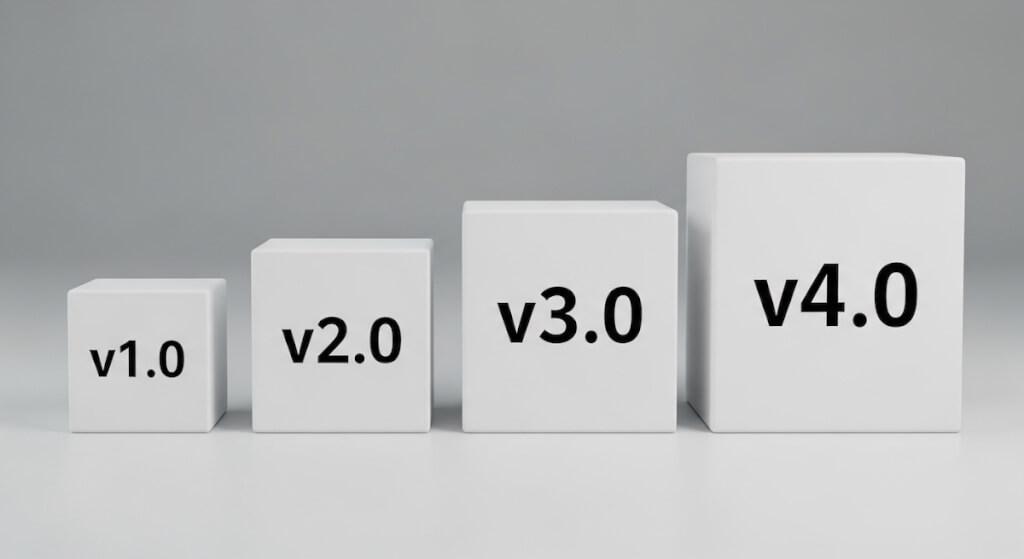
Before we look forward, it helps to see how we got here. Professional services have not stood still, even if the pace of change once felt very slow. I think of the journey in four clear versions, much like software releases. Each version marks a real shift in how firms create and deliver value.
Professional Services v1.0: The Traditional Partnership (Post-War to Late 1980s)
Professional Services v1.0 is what I call The Traditional Partnership. This model held sway from the post-war era right through to the late 1980s. Think of the classic solicitor’s office or the local accountancy practice on the high street. A senior partner, or a small group of partners, owned the firm. They were the business. Clients came because of their personal skills, their name, and often their family ties. Work was billed by the hour or on a time-and-materials basis. The knowledge lived in the heads of the partners and nowhere else. There was little formal marketing, very little technology, and almost no way to scale.
The model worked because competition was limited and clients had few real alternatives. David Maister, one of the most influential thinkers on professional firms, described this world brilliantly. He grouped work into three types: brain surgery, needing deep expertise; grey hair, built on years of experience; and routine efficiency work, done by process. In v1.0, most firms tried to do all three under one roof.[1][2]
Professional Services v2.0: The Corporatised Firm (Late 1980s to 2000s)
Professional Services v2.0 came about in the late 1980s and picked up speed through the 1990s. I call this The Corporatised Firm. The trigger in the UK was the Big Bang of 1986, when Margaret Thatcher’s government opened up the City of London. This set off a wave of mergers among financial services firms, and the effects soon spread to the accountancy, legal, and consulting worlds.[3]
Professional firms suddenly needed marketing teams, brand names, and corporate structures. The Big Four accountancy firms took shape through a series of big mergers. Law firms followed suit. Major consultancies like McKinsey and Deloitte began to scale up and industrialise their approach. Technology crept in, with early practice management software and email slowly replacing paper files. Firms grew bigger, more structured, and more corporate. But the core model of billing clients for time spent stayed largely the same.
Professional Services v3.0: The Platform and Product Era (2010s to Early 2020s)
Professional Services v3.0 started around 2010 and picked up fast during the pandemic. I think of this as The Platform and Product Era. Cloud computing, smartphones, and digital tools changed how and where professional work got done. The shift to remote working in 2020 and 2021 proved that offices were not needed for top-quality advice.
Firms began to package their expertise into set offerings with clear outputs and fixed prices. The gig economy started to shape staffing, with more firms hiring contract specialists rather than keeping large permanent teams. Outsourcing of routine tasks became normal. Craig West of Succession Plus set out a vision of this new model as early as 2020, pointing to a shift from high fixed costs and hourly billing towards more flexible, variable cost structures and fixed-fee deals.
Meanwhile, Professional Services Automation software grew into its own distinct class, giving firms better tools to manage projects, track usage, and boost profits. Deltek research found that 67 per cent of firms expected to lose market share within two years if they did not make real progress in digital change.[4][5]
Professional Services v4.0: The AI-Native Firm

Now we arrive at Professional Services v4.0, which I call The AI-Native Firm. This is the version that will shape the future of professional services over the coming decade. We are only at the start of this shift, but the direction is clear. According to McKinsey research cited by BPM, professional services leads all sectors in generative AI take-up, with rates climbing from 33 per cent in 2023 to 71 per cent in 2024. The Technology and Services Industry Association (TSIA) has given this change a formal name, Professional Services 2.0, and calls it a move from project-based, effort-led work to models built on subscriptions, AI, and measured outcomes.[6][7]
The End of the Billable Hour
What does this mean in practice? It means the billable hour, the bedrock of professional services pricing for well over a hundred years, is reaching the end of its life. AI can now do in minutes what once took a junior team member hours or even days. Contract checks, data analysis, compliance work, research, and even first drafts of advisory reports can all be handled by AI tools. When a task that took ten hours now takes one, charging by the hour no longer makes sense for either side.
Forbes reported in 2025 that firms across law, consulting, marketing, and accountancy are actively rethinking how they charge, moving towards output-based and value-based pricing. The change goes well beyond fees. It means rethinking how services are designed and delivered from the ground up. AI is becoming the operating system for professional work. Firms are building their own AI platforms, using smart AI agents, and creating client-facing content at scale. BCG research cited by WNS found that 95 per cent of professional services staff now use generative AI at least once a month.[8][9]
Why the UK Is Well Placed
The UK occupies a strong position for this transformation. Professional and business services bring in around 300 billion pounds a year and make up 14 per cent of the UK workforce. The government published an ambitious sector plan in 2025, with a bold goal for the UK to become the world’s most trusted adviser to global industry by 2035. A 150 million pound fund has been set aside to help firms adopt new technology, including an expansion of the Made Smarter programme to bring AI tools to smaller firms.[10][11][12]
The Management Consultancies Association reported in January 2026 that 77 per cent of UK consulting firms have now built AI into their systems. The sector has moved past debating whether AI will change professional services. The only questions left are how fast and who will lead.[13]
Five Waypoints on the Road to 2035
So what are the key waypoints between now and 2035? I see five critical milestones on the journey from where we stand today to a fully formed v4.0 world.
Waypoint 1: AI Adoption and Testing (2026)
The first waypoint, which we are passing through right now, is AI adoption and testing. Firms are putting AI to work for internal gains, cutting out routine tasks, and starting to rethink how they price their services. Early movers are pulling ahead, while firms that hold back risk falling behind more agile rivals.
Waypoint 2: The Pricing Shake-Up (2027-2028)
The second waypoint will be the pricing shake-up. Value-based and outcome-based pricing will move from rare to standard. Monthly plans and fixed fees will replace hourly billing across all but the most complex, bespoke work. Clients will expect to pay for results, not for time logged.
Waypoint 3: The Hybrid Workforce (2028-2030)
The third waypoint will see the rise of the hybrid workforce. Firms will run with lean core teams backed by specialist contractors, AI agents, and offshore support. The old career path from trainee to partner will give way to more fluid, skills-based roles. The fight for people who can work well alongside AI will heat up considerably.
Waypoint 4: Platform Power (2030-2032)
The fourth waypoint will be about platform power. Firms that have built their own AI tools and data assets will pull ahead of the field. Those relying on off-the-shelf technology will find it harder to stand out. Joint ventures and strategic tie-ups will be vital for mid-market firms that lack the funds to build their own platforms.
Waypoint 5: The AI-Native Model Matures (2033-2035)
The fifth waypoint will mark the full shape of the AI-native model. By then, the best firms will look very different from those of today. They will have fewer staff but more revenue. Most of their income will come from digital services and outcome-based deals. They will use AI not just to work faster, but to create new types of advisory services that do not yet exist.
The Human Factor Still Matters Most
None of this means the human side becomes less important. Quite the reverse. As AI takes on routine and repetitive tasks, the value of human thinking, empathy, and strategic insight rises. The firms that thrive will be those that use technology to free their people for what humans do best: building trust, using their professional judgement, and giving the kind of personal counsel that no algorithm can match. The UK government has made clear that firms must balance technology with real, human-led client contact.[10]
What This Means for SME Owners
For SME owners, this shift brings both opportunity and risk. On the upside, AI-driven professional services will be more open and less costly. You will be able to tap into advice that was once only for large firms with big budgets. On the downside, the gap between forward-looking firms and those stuck in the old ways will widen fast. Picking the right advisors will matter more than ever in the years ahead.
My advice to any business owner reading this is simple. Ask your accountant, your solicitor, your marketing consultant how they are using AI right now. Ask how their pricing model is changing. Ask what their plan is for the next three to five years. If the answer is a blank stare, it might be time to start looking around.
The future of professional services is not a distant prospect. It is taking shape right now, version by version, waypoint by waypoint. The firms that embrace the change will be more productive, more profitable, and better placed to serve their clients. Those that resist will find themselves overtaken by rivals who know that the old model has run its course.
References and Further Reading
Maister, D. Managing the Professional Service Firm – Summary and Key Ideas. https://tylerdevries.com/book-summaries/managing-the-professional-service-firm/
Remaking Law Firms – 25 Years Ago David Maister Published Managing the Professional Service Firm. https://remakinglawfirms.com/25-years-ago-david-maister-published-managing-the-professional-service-firm/
MSP Reach – Professional Services Marketing History. https://www.mspreach.co.uk/professional-services-marketing-history/
SpireSearch – How PSA Was Codified: The Evolution of Professional Services Automation. https://spiresearch.com/2025/03/04/how-psa-was-codified-the-evolution-of-professional-services-automation/
Deltek – The Evolution of Business Models in Professional Services. https://www.deltek.com/en-gb/blog/evolution-of-business-models
BPM – Professional Services Industry Outlook 2026. https://www.bpm.com/insights/professional-services-industry-outlook-2026/
TSIA – Professional Services 2.0 Explained: What It Means for Your Business. https://www.tsia.com/blog/professional-services-2-0-explained
Forbes – In The AI Era, Why Businesses Are Rethinking Their Pricing Strategies. https://www.forbes.com/sites/alisoncoleman/2025/06/06/in-the-ai-era-why-businesses-are-rethinking-their-pricing-strategies/
WNS – Professional Services in 2026: 5 Trends Powering the Next Frontier. https://www.wns.com/perspectives/articles/professional-services-in-2026-5-trends-powering-the-next-frontier
UK Government – Professional and Business Services Sector Plan. https://www.gov.uk/government/publications/professional-and-business-services-sector-plan
Business.gov.uk – Professional and Business Services: Invest in the UK. https://www.business.gov.uk/campaign/invest-in-great/professional-and-business-services/
Consultancy.uk – Professional and Business Services Prioritised by Government for UK AI Adoption. https://www.consultancy.uk/news/40889/professional-and-business-services-prioritised-by-government-for-uk-ai-adoption
MCA – UK Consultants Forecast Higher Growth as Demand for Digital Technology Is Expected to Surge. https://www.mca.org.uk/press-releases/uk-consultants-forecast-higher-growth-as-demand-for-digital-technology-is-expected-to-surge
LinkedIn – The Evolution of Partnership Models in Professional Services. https://www.linkedin.com/pulse/evolution-partnership-models-professional-services-dan-lane-nlece
WTW – 2026 Professional Services Outlook. https://www.wtwco.com/en-us/insights/2026/01/2026-professional-services-outlook-confront-business-and-talent-risks-with-strategic-planning
Sources
[1] Managing The Professional Service Firm by David Maister https://tylerdevries.com/book-summaries/managing-the-professional-service-firm/
[2] 25 years ago David Maister published Managing the … https://remakinglawfirms.com/25-years-ago-david-maister-published-managing-the-professional-service-firm/
[3] Professional services marketing history – MSP Reach https://www.mspreach.co.uk/professional-services-marketing-history/
[4] The Evolution of Business Models in Professional Services – Deltek https://www.deltek.com/en-gb/blog/evolution-of-business-models
[5] How PSA Was Codified – Evolution of Professional Services … https://spiresearch.com/2025/03/04/how-psa-was-codified-the-evolution-of-professional-services-automation/
[6] Professional Services Industry Outlook 2026 | BPM https://www.bpm.com/insights/professional-services-industry-outlook-2026/
[7] Professional Services 2.0 Explained: What It Means for Your Business https://www.tsia.com/blog/professional-services-2-0-explained
[8] Professional Services in 2026: 5 Trends Powering the Next Frontier https://www.wns.com/perspectives/articles/professional-services-in-2026-5-trends-powering-the-next-frontier
[9] In The AI Era, Why Businesses Are Rethinking Their Pricing Strategies https://www.forbes.com/sites/alisoncoleman/2025/06/06/in-the-ai-era-why-businesses-are-rethinking-their-pricing-strategies/
[10] Professional and business services prioritised by … https://www.consultancy.uk/news/40889/professional-and-business-services-prioritised-by-government-for-uk-ai-adoption
[11] Professional and Business Services Sector Plan – GOV.UK https://www.gov.uk/government/publications/professional-and-business-services-sector-plan
[12] Professional and Business Services https://www.business.gov.uk/campaign/invest-in-great/professional-and-business-services/
[13] UK CONSULTANTS FORECAST HIGHER GROWTH AS DEMAND … https://www.mca.org.uk/press-releases/uk-consultants-forecast-higher-growth-as-demand-for-digital-technology-is-expected-to-surge-in-2026
[14] Professional-Services-Business-Model-for-2030.pdf https://ppl-ai-file-upload.s3.amazonaws.com/web/direct-files/attachments/20997998/364a9905-6c39-451d-8cba-0309221317e1/Professional-Services-Business-Model-for-2030.pdf

Leave a Reply