Repertory Theatre Business Lessons
Repertory theatre’s brisk rhythm, rehearsing new work by day and performing finished work by night, offers a living blueprint for organisations that need to innovate quickly, keep teams cohesive and maintain a constant dialogue with customers. By unpacking the rep model and weaving it into modern management practices, this post shows how firms can sharpen agility, foster ensemble-level collaboration and cross-sell with flair…all while keeping staff energised and audiences (customers) coming back for more.
Why I’m Writing This Post
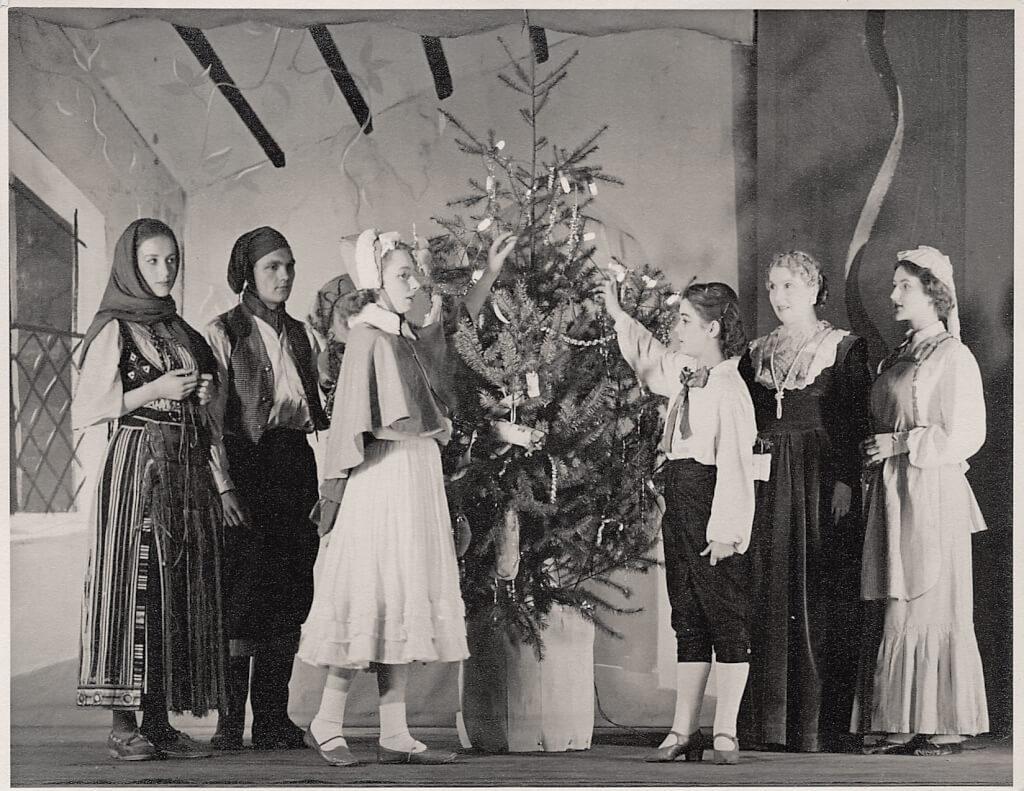
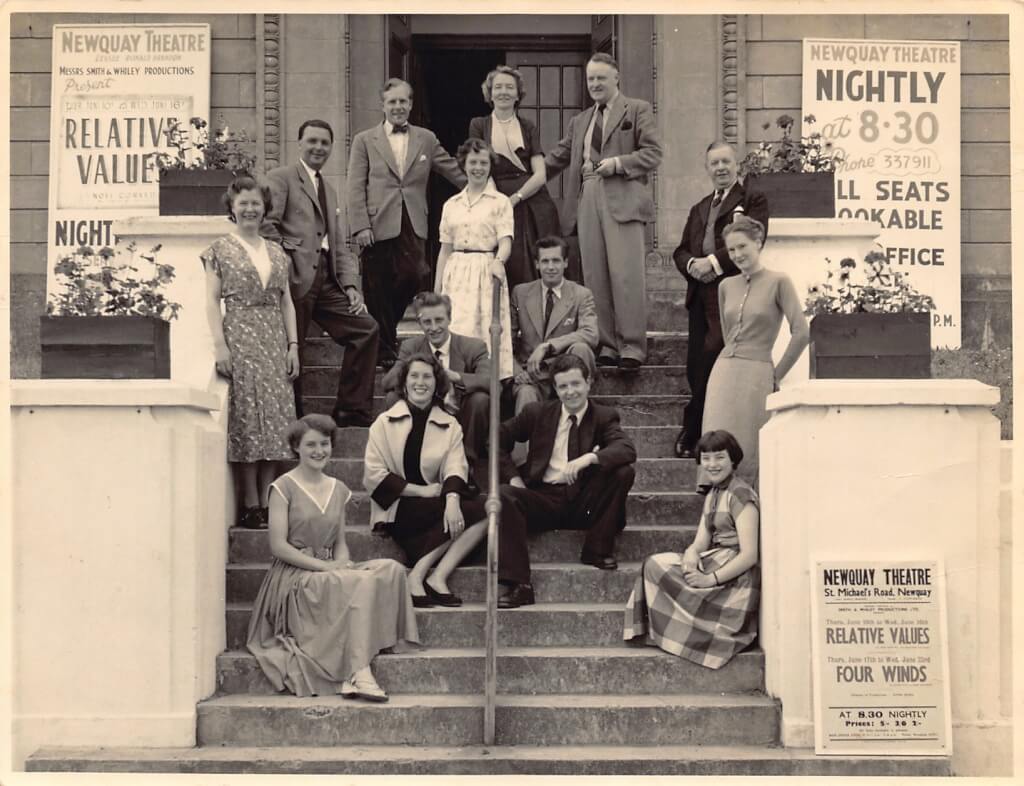
My mother’s repertory company staged a fresh show every week, luring holiday-makers in Newquay, Belfast and many other towns, to see two different plays during a single stay. That elegant cadence – show, rehearse, promote, repeat – sparked my curiosity: what could today’s businesses harvest from that tempo?
For decades I have helped firms reset their workflows, so let’s explore how a century-old theatre practice can enrich lean start-ups, high-street retailers and global tech giants alike.
The Repertory Blueprint
The Core Mechanics
| Feature | Theatre Practice | Business Translation | Benefit |
|---|---|---|---|
| Rotating repertoire | Different play each week[1] | Short product sprints with rapid iteration[2] | Quicker market feedback[3] |
| Daytime rehearsal | Safe space to test, fail, refine[4] | Internal “rehearsal rooms” for prototypes[5] | Lower risk experimentation[6] |
| Evening performance | Live customer beta test[3] | Pilot launches to selected segments[7] | Real-world validation |
| Ensemble company | Resident multi-skilled team[4] | Cross-functional squads sharing leadership[8][9] | Higher trust & productivity[10] |
| Continual marketing | Promote next play during current show[1] | Active cross-sell at point of service[7][11] | Increased lifetime value[12] |
Timing Cadence
Reps typically rehearse for six hours and perform for three[13], creating a nine-hour daily loop that blends creation with delivery. That loop mirrors lean software’s build-measure-learn cycle[14].
Lesson 1: Adopt a Weekly Sprint Rhythm
How It Works on Stage
Actors master lines fast because the curtain rises whether they feel ready or not. The fixed opening night forces focus and eliminates “perfect-later” thinking[15].
Business Application
- Set a non-negotiable demo every Friday.
- Allocate mornings for rehearsal (development) and afternoons for live service (customer calls, micro-launches).
- Carry insights into Monday’s backlog grooming.
Pay-Off
Companies that shift from monthly to weekly releases cut cycle time by up to 30%[16] and see defect rates fall because bugs surface sooner[17].
Lesson 2: Build an Ensemble, Not a Hierarchy
On-Stage Insight
A resident company thrives on shared leadership; leads vary from show to show, yet the same actors keep trust levels high[3].
Practical Moves
- Rotate functional leadership. Let marketing “star” this sprint, finance next.
- Practice “no diminishment”—every voice counts, mirroring jazz ensembles’ ethos[18].
- Introduce ensemble retros where feedback is candid, fast and framed as improvement, not blame[10].
Firms using ensemble structures report 25% higher employee engagement and 15% faster decision loops[8].
Lesson 3: Rehearse Critical Conversations
Theatrical Parallel
Directors run table work and blocking sessions to test ideas without an audience[19].
Corporate Technique
- Stage simulation labs: sales calls, high-stakes negotiations or crisis media briefings.
- Encourage role swapping so staff feel customer pain points first-hand[5].
Sales teams that rehearse objections improve win rates by 17%[20].
Lesson 4: Rotate Schedules for Energy & Fairness
Rep actors avoid burnout by switching roles and performance slots[21]. Service firms can mirror this with rotating shifts that balance peak demand and staff well-being[22].
Key tips:
- Use a forward rotation (early → late) to match circadian rhythms[16].
- Keep cycles consistent, typically two weeks, to boost predictability[23].
Retailers adopting structured rotations cut absenteeism by 12%[17].
Lesson 5: Market the Next Offer Mid-Performance
Why It Works on Stage
During the interval the front-of-house team plugs next week’s play, leveraging existing excitement[1].
Commercial Counterpart
- Cross-sell complements while customers are still in the “wow” moment[7].
- Train staff to suggest “what’s on next” products, mirroring Amazon’s “customers also bought” logic[11].
Done well, cross-selling can lift average order value by 10-30%[12].
Lesson 6: Store and Re-use Successful Sets
Rep companies keep flats, costumes and props to re-mount popular shows swiftly[3]. Businesses can:
- Archive code modules, marketing assets and vendor contracts for rapid redeployment.
- Build knowledge bases so new hires stand on seasoned shoulders, not start from scratch.
Lesson 7: Think Local, Live Global
Rep troupes anchor themselves in community, adapting material to local tastes[24]. Firms should:
- Localise features or campaigns while using a global backbone.
- Invite customers into workshops to co-create region-specific add-ons[25].
Companies blending local relevance with central resources grow regional revenue 1.3× faster[14].
Lesson 8: Treat Opening Night as a Soft Launch
Opening night gives critics—and paying patrons—a chance to shape tweaks before a longer run. Similarly:
- Label first public release a preview; gather data, adjust, rerelease.
- Offer split-ticket trials (Reading Rep uses instalments to widen access[26]) to lower friction for new customers.
Case Snapshot: Newquay’s Mid-Week Switchover
By launching a second play on Wednesday, my mother’s company doubled audience wallets: tourists bought tickets for both shows, and word-of-mouth spread across holiday parks. Translation for firms: stagger product drops mid-cycle, giving loyal users a second purchase window.
Potential Pitfalls & How to Avoid Them
| Challenge | Mitigation |
|---|---|
| Creative fatigue in rapid cycles | Schedule micro-breaks and wellness check-ins[17] |
| Role confusion in ensembles | Document responsibilities; rotate only after handover |
| Over-selling to captive customers | Use needs-based cross-sell; solve a real adjacent problem[7] |
| Quality slippage under speed | Keep a dedicated rehearsal/test phase; never skip line-runs[19] |
Reference and Further Reading
[1] Repertory Theatre Essentials – Number Analytics https://www.numberanalytics.com/blog/repertory-theatre-essentials
[2] What Can Business Learn From Theater | Innovation Elegance https://www.innovationelegance.com/thought-leadership/theater
[3] Repertory is the Answer | HowlRound Theatre Commons https://howlround.com/repertory-answer
[4] What Does “Repertory” Mean, Anyway? https://playmakersrep.org/repertory-mean-anyway/
[5] The Business World’s Missing Rehearsal Process | Simone de Haas https://www.linkedin.com/posts/simonedehaas1_leadership-theatreofleadership-professionaldevelopment-activity-7346304162680197121-ovJi
[6] Agile Team Rehearsals: Proven Tactics to Boost Efficiency and … https://matthiasorgler.com/2021/10/04/how-do-agile-teams-rehearse/
[7] What Is Cross-Selling? Intro, Steps, and Pro Tips [+Data] https://blog.hubspot.com/sales/cross-selling
[8] Six Key Qualities of Ensembles – Global Round Table Leadership https://www.globalroundtableleadership.com/blog/six-key-traits-of-ensembles
[9] When, Why and How to Move to an Ensemble Practice | Hubly https://www.myhubly.com/blog/move-to-an-ensemble-practice
[10] The 4 mindsets you want on any work team – Quartz https://qz.com/the-4-mindsets-you-want-on-any-work-team-1850972611
[11] 27 Effective Cross Selling Examples Businesses Should Consider https://www.ringy.com/articles/cross-selling-examples
[12] What Is Cross Selling In Marketing? Definition, Benefits, Examples https://thecmo.com/customer-marketing/what-is-cross-selling-in-marketing/
[13] Repertory Theatre: A Timeless Tradition – Number Analytics https://www.numberanalytics.com/blog/ultimate-guide-repertory-theatre
[14] From theatre director to the corporate world – business lessons from … https://blog.som.cranfield.ac.uk/knowledge/from-theatre-director-to-the-corporate-world-business-lessons-from-the-stage
[15] What is a “normal” profession rehearsal schedule like? : r/Theatre https://www.reddit.com/r/Theatre/comments/1c3bwei/what_is_a_normal_profession_rehearsal_schedule/
[16] How to set up and optimize a rotating schedule – Homebase https://www.joinhomebase.com/blog/rotating-schedule
[17] How to create a rotating schedule [Examples + Benefits] https://workforce.com/news/how-to-create-a-rotating-schedule-for-fair-flexible-shift-work
[18] Ensemble Thinking : Hard-Won Wisdom & Real-World Practices to … https://www.globalroundtableleadership.com/blog/ensemble-thinking-nbsphard-won-wisdom-amp-real-world-practices-to-bring-back-to-your-teams
[19] [PDF] Rehearsal Diaries – AWS https://national-theatre-assets.s3.amazonaws.com/uploads/2022/10/antonycleopatra-rehearsaldiaries.pdf
[20] Cross-Sell vs. Upsell: What’s the Difference? – Revenue.io https://www.revenue.io/blog/whats-the-difference-between-a-cross-sell-and-an-upsell
[21] Mastering Repertory Theatre – Number Analytics https://www.numberanalytics.com/blog/mastering-repertory-theatre
[22] Could Your Business Use a Rotating Shift Schedule? – Findmyshift https://www.findmyshift.co.uk/blog/could-your-business-use-a-rotating-shift-schedule
[23] Rotation Schedules: How To Schedule Shifts Efficiently – Shopify https://www.shopify.com/uk/retail/rotating-schedules
[24] Theatres in Cornwall – Arthur Lloyd http://www.arthurlloyd.co.uk/CornwallTheatres.htm
[25] [PDF] Arts Council England Analysis of Theatre in England https://www.artscouncil.org.uk/sites/default/files/download-file/Analysis%20of%20Theatre%20in%20England%20-%20Final%20Report.pdf
[26] Reading Rep Theatre Announce This Year’s Festive Show https://whatsonreading.com/reading-rep-theatre-announce-years-festive-show
>>> Why Deming’s 85/15 Rule Should Transform Your Business
Repertory Theatre
Main Definition
A repertory theatre (often shortened to rep or stock) is a theatrical system in which a resident acting company maintains a collection of plays (“repertoire”) ready for performance, typically presenting different works in alternation or rotation over a season[a][b].
Key Characteristics
- Resident Company
A permanent ensemble of actors, directors and production staff employed by the theatre rather than hired on a show-by-show basis[2b]. - Rotating Repertoire
Multiple productions are kept “in rep” simultaneously and performed on different nights—sometimes changing daily—to offer variety and showcase the company’s versatility[a][b]. - Continuous Rehearsal
While some plays are running, the company rehearses new or replacement productions during the day, ensuring fresh work enters the rotation regularly[c]. - Artistic Development
Serves as a training ground for emerging playwrights and actors, and supports both classical and experimental drama by providing a stable platform for new works and interpretations[b][c].
Historical Origins
- The term derives from the Latin repertorium (“list or catalogue”) denoting a stock of plays ready for presentation.
- Early modern rep emerged in the United Kingdom in the early 1900s, pioneered by Annie Horniman’s Gaiety Theatre in Manchester (opened 1908), which inspired similar companies in Glasgow, Liverpool and Birmingham[a].
- Continental Europe and state-supported theatres in France and Germany maintained repertory systems even earlier, enabling a true rep model where companies sustained long-term rotations rather than short runs[b].
Variations
- True Repertory (True Rep): A model where multiple plays remain continuously available over months or years, typical of state-supported theatres in Europe[b].
- Weekly Rep: A British variant from the early 20th century where new plays were produced and replaced weekly, rather than maintaining a deep repertoire at all times[a].
- Summer Stock/Festival Rep: Seasonal rep companies in North America and Europe that stage rotating productions over a summer or festival period, often employing a mix of resident and guest artists[a].
Contemporary Examples
- United Kingdom: Royal Shakespeare Company; Birmingham Repertory Theatre; Citizens’ Theatre (Glasgow)[a].
- United States: American Repertory Theatre; Utah Shakespeare Festival; Summer stock theatres employing rotating repertory models[a].
- Canada: Stratford Festival; Shaw Festival operate modified rep systems where productions run in rotation within a season[a].
Repertory theatre remains a vital format for sustaining artistic excellence and ensemble cohesion, fostering diverse programming, and offering audiences a broad theatrical experience within a single company framework.
Sources
[a] Repertory theatre – Wikipedia https://en.wikipedia.org/wiki/Repertory_theatre
[b] Repertory theatre | Acting, Performance & Improvisation – Britannica https://www.britannica.com/art/repertory-theatre
[c] repertory theater – Students | Britannica Kids | Homework Help https://kids.britannica.com/students/article/repertory-theater/334415



Leave a Reply