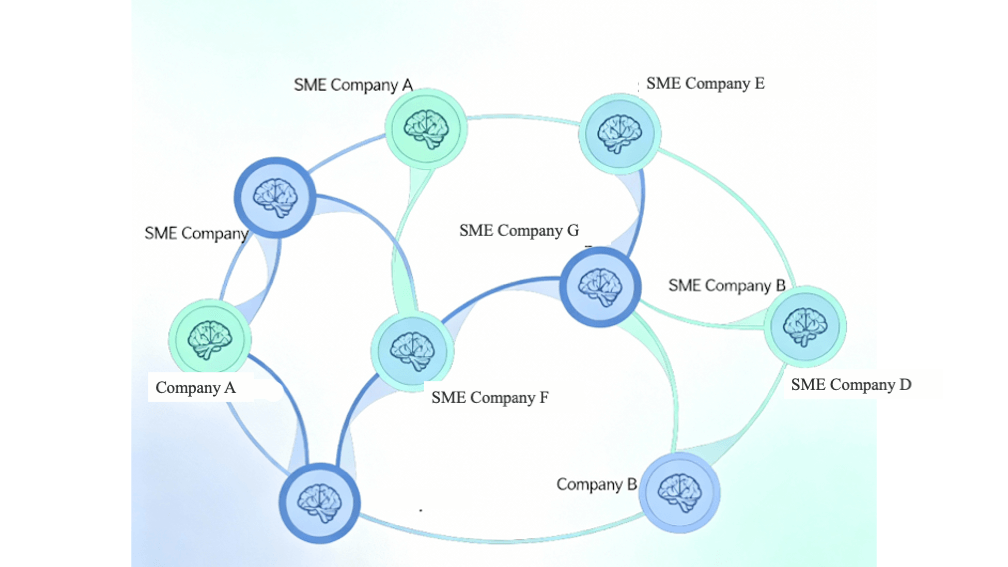
The business world has been obsessed with digital networks, social media algorithms, and artificial intelligence for good reason. But what if I told you there’s been a profound academic theory sitting quietly in the shadows since 2014 that holds the keys to transforming how UK SME B2B marketers think about growth, competitive advantage, and business relationships?
I’ve just finished reading “The Influence of Network Effects on SME Performance” – a fascinating piece of research that combines Industrial Marketing and Purchasing (IMP) theory with social network analysis to reveal something extraordinary: your emotional intelligence might be the single most important factor determining your business network’s effectiveness, and consequently, your company’s performance.
The Theory That Changes Everything
The research, conducted by Peter Naudé and his colleagues at Manchester Business School and University of Leeds, examined 227 CEOs of Iranian IT companies to understand how personal characteristics translate into network advantages and ultimately business success. Their findings challenge much of what we think we know about entrepreneurial networking[1].
Here’s the revolutionary part: while most business advice focuses on being more entrepreneurial, more aggressive, or more innovative, this research shows that emotional intelligence is the true driver of network success. The study revealed that emotionally intelligent leaders consistently occupy better network positions, characterised by structural holes and centrality, which directly impacts their business performance[1].
Understanding Network Structure: Your Competitive Moat
Before we explore the implications, let’s understand what network structure actually means in practical terms.
Structural Holes represent gaps between different groups in your network where you act as the bridge. Think of yourself as the connector between your manufacturing clients and your tech suppliers – you’re the only one linking these two worlds. This position gives you tremendous bargaining power and access to non-redundant information[1].
Network Centrality measures how connected you are to others in your business ecosystem. If you’re central, you’re like a hub airport – everyone needs to go through you to reach other destinations. This position grants you early access to opportunities, information, and resources[1].
The research shows that leaders who combine both characteristics – bridging structural holes while maintaining high centrality – create what I call a “network fortress” around their business. They become indispensable to their ecosystem, gaining competitive advantages that are nearly impossible to replicate.
The Emotional Intelligence Advantage
This is where the research gets truly interesting. The study found that emotional intelligence drives three critical outcomes: entrepreneurial style, network structure, and external networking behaviour. Most surprisingly, emotional intelligence fully mediates the relationship between personal characteristics and business performance[1].
What does this mean in practical terms?
An emotionally intelligent leader doesn’t just build better relationships; they strategically position themselves within their business network to maximise information flow, resource access, and collaborative opportunities. They understand that business success isn’t about what you know or how entrepreneurial you are – it’s about how well you navigate the complex web of human relationships that surround every B2B transaction.
Consider Sarah, a manufacturing consultant I know in Birmingham. Instead of focusing solely on technical expertise, she invested in understanding her clients’ emotional drivers, industry pressures, and relationship dynamics. Over five years, she became the go-to connector between manufacturers and their supply chains. When Brexit created supply chain disruptions, Sarah’s network position meant she was the first to know about alternative suppliers and the last to lose clients. Her emotional intelligence had created a structural competitive advantage.
Modern Applications: How Today’s SME Marketers Can Leverage Network Effects
The 2014 research findings align remarkably well with current UK business trends. In 2025, we’re seeing several developments that make network positioning even more crucial:
Digital-First Networking: With 80% of B2B sales interactions now occurring online, the ability to build meaningful digital relationships through emotional intelligence has become essential[2]. The old model of relationship building through golf courses and pub lunches has evolved into LinkedIn conversations, virtual coffee chats, and collaborative online projects.
Community-Driven Growth: Modern UK SMEs are increasingly embedding themselves within local business communities, exactly mirroring the network positioning strategies identified in the research[3]. The most successful are those who become central connectors within their local ecosystems, bridging gaps between different industry sectors.
AI-Enhanced Network Analysis: Today’s tools allow us to visualise and optimise our network positions in ways the 2014 researchers could only dream of. Social network analysis software can now identify structural holes in your business relationships and suggest strategic connections[4].
Contrasting with Popular Modern Theory
The research findings create an interesting tension with current popular business thinking. Most contemporary B2B marketing advice focuses on:
- Content Marketing: Creating valuable content to attract prospects
- Sales Automation: Using technology to scale outreach efforts
- Product-Led Growth: Letting the product sell itself
- Data-Driven Decisions: Optimising based on metrics and analytics
While these approaches have merit, the network effects research suggests a different priority: relationship-led positioning. Instead of pushing content or products, successful SME leaders should focus on becoming indispensable connectors within their business ecosystems.
This creates a fascinating paradox. In our increasingly digital world, the most sustainable competitive advantages come from the oldest business practice of all: building genuine human relationships. But these relationships must be strategically positioned to create network effects that amplify your influence and access to resources.
The Entrepreneurial Style Surprise
One of the most counterintuitive findings from the research was that entrepreneurial style – typically characterised by risk-taking, innovation, and proactiveness – didn’t significantly influence external networking behaviour[1]. This contradicts much of the popular wisdom about entrepreneurial success.
The implication is profound: being entrepreneurial isn’t enough. You might have the best ideas, the most innovative products, or the highest risk tolerance, but without the emotional intelligence to navigate business relationships effectively, these advantages won’t translate into network positions that drive performance.
This finding aligns with recent UK business trends showing that emotional intelligence has become crucial for modern executives[5]. As workplace dynamics become more complex and diverse, leaders who can understand and manage emotions – both their own and others’ – consistently outperform those who rely solely on technical or entrepreneurial capabilities.
Practical Implementation Strategies
Based on the research findings and current market conditions, here are specific strategies UK SME B2B marketers can implement:
Network Mapping and Analysis
Start by visualising your current business network. Identify the different groups you’re connected to – suppliers, clients, industry associations, local business communities. Look for gaps where you could become a bridge between disconnected groups. These structural holes represent your biggest opportunities for creating network-based competitive advantages.
Emotional Intelligence Development
The research identified four key components of emotional intelligence: self-emotional appraisal, others’ emotional appraisal, regulation of emotions, and utilisation of emotions[1]. Focus particularly on understanding others’ emotional drivers in business contexts. When you’re in meetings, pay attention to the emotional undercurrents alongside the rational discussions.
Strategic Positioning Over Content Creation
Instead of producing more content, focus on positioning yourself strategically within existing conversations and communities. Join industry associations not just for the knowledge, but to identify relationship gaps you could fill. Attend networking events with the specific goal of connecting disparate groups rather than just promoting your own services.
Relationship Maintenance Systems
The research showed that external networking behaviour significantly impacts network structure[1]. Develop systematic approaches to building, maintaining, and using your business relationships. This might involve regular check-ins with key network contacts, proactive introductions between your connections, and strategic sharing of valuable information across your network.
The UK Context: Local Networks in a Global Economy
The research has particular relevance for UK SMEs operating in our unique business environment. The UK’s diverse regional economies, from London’s financial district to Manchester’s technology sector to Scotland’s renewable energy cluster, create numerous opportunities for network-based positioning.
Recent trends show that 79% of UK SMEs are planning managed service provider investments in 2025, primarily driven by security concerns[6]. This creates structural holes between traditional businesses and technology providers – exactly the kind of gap that emotionally intelligent network brokers can exploit.
Similarly, the UK’s focus on sustainability and ESG compliance is creating new network dynamics[7]. SMEs who position themselves as bridges between traditional industries and sustainable suppliers are creating powerful network effects that translate into competitive advantages.
The Limitations and Challenges
The research isn’t without limitations that UK marketers should consider. The study focused on Iranian IT companies, which may not directly translate to all UK SME contexts. Cultural differences in relationship building, business practices, and network dynamics could influence the applicability of the findings.
Additionally, the research was conducted in 2014, before the massive digital transformation of business relationships we’ve witnessed. While the core principles likely remain valid, the mechanisms for building and maintaining network positions have evolved significantly.
There’s also the challenge of measurement. Unlike financial metrics or website analytics, network positions and emotional intelligence are harder to quantify and track. This makes it difficult for performance-focused SME leaders to justify investing time in relationship building when more measurable activities compete for attention.
Future Implications: The Network-First Business Model
Looking ahead, I believe we’re moving toward what I call the “network-first business model.” Instead of starting with product development or market analysis, successful SMEs will begin by identifying strategic network positions they can occupy, then building businesses around those relationship-based competitive advantages.
This shift is already visible in successful UK SMEs. The most resilient businesses during recent economic uncertainties weren’t those with the best products or the most capital, but those with the strongest network positions that provided early warning of changes, access to alternative resources, and collaborative problem-solving capabilities.
The research suggests that these network advantages compound over time. Leaders who develop emotional intelligence and secure strategic network positions create self-reinforcing cycles where their network value attracts more valuable connections, further strengthening their position.
The Integration Challenge
The biggest challenge for UK SME marketers will be integrating network-based strategies with existing marketing approaches. Traditional marketing focuses on broadcasting messages to target audiences, while network marketing focuses on positioning yourself strategically within relationship ecosystems.
These approaches aren’t mutually exclusive, but they require different mindsets, metrics, and resource allocation. Content marketing can support network positioning by providing valuable information to share across your network. Digital marketing tools can help identify and connect with strategic network contacts. But the core focus shifts from push-based promotion to pull-based positioning.
Measuring Network Effects
Unlike traditional marketing metrics, network effects require different measurement approaches. Instead of tracking leads, conversions, and revenue attribution, network-focused marketers need to monitor:
- Network density: How connected are the people in your network?
- Brokerage opportunities: How many structural holes can you bridge?
- Information flow: How often do valuable insights flow through your network position?
- Collaborative value: How much value is created through network-facilitated partnerships?
These metrics are harder to quantify but often more predictive of long-term business success than traditional marketing measurements.
The Human Element in an AI World
Perhaps the most important insight from the research is its emphasis on human emotional intelligence in an increasingly automated world. As AI handles more routine business tasks, the competitive advantages increasingly belong to those who can navigate complex human relationships effectively.
This creates opportunities for UK SMEs willing to invest in relationship-based competitive advantages. While larger competitors focus on technological solutions and operational efficiency, emotionally intelligent SME leaders can create network positions that are nearly impossible to replicate through technology alone.
The research suggests that these human-centred competitive advantages become more valuable, not less, as business becomes more digital. Networks based on genuine relationships and emotional understanding create barriers to entry that algorithmic approaches can’t easily overcome.
Network effects represent a fundamental shift in how we think about B2B marketing and competitive advantage. The research reveals that success isn’t just about what you sell or how you sell it, but about where you position yourself within the complex web of business relationships that drive modern commerce.
For UK SME marketers, this presents both an opportunity and a challenge. The opportunity lies in creating sustainable competitive advantages through strategic network positioning. The challenge lies in developing the emotional intelligence and relationship-building capabilities that make such positioning possible.
The businesses that thrive in the coming years won’t necessarily be those with the best products, the most innovative technologies, or the largest marketing budgets. They’ll be those led by emotionally intelligent individuals who understand how to position themselves strategically within business networks to create value for all participants while securing sustainable competitive advantages for themselves.
The network effects theory isn’t just an academic curiosity – it’s a roadmap for building resilient, relationship-based businesses that can thrive regardless of economic conditions, technological disruptions, or competitive pressures. The question isn’t whether network effects matter for your business success. The question is whether you’ll recognise their importance before your competitors do.
References and Further Reading
Academic Sources:
- Naudé, P., Zaefarian, G., Tavani, Z.N., Neghabi, S., & Zaefarian, R. (2014). The influence of network effects on SME performance. Industrial Marketing Management, 43(4), 630-641.
Contemporary Research:
- Corporate Finance Institute. (2024). Network Effect – Understanding the Types and Economic Impact
- Harvard Business School. (2020). What Are Network Effects?
- University College London. (2022). Structural Holes in Social Networks
UK Business Context:
- British Chambers of Commerce. (2025). UK SME Networking Strategies Report
- Federation of Small Businesses. (2025). Business Growth Through Networks
- Enterprise Nation. (2025). Networking for Small Business Success
Modern Applications:
- Martal Group. (2025). B2B Networking 2025: Trends, Strategies, and Expert Insights
- Changing Point. (2025). Emotional Intelligence in Leadership During Times of Change
- Great British Business Show. (2025). The Biggest UK Business Trends in 2025
Sources
[1] The-Influence-of-Network-Effects-on-SME-Performance-V12.pdf https://ppl-ai-file-upload.s3.amazonaws.com/web/direct-files/attachments/20997998/ae89766f-5db9-4a26-9afd-ff35c55d978e/The-Influence-of-Network-Effects-on-SME-Performance-V12.pdf
[2] B2B Networking 2025: Trends, Strategies, and Expert … https://martal.ca/b2b-networking-lb/
[3] Local Networking Strategies for UK SMEs | Boost Business … https://ggglobal.co.uk/blog/local-networking-strategies-for-uk-smes-unlocking-business-growth/
[4] The Application and Value of Social Network Analysis in … https://pdfs.semanticscholar.org/104b/eefb05419628a7b29826fd63d95f3c57d737.pdf
[5] The Importance of Emotional Intelligence in Achieving … https://huntscanlon.com/the-importance-of-emotional-intelligence-in-achieving-success-as-a-modern-executive/
[6] Why 2025 is the Year UK SMEs Must Modernise Their … https://www.itbuilder.co.uk/blog/uk-sme-network-infrastructure-consulting-2025
[7] The Biggest UK Business Trends in 2025 https://www.greatbritishbusinessshow.co.uk/blog-library/biggest-uk-business-trends-2025
[8] Network Externality Theory https://open.ncl.ac.uk/academic-theories/42/network-externality-theory/



Leave a Reply