
The Hidden Story of Survivorship Bias
Sometimes the way we see the world is shaped not by the evidence in front of us, but by the evidence we never notice. One of the clearest examples of this is the story of Allied aircraft in the Second World War.
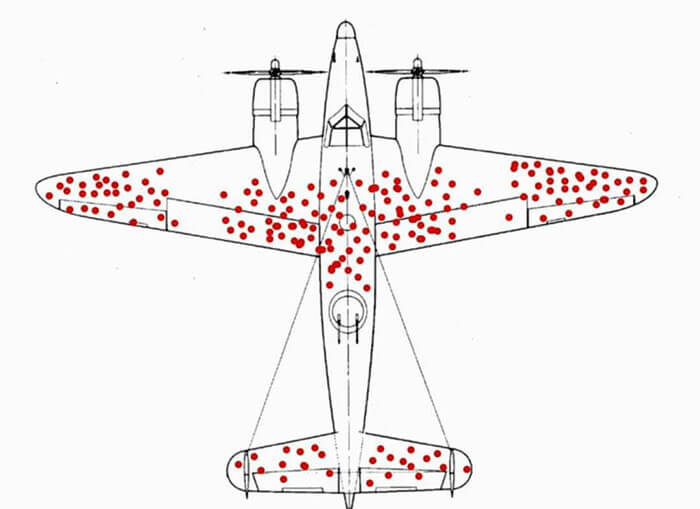
Ground crews kept track of where returning planes were damaged after facing German anti-aircraft fire and fighters. Unsurprisingly, the bullet holes and shell damage clustered across the wings and fuselage. The military’s first reaction was simple: reinforce those areas. After all, that was where the planes were being hit.
But Hungarian-born statistician Abraham Wald pointed out something most had missed. The planes they were looking at were the ones that came back. The damage was real, but it was incomplete data. The missing planes – the ones that never returned – probably carried fatal hits in the places that looked untouched on the surviving bombers.
Wald’s insight transformed the Allies’ strategy: armour the parts where no damage was recorded, because that is where a single hit could bring down the plane. This shift in approach saved countless lives and changed how the military thought about evidence.
What Does Survivorship Bias Mean Today?
Survivorship bias is a logical error that occurs when we only focus on successes and survivors, forgetting about failures that go unseen. In simple terms, it tricks us into drawing the wrong lessons from incomplete data.
This kind of bias shows up everywhere:
- In business when we study only the companies that succeeded, forgetting how many tried the same idea and failed.
- In investing when people celebrate those who made fortunes on risky bets, without counting the silent majority who lost money.
- In personal growth when we admire elite athletes, entrepreneurs, or artists without noticing the countless others who trained just as hard but did not make it.
By only looking at what survives, we tell ourselves a flattering story – that success is built on simple choices or traits. In reality, the unseen failures tell us the other half of the picture.
How to Think Beyond Survivorship Bias
The real value in recognising survivorship bias is learning to ask the right questions. Instead of accepting the visible results at face value, we need to pause and ask:
- What am I not seeing here?
- Who tried this and failed – and why?
- What hidden factors might explain the outcomes?
By focusing not just on the successes but also the invisible failures, we can make decisions based on the full picture. Whether in business, personal decisions, or even everyday problem-solving, avoiding survivorship bias allows us to see reality with more clarity.
References and Further Reading
Image source: https://sketchplanations.com/survivorship-bias-silent-evidence



Leave a Reply