The marketing advice I gave to SME clients in the early 2000s would be professionally embarrassing today. Back then, I confidently recommended six-month brand awareness campaigns with unmeasurable outcomes. I advocated for expensive agency retainers that delivered polished creative work but little accountability. I pushed international expansion strategies that ignored the practical realities of regulatory compliance and cultural adaptation costs.
Today, that same advice would be professionally negligent. The fundamental assumptions underlying B2B marketing wisdom have shifted so dramatically that yesterday’s best practices have become today’s cautionary tales. This transformation reflects not just technological advancement, but a complete reframing of how professional marketing advice should serve business reality rather than industry convention.
Having worked across multiple decades and witnessed this evolution firsthand, I’ve observed how the gap between traditional marketing wisdom and practical business needs has widened to breaking point. The advice that shaped careers in the 1990s now represents the primary obstacles to SME growth in 2025.
From Creative Intuition to Data Science Requirements
The 1990s: When Gut Instinct Ruled Supreme
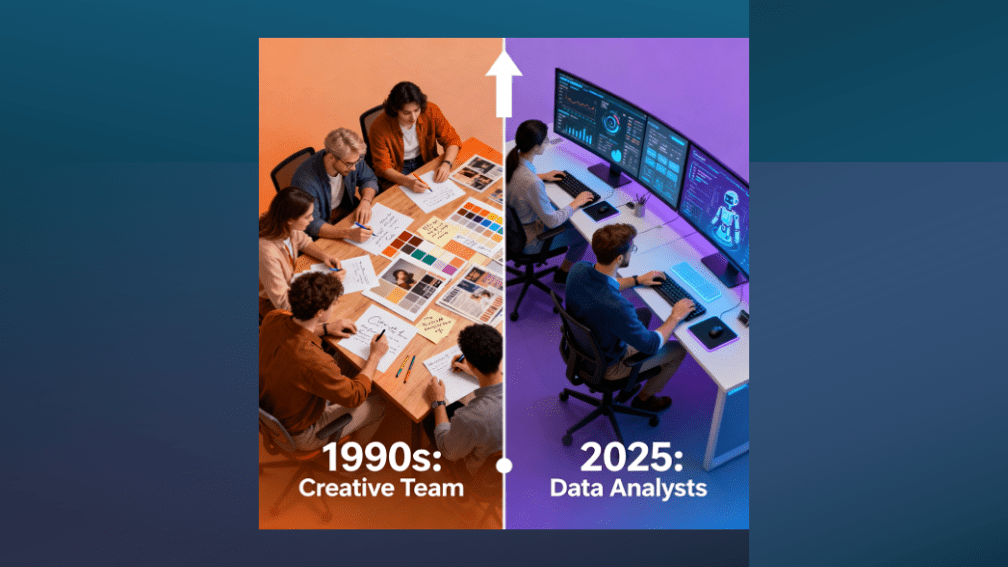
Twenty-five years ago, marketing professionals built reputations on creative intuition and campaign aesthetics[1]. Success was measured through brand recall studies and award show recognition rather than revenue attribution. The most respected marketing advice focused on message crafting, media planning, and creative development[1].
Professional development centred on understanding consumer psychology, mastering traditional media channels, and developing relationships with creative agencies[1]. Data analysis meant basic demographics and reach/frequency calculations. Marketing professionals could build entire careers without ever opening a spreadsheet or understanding statistical significance[1].
2025: The Technical Transformation
Modern marketing advice assumes technical competency that would have been unimaginable three decades ago. Today’s marketing professionals must understand SQL queries, statistical modelling, API integrations, and machine learning algorithms[2][3]. The role has evolved from creative generalist to technical specialist[2].
Recent research shows that 63% of marketing leaders now plan to invest in generative AI by 2025[3], representing a fundamental shift from human creativity to AI-augmented decision making. Marketing professionals who cannot collaborate effectively with AI tools risk professional obsolescence[3].
The complexity extends beyond individual skills to systematic thinking. Modern marketing advice emphasises understanding customer data platforms, marketing automation workflows, attribution modelling, and privacy compliance frameworks[2][4]. These technical requirements were literally non-existent when many senior marketing professionals began their careers[2].
The Great MQL Death March
The Gumball Machine Era
The traditional B2B playbook I helped develop during my time at various technology companies treated marketing like a gumball machine – budget goes in, MQLs come out[5]. This approach dominated professional advice throughout the 2000s and 2010s. Marketing success was measured by lead volume, and campaigns were optimised for form completions rather than business outcomes[5].
Professional marketing advice focused on funnel optimisation, lead scoring methodologies, and sales development representative productivity. Conferences featured sessions on MQL-to-SQL conversion rates and lead nurturing cadences[5]. The entire professional development ecosystem reinforced this metrics-obsessed approach[5].
The Customer-Obsessed Revolution
Today’s most progressive marketing advice advocates abandoning the MQL framework entirely[5]. As Jon Miller, former Marketo executive, argues: “When we bombard prospects with unwanted emails just because they downloaded an eBook, we’re not building relationships – we’re burning bridges”[5].
The shift represents a fundamental change in professional wisdom. Modern advice emphasises customer journey mapping, buying committee engagement, and long-term relationship building over short-term lead generation[5]. Success metrics have evolved from quantity-focused (leads generated) to quality-focused (customer lifetime value, engagement depth, advocacy rates)[5].
This transformation affects how marketing professionals structure their careers. The skills that created success in lead generation roles – campaign automation, email marketing, form optimisation – are becoming less valuable than customer experience design, community building, and strategic relationship management[5].
From Global Aspirations to Regional Reality
The International Expansion Obsession
Throughout the 2000s and early 2010s, professional marketing advice consistently pushed international expansion as a growth imperative. Marketing conferences featured case studies of European market entry strategies, and career advancement often required demonstrating global campaign experience[6].
This advice assumed that larger addressable markets automatically translated to business growth. Marketing professionals were trained to develop multi-market campaigns, manage cultural adaptation processes, and coordinate global agency relationships[6]. International experience became a prerequisite for senior marketing roles[6].
The Domestic Focus Revolution
Current research reveals that 84% of UK SMEs now focus primarily on domestic growth rather than international expansion[6]. This represents a complete reversal of traditional professional wisdom that prioritised global reach over local depth[6].
Modern marketing advice recognises that domestic markets offer advantages that international expansion cannot match: intimate customer knowledge, regulatory familiarity, and cultural authenticity[6]. A Manchester-based software company can reach 67 million potential customers without currency fluctuation risks, cross-border compliance costs, or cultural adaptation challenges[6].
Professional development now emphasises regional expertise over global experience. Marketing professionals who understand local market nuances, regional customer behaviour patterns, and domestic competitive landscapes often deliver superior results compared to generalists with international experience[6].
The Agency Model Collapse
The Network Agency Golden Age
For decades, professional marketing advice assumed that larger agencies delivered superior results through global resources, diverse expertise, and established processes. Career progression often meant moving from boutique agencies to network agencies to client-side roles at multinational corporations[7].
Marketing education reinforced this hierarchy, with network agencies recruiting from top universities and offering prestigious graduate schemes[7]. Professional success was measured by agency size, client list recognition, and award show performance[7].
The Independent Agency Renaissance
Today’s most effective marketing advice advocates for independent agencies that offer direct senior access, rapid campaign adaptation, and genuine partnership relationships[7]. London marketing agencies typically charge £10,000+ monthly for services that regional independents provide for £1,000-£5,000[3][4][8].
This shift reflects changing client expectations. SME owners require tactical, measurable approaches that drive immediate business impact rather than brand awareness metrics that matter to FTSE 100 companies[7]. They need marketing partners who understand operational constraints and can execute campaigns within realistic resource limitations[7].
Professional marketing careers are adapting accordingly. The most successful marketing professionals are those who can deliver senior-level strategic thinking with hands-on execution capabilities, rather than those who manage large teams and complex approval processes[7].
The Authenticity Authenticity Premium
The Manufactured Perfection Era
Traditional marketing advice emphasised polished brand presentation, professional photography, and corporate messaging consistency. Marketing professionals were trained to eliminate anything that appeared unfinished, personal, or imperfect[9][10].
Brand guidelines specified exact colour codes, approved photography styles, and messaging frameworks that ensured consistency across all touchpoints[9]. Professional success was measured by brand presentation quality and message control rather than customer engagement depth[9].
The Genuine Connection Revolution
Modern marketing wisdom recognises that manufactured perfection actively works against authentic customer connection[9][10]. Research shows that 90% of Millennials consider authenticity crucial when choosing brands to support[9][10].
The most effective contemporary marketing advice advocates for genuine storytelling, behind-the-scenes content, and personal business owner involvement[9]. A family-run Coventry bakery increased social media engagement by 100% when they replaced professional food photography with iPhone photos of actual products, including occasional imperfect batches[6].
This authenticity premium affects professional development priorities. Marketing professionals now need skills in authentic content creation, community management, and crisis response rather than traditional brand management and message control capabilities[9][10].
The Compliance Reality Check
The Pre-Regulatory Freedom
Marketing advice from the early 2000s operated in a regulatory environment that was dramatically simpler than today’s landscape. Email marketing required no explicit consent mechanisms, website analytics involved no privacy considerations, and customer data collection faced minimal legal constraints[11][5].
Professional development focused on campaign creativity and channel optimisation without significant legal knowledge requirements. Marketing professionals could execute sophisticated campaigns without understanding data protection frameworks or advertising standards compliance[11][5].
The Regulatory Constraint Era
Contemporary marketing advice must account for compliance costs that average £4,500 annually per SME, with the sector collectively spending £25 billion on compliance activities[11][5]. GDPR implementation alone requires sophisticated consent management systems that can consume substantial portions of limited marketing budgets[11].
Modern marketing education includes privacy law understanding, data protection implementation, and advertising standards compliance as core competencies rather than peripheral considerations[11]. Marketing professionals who cannot navigate regulatory requirements effectively find their strategic options severely limited[11].
This compliance burden disproportionately affects smaller businesses, with 18% of SMEs citing government regulations as key barriers to growth[12]. Professional marketing advice must now balance growth opportunities against regulatory exposure in ways that were unnecessary in previous decades[12].
From Channel Tactics to Customer Experience
The Campaign-Centric Approach
Traditional marketing advice organised around channel-specific tactics: email marketing campaigns, social media strategies, search engine optimisation, and paid advertising management[13]. Professional development followed similar patterns, with specialists developing expertise in specific channels rather than integrated customer experiences[13].
Marketing organisations structured around functional silos – content teams, digital specialists, traditional media planners – that operated independently with minimal coordination requirements[13]. Success was measured channel by channel rather than through integrated customer journey metrics[13].
The Experience-Integrated Future
Contemporary marketing wisdom recognises that today’s B2B buyers use more than nine channels during their buying journeys, up from five channels in 2016[10]. Modern marketing advice emphasises seamless omnichannel experiences that prioritise customer journey coherence over channel-specific optimisation[10].
Professional skills now require understanding of customer data platforms, identity resolution, journey orchestration, and experience measurement across multiple touchpoints[13]. Marketing professionals must think systematically about how individual tactics contribute to overall customer experience rather than optimising channels in isolation[13].
The Skills Evolution Crisis
The Creative Generalist Era
Marketing advice from the 1980s and 1990s assumed that successful professionals needed broad creative skills combined with strategic thinking ability[1]. Career development paths moved from junior creative roles through account management to strategic planning positions[1].
The most challenging marketing role during this era was arguably the Creative Director, who needed artistic vision combined with commercial understanding[14]. Professional development focused on creative portfolio building, client relationship management, and campaign storytelling capabilities[14].
The Technical Specialist Reality
Today’s most demanding marketing roles require technical expertise that would have been incomprehensible to previous generations of marketing professionals. Marketing data analysts must master SQL, Python, statistical modelling, and advanced analytics platforms whilst translating complex data patterns into strategic recommendations[2].
Marketing automation specialists need platform expertise across HubSpot, Salesforce, Marketo, and Eloqua, combined with customer psychology understanding and campaign strategy development[2]. These roles require continuous learning as marketing technology evolves faster than professionals can adapt[2].
The pressure for real-time decision-making adds complexity that previous marketing generations never faced. Modern marketing operates at breakneck speed, with campaigns requiring constant optimisation based on incoming data streams[4]. Marketing professionals must process information quickly and make recommendations that can impact millions in advertising spend within hours of campaign launches[4].
The Agency Fee Structure Revolution
The Retainer Model Dominance
Traditional marketing advice assumed that monthly retainer relationships provided the stability and resources necessary for effective campaign development. Agency fee structures were built around ongoing relationship management, with success measured through client retention and account growth rather than measurable business outcomes[3][4][8].
Professional career advancement often required managing larger retainer accounts, demonstrating consistent monthly billing, and maintaining long-term client relationships regardless of actual performance delivery[3][4][8]. The model prioritised relationship management skills over results delivery capabilities[3][4][8].
The Performance-Based Evolution
Contemporary marketing advice increasingly advocates for performance-based fee structures that align agency compensation with business outcomes rather than time investment[3][4][8]. This shift reflects client demand for accountability and measurable return on marketing investment[3][4][8].
Independent agencies capture market share by offering value-based pricing models that regional clients can afford whilst delivering superior results compared to network agency overhead structures[7][15][16]. This efficiency advantage often translates to 25-40% better value for equivalent services[15][16].
Professional marketing careers must adapt to this performance accountability. Marketing professionals who cannot demonstrate measurable business impact through their campaigns find their career options increasingly limited as clients demand proof of value rather than relationship management capabilities[3][4][8].
Looking Forward: The Continuous Evolution
The evolution of B2B marketing wisdom shows no signs of slowing. Artificial intelligence will continue automating tactical execution whilst creating new strategic roles that require AI collaboration skills[10]. Privacy regulations will drive new specialisation requirements as marketing professionals learn to navigate cookieless attribution and measurement[17].
Customer experience roles will likely join the most challenging category as companies recognise the importance of integrated customer journeys[13]. These positions will require understanding of technology, psychology, and business strategy in equal measure[13].
The marketing advice that shapes professional development today will likely seem quaint by 2030. The professionals who thrive will be those who embrace continuous learning, adapt to changing technical requirements, and maintain focus on genuine customer value creation rather than industry convention compliance.
The Practical Implications
For marketing professionals navigating this evolution, the implications are clear: yesterday’s expertise becomes tomorrow’s limitation unless continuously updated. The skills that created success in previous decades – creative intuition, relationship management, channel-specific tactics – remain valuable but insufficient without technical competency and systematic thinking capabilities.
The most successful marketing professionals I encounter have stopped trying to predict which specific technologies or tactics will dominate the future. Instead, they focus on developing learning agility, customer empathy, and business acumen that remain valuable regardless of technical evolution.
The marketing advice revolution reflects a broader shift from professional practices based on industry convention to approaches grounded in customer reality and business outcomes. This transformation will continue accelerating as clients demand measurable value and authentic connection over polished presentation and theoretical expertise.
The evolution of B2B marketing wisdom represents opportunity rather than threat for professionals willing to embrace change. Those who adapt their advice to serve business reality rather than industry convention will find themselves leading the next phase of marketing professional development.
References and Further Reading
[1] 10 B2B Marketing Trends To Watch In 2024 https://thecmo.com/marketing-strategy/b2b-marketing-trends-2023/
[2] Top Marketing Trends for Professional Services in 2025 https://www.calpartners.co.uk/insights-blog/new-year-marketing-predictions/
[3] B2B Marketing: 10 Trends Shaping Success in 2025 https://viamrkting.com/future-of-b2b-marketing-trends-that-are-becoming-necessities/
[4] Jon Miller’s 2025 B2B Marketing Predictions https://www.marketingprofs.com/articles/2024/52430/b2b-marketing-future-predictions-jon-miller
[5] The Future of B2B Marketing: New Playbooks, Strategic … https://www.jonmiller.com/blog/2025/1/9/the-future-of-b2b-marketing-new-playbooks-strategic-brands-and-ai-agents-11-predictions-for-2025
[6] Future of B2B marketing in 2025: AI, globalisation trends https://cmotech.uk/story/future-of-b2b-marketing-in-2025-ai-globalisation-trends
[7] A complete guide to B2B marketing – Precis https://www.precis.com/resources/complete-guide-b2b-marketing
[8] Four ways in which the marketing profession is changing https://www.business-school.ed.ac.uk/about/news/four-ways-marketing-is-changing
[9] Future of B2B sales: The big reframe https://www.mckinsey.com/~/media/mckinsey/business%20functions/marketing%20and%20sales/our%20insights/future%20of%20b2b%20sales%20the%20big%20reframe/future-of-b2b-sales-the-big-reframe.pdf
[10] B2B Marketing Trends 2025 for Performance Advertisers https://www.taboola.com/marketing-hub/b2b-marketing-trends/
[11] The latest digital marketing trends – 2025 https://www.davechaffey.com/digital-marketing-trends/latest-digital-marketing-trends/
[12] Shaping the Future of B2B Marketing: 2024 Reflections … https://www.pipeline-360.com/blog/pipeline360-2025-predictions
[13] Frontline Marketing: The Evolution Of B2B Growth Teams https://www.forrester.com/blogs/frontline-marketing-the-evolution-of-b2b-growth-teams/
[14] The Evolution of B2B Marketing: Embracing Automation and … https://breadcrumbs.io/blog/the-evolution-of-b2b-marketing/
[15] Top Experts Share B2B Marketing Trends for 2025 https://aimers.io/blog/top-experts-share-b2b-marketing-trends-for-2025
[16] Five key trends shaping the future of marketing https://www.business-reporter.co.uk/management/five-key-trends-shaping-the-future-of-marketing
[17] What are the Digital Marketing Trends for 2025? https://digitalmarketinginstitute.com/blog/digital-marketing-trends-2025



Leave a Reply