
When you launch a new company with multiple services, you face an uncomfortable choice. You can list everything you offer, risk appearing unfocused, and watch your marketing message lose its power. Or you can make a harder decision: prioritise ruthlessly, have a service positioning strategy
The second option takes courage, but it’s also where real business growth begins. Service positioning strategy separates thriving startups from those that fade into the background noise of the market.
I’ve watched many ambitious entrepreneurs make the same mistake at launch. They build a new venture with breadth across their service offerings, then panic about capturing opportunity. So they broadcast everything. The result? Potential clients see a generalist, not a specialist. Your marketing investment dilutes. Your brand becomes vague. And competitors, even well-funded ones, can outflank you on specificity.
The trap isn’t describing too few services. It’s pitching all of them at once.
Why The Jack-Of-All-Trades Problem Feels So Real
Let’s be direct. When you’ve built expertise across multiple service lines, it feels wrong to hide your capability. You’ve invested time, money, and mental energy to develop these offerings. Of course you want to show what you can do.
But here’s the problem with launch strategy that fails to prioritise. Customers don’t buy comprehensiveness. They buy solutions.
Research from positioning experts confirms this. When a company presents multiple services without clear hierarchy, buyers become confused about what actually differentiates the offering. They can’t picture themselves as customers. Worse, they compare you against specialists who’ve aligned every marketing message toward solving their specific problem.
This is where the compound effect in marketing works against you. Every confused customer who leaves your website without clarity is a lost opportunity. Every mixed message you send dilutes the next message. The marketing momentum you’re trying to build stalls before it starts.
The Compound Effect Of Focused Messaging
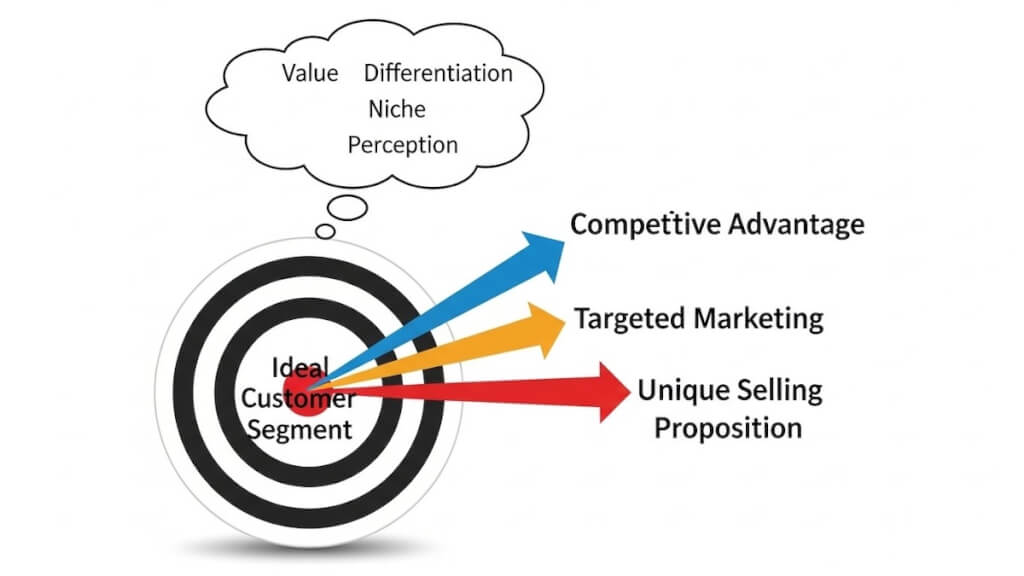
Here’s what most new service companies get wrong about launch strategy. They think compound growth in marketing means reaching more people. Actually, it means consistently reinforcing the same clear value to the right people.
When your positioning is sharp, multiple things happen at once. Your website copy becomes clearer. Your outbound messaging grows stronger. Your team can explain what you do in a sentence. Prospects start referring you more consistently because they can actually remember what you do.
That consistency builds authority. Each prospect who encounters your message understands what you solve and for whom. They tell others. Word of mouth accelerates. Your marketing investment multiplies, not because you’re spending more, but because every pound of marketing spend now works harder.
Consider the alternative. If your message is “we offer services A, B, C, and D,” nobody remembers it. Nobody refers you confidently. Your team sounds uncertain in client conversations. Your website traffic doesn’t convert as well because visitors aren’t sure whether you’re right for them.
The compound effect works both ways.
Strategic Positioning Isn’t About Limiting Growth
I can sense the objection already. If you focus on one service at launch, aren’t you capping your potential?
Actually, no. You’re investing in the right foundation.
Positioning strategy for startups works best when you think in phases. Your launch phase isn’t your forever phase. It’s your credibility-building phase. When you establish clear authority in one core service, you build a platform for expansion later.
The companies that successfully expand their service offerings start with ruthless focus. They dominate a specific problem for a specific market. They build testimonials, case studies, and referral networks around that core offering. Then, from a position of strength and established authority, they layer on complementary services.
Those customers already know you deliver on your promises. They’re ready to try your other offerings. They trust your judgment. You’ve earned the right to introduce complexity.
But launching with complexity? That’s where positioning strategy fails. You’re building in the wrong order.
How To Make Your Positioning Decision
If you’ve got multiple services and you’re unsure where to focus, start with this question: What’s the one service that would break your business if you stopped offering it?
That’s likely your core. That’s what you should emphasise at launch.
Next, identify your ideal customer. Not “small companies.” Specifically: manufacturers in the West Midlands with 15 to 40 staff? Legal services firms struggling with business development? E-commerce retailers under-using their email lists? The more specific, the sharper your messaging becomes.
Now craft your launch messaging around that intersection. How does your core service solve the specific problem your ideal customer faces? That becomes your headline. That becomes your positioning.
Your other services aren’t abandoned. They’re simply held in reserve until you’ve established authority. You mention them only when relevant to a specific prospect’s situation.
This is disciplined marketing. It’s also the approach that works.
The Launch Phase Advantage
Here’s what launch positioning gives you. Focused messaging creates clarity. Clarity attracts the right prospects. Those prospects become customers faster because you’re already speaking their language. They become advocates because you’ve solved their specific problem with precision, not superficial breadth.
From that platform, expansion becomes easier. You’ve established credibility. Your team understands your customer deeply. Your marketing infrastructure is built around clarity, not confusion.
The alternative, broadcasting everything from day one, leaves you perpetually explaining yourself. You’re always fighting the perception of being a generalist. You’re always trying to educate prospects about which of your services matters for them. That’s expensive, uncertain, and slow.
Focus changes the trajectory. Your launch messaging attracts customers who value expertise. Your positioning becomes the anchor point for everything else your company does.
The jack-of-all-trades trap becomes irrelevant because you’re not trying to be that. You’re being brilliant at something specific. That’s a very different position to compete from, and it’s where new service companies consistently win.
References and Further Reading
[1] Full Funnel. Marketing Positioning: 6-Step Guide to Win in 2023. https://fullfunnel.io/marketing-positioning/
[2] MyKpono. How to Develop Strategic Messaging and Positioning. https://www.mykpono.com/strategic-communication-how-to-develop-strategic-messaging-and-positioning/
[3] Brandwell. Brand Dilution, and how to Avoid it. https://brandwell.com.au/brand-dilution-and-how-to-avoid-it/
[4] Digital Leadership. Focused Differentiation Strategy Vs Broad Differentiation Strategy. https://digitalleadership.com/glossary/focused-differentiation-strategy-vs-broad-differentiation-strategy/
[5] M Accelerator. How Startups Can Refine Positioning for Niche Markets. https://maccelerator.la/en/blog/entrepreneurship/how-startups-can-refine-positioning-for-niche-markets/
[6] Flux Branding. Compound Interest of Brand Equity. https://fluxbranding.com/the-compound-interest-of-brand-equity/
[7] Salesforce. Build Product Messaging and Positioning That Stands Out. https://www.salesforce.com/blog/build-product-messaging-and-positioning/
[8] Stripe. How to Determine Market Positioning for Your Startup. https://stripe.com/gb/resources/more/how-to-determine-market-positioning-for-your-startup



Leave a Reply