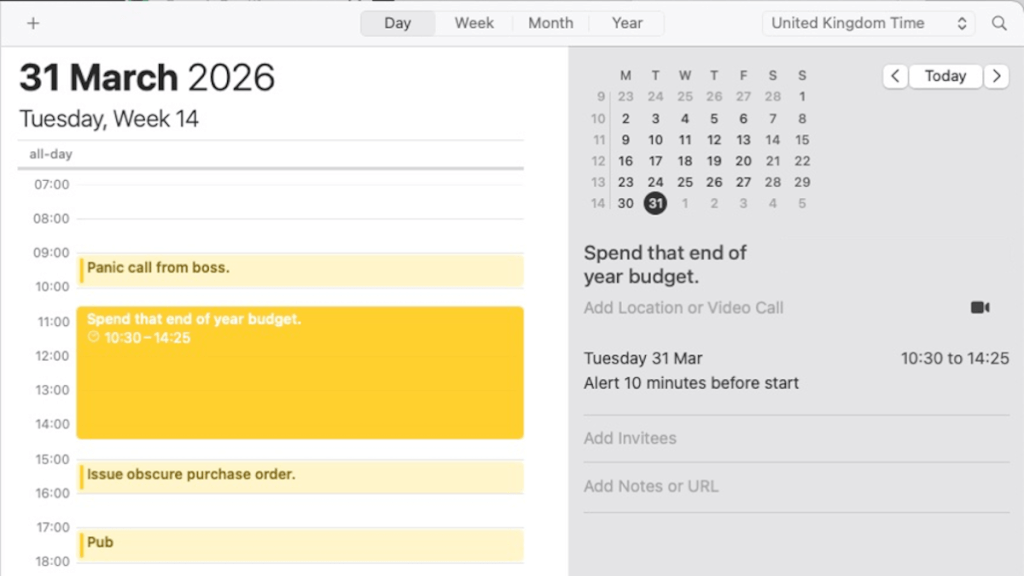
As a B2B marketing consultant working with UK SMEs, I have seen the same strange pattern repeat itself every December and March. Marketing directors start behaving oddly, finance teams develop nervous twitches, and normally rational business owners make decisions that seem to defy logic. The culprit? Fiscal year-end pressure. Let’s look at how this can knowledge can be use in year-end marketing strategies.
December marks the financial year-end for the US and 142 other countries, while March signals the same panic for the UK and 22 nations including Australia and Japan (click here for more on country fiscal year end dates). These periods trigger predictable yet bizarre behaviours that smart B2B marketers can exploit. Let me explain what actually happens and how your SME can turn this annual madness to your advantage.
The “Use It or Lose It” Phenomenon
The most powerful force driving year-end behaviour is the “use it or lose it” budget rule. Most marketing budgets do not roll over into the next financial year. If you have not spent it by the deadline, that money vanishes forever[1]. This creates an artificial urgency that transforms normally cautious buyers into motivated decision-makers.
I have witnessed marketing managers frantically signing off on campaigns in late March that they have debated for months. The IPA Bellwether Report shows this pattern clearly, with sales promotion budgets rising when main media budgets fall, indicating a shift to short-term tactics during uncertain periods[2]. The psychology is simple: nobody wants to explain to finance why they left money on the table, especially when it might result in a smaller budget next year.
What fascinates me is how this behaviour creates a window of opportunity. When your competitors are either spending wildly without strategy or, conversely, cutting budgets prematurely, you can maintain a steady, strategic presence that stands out precisely because it is not panicked.
Why December Is Actually a B2B Opportunity
Here is what seems counterintuitive but is absolutely true: while consumer brands go crazy in December, many B2B companies slash their marketing spend. Financial institutions, for example, cut checking-account acquisition advertising by an average of 63% from November to December[3]. Yet consumer demand does not slow in the same way, and B2B buyers are still online, scrolling, shopping, and absorbing messages[3].
This creates a perfect storm for UK B2B SMEs. Your competitors disappear just when decision-makers have more thinking time. The brands that stay visible in December are already top of mind when buyers return in January ready to act[3]. I have seen this work brilliantly for my clients who maintain a modest but consistent LinkedIn presence and targeted email campaigns during the festive period.
The data supports this approach. December remains one of the highest-conversion months when you focus on last-minute shoppers and year-end decisions[4]. For B2B, this means targeting procurement teams who need to exhaust budgets and decision-makers planning for the new year.
March Year-End: The UK B2B Reality
For UK SMEs, March is our December. The end of the financial year on 5 April creates a unique set of pressures. According to B2B Marketing research, 26.2% of UK agencies end their financial year in March[5], which directly impacts service delivery and client priorities.
What I observe every March is a split in behaviour. Approximately 30% of businesses have already exhausted their budgets and shut down marketing activity by mid-March. Another 40% realise they have underspent and enter panic mode, approving campaigns they have delayed for months. The remaining 30% maintain steady, planned activity and consistently outperform the others.
The UK government budget announcements in March or April add another layer of complexity. The Autumn Budget 2025 introduced measures that reshape household finances and business strategies, influencing how much companies will spend in the coming year[6]. Smart SMEs monitor these announcements and adjust their March messaging accordingly, positioning themselves as stable partners during uncertain times.
Odd Behaviours I Have Observed
Let me share some genuinely strange behaviours I have witnessed during fiscal year-ends. These are real examples from my consulting practice, anonymised to protect the guilty.
The Midnight Invoice: A marketing director once called me at 13.30 on 31 March, desperate to issue an invoice that day for work we had not even scoped. They had found budget surplus and needed to commit it before midnight. We ended up creating a “strategic planning retainer” that delivered genuine value, but the panic was palpable.
The Trade Show Obsession: Every December, I see companies book expensive exhibition stands at February trade shows they have no plan to leverage. The logic is simple: “We have budget left, trade shows are expensive, therefore we should book one.” No audience analysis, no lead generation strategy, just budget exhaustion[7].
The Content Splurge: Businesses commission twelve blog posts in the final week of March, then publish them all in three days. This burst of activity looks impressive for about a week, then damages their SEO and audience engagement for months.
The Mysterious Disappearance: Some marketing managers simply stop responding to emails in late March. They have hit their budget limit and are terrified of being asked to do anything that might require spending money they do not have.
These behaviours are not just amusing anecdotes; they represent systemic failures in marketing planning that your SME can exploit.
Smart Strategies for UK B2B SMEs
Here is how to turn this annual chaos into your competitive advantage. These strategies work because they are based on how humans actually behave under pressure, not how we wish they would behave.
Plan for the Panic
Build your annual marketing calendar around these predictable pressure points. I advise clients to hold back 15-20% of their budget specifically for year-end opportunities. This is not about being reckless; it is about being ready when competitors are either absent or desperate[7].
Target the “Use It or Lose It” Buyers
Create a specific campaign for late March targeting procurement teams and marketing managers who need to spend remaining budget. Position your service as a “strategic investment” that delivers value in the new financial year. Case studies work brilliantly here, especially those showing ROI within the first quarter[8].
Maintain Presence When Others Vanish
If your competitors cut December activity, increase yours modestly. You do not need to match their peak spend; you just need to be visible. A targeted LinkedIn campaign costing £500-£1,000 can deliver exceptional ROI when the platform is less crowded[9]. The same applies to March for UK-focused campaigns.
Prepay for Next Year
If you genuinely have surplus budget, prepay for next year’s activity. This could mean commissioning content libraries, booking advertising slots at 2025 prices, or investing in team training and certifications[10]. These moves make finance happy because they use this year’s budget while setting you up for success next year.
Launch Account-Based Marketing Sprints
Use year-end budget for focused Account-Based Marketing (ABM) sprints targeting your “dream customer” list[9]. The shortened timeframe creates urgency and forces sales and marketing alignment. I have seen two-week ABM sprints in late March deliver more qualified leads than three months of general activity.
Optimise What Already Works
Rather than launching untested campaigns, use year-end funds to boost high-performing channels. Pay to promote your best organic LinkedIn posts, refresh successful Google Ads campaigns, or create video versions of your most popular blog content[7]. This is the lowest-risk way to spend surplus budget.
What Not to Do
Learning from others’ mistakes is cheaper than making your own. Here are the worst ways I have seen B2B SMEs waste year-end budget.
Do not book random trade shows without a clear lead capture and follow-up strategy. A £5,000 exhibition stand generates nothing but expense if you have not planned how to measure ROI[7].
Do not commission content you cannot publish strategically. Twelve blog posts dumped on your website in three days damages your SEO and overwhelms your audience[7].
Do not buy marketing technology you have not tested. That shiny new CRM or automation platform will not magically fix problems next year if you have not scoped your requirements properly[7].
Do not stop marketing entirely. Some SMEs cut all activity in December or March, assuming buyers are distracted. This is when your competitors are making the same mistake, creating a perfect opportunity for you to stand out[3].
References and Further Reading
[1] Use It Or Lose It: Why Your B2B Marketing Budget Should … https://www.gclb2b.com/blog/use-it-or-lose-it-why-your-b2b-marketing-budget-should-work-until-the-very-last-drop/
[2] Marketing budgets fall for first time in four years. https://www.marketingweek.com/budgets-down-bellwether/
[3] Banks Need to Refresh Year-End Marketing. https://thefinancialbrand.com/news/bank-marketing/maybe-there-is-a-santa-but-a-holiday-slowdown-for-bank-and-credit-union-market
[4] December 2025 Digital Marketing Guide. https://fastersolutions.com/december-2025-digital-marketing-guide-seasonal-strategy-whats-changing-in-marketing/
[5] 2025 trends and challenges revealed: The state of UK B2B marketing agencies. https://www.b2bmarketing.net/marketing-agencies-uk/
[6] Autumn Budget 2025: What marketers need to know. https://www.cim.co.uk/content-insights/articles/autumn-budget-2025-what-marketers-need-to-know/
[7] The 7 Worst Ways to Spend End-of-Year B2B … https://www.toprankmarketing.com/blog/spend-eoy-b2b-marketing-budget/
[8] Optimize ABM Strategy: Targeting Key Prospects with EOY … https://vereigenmedia.com/optimize-your-abm-strategy-targeting-key-prospects-with-eoy-budgets/
[9] What are the top B2B lead generation tactics in the UK right now. https://www.themarketingcentre.com/blog/top-b2b-lead-generation-tactics-in-the-uk-right-now
[10] 6 Smart Ways to Spend Unused Marketing Budget https://www.cmswire.com/digital-marketing/write-the-eoy-checks-6-smart-ways-to-spend-unused-marketing-budget/
[11] Master Year-End Holiday Marketing Strategies 2025. https://growthanalytica.co.uk/year-end-holiday-marketing-campaign-the-complete-strategy-guide-for-2025
[12] B2B Marketing Guide: Strategy, Trends & Best Practices 2025. https://www.loop-digital.co.uk/marketing-insights-news/b2b-marketing-guide/
[13] Marketing Budget Guide 2025: Allocation Tips & Examples. https://improvado.io/blog/marketing-budget-allocation
[14] How to get the best from your marketing budget. https://www.experian.co.uk/blogs/latest-thinking/small-business/how-to-get-the-best-from-your-marketing-budget/
[15] UK Trends to Watch in 2026. https://www.emarketer.com/content/uk-trends-watch-2026
[16] How to transform the impact of your B2B marketing. https://www.smetoday.co.uk/news/how-to-transform-the-impact-of-your-b2b-marketing/
[17] Decoding December: Sales Metrics That Matter. https://myfbaprep.com/blog/conversions/december-sales-metrics/
Fiscal Year End Dates: Global Overview
Countries with December (Calendar Year) Fiscal Year End: 143 countries
The vast majority of countries globally follow the standard calendar year (1 January to 31 December) as their fiscal year. This includes major economies and nearly two-thirds of all nations, spanning Europe (France, Germany, Italy, Spain), Asia (China, South Korea, Vietnam, Taiwan), the Middle East (Saudi Arabia, UAE, Iraq), Africa (Nigeria, Kenya, Egypt, South Africa for non-government), and the Americas (Brazil, Argentina, Mexico, Chile).
Countries with March (1 April to 31 March ) Fiscal Year End: Approximately 22 countries
Only a small subset of nations use the April-March fiscal year, predominantly former British Commonwealth nations and countries influenced by the British colonial system. This group includes:
- Government/Official fiscal years: India, Japan, United Kingdom, Canada, Australia (companies), New Zealand (companies), Hong Kong (government), Singapore (government), South Africa (government), Myanmar
- Small nations: Antigua and Barbuda, Barbados, Belize, Botswana, Brunei, Jamaica, Kuwait, Lesotho, Namibia, Qatar, Saint Lucia, Eswatini
- US exception: New York State (31 March ) and Texas (31 August ) use non-standard fiscal years compared to the federal government
Context and Patterns
The April-March fiscal year predominantly reflects British colonial legacy, implemented originally in 1867 when Britain reorganised India’s fiscal administration. Most countries that independently adopted or maintained this system do so for administrative, agricultural, or cultural reasons rather than calendar synchronisation with international business practices.
The December fiscal year dominates globally due to its alignment with the natural calendar and international accounting conventions, making financial reporting, taxation, and business operations more uniform across borders.



Leave a Reply