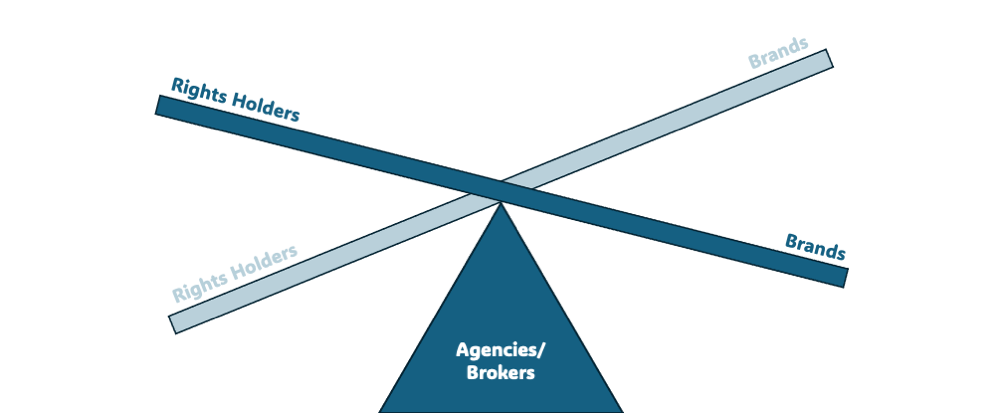
In the fast-moving world of sponsorship, where relationships between brands, rights holders and intermediaries generate billions of pounds annually, I recently had conversations with two industry experts that revealed something fascinating. When asked about the core concerns driving each player in the sponsorship ecosystem, three distinct but interconnected fears emerged that create a fascinating paradox of friction and opportunity.
The Expert’s Insights: Three Fundamental Fears
The expert’s responses were remarkably clear. Sponsors obsess about achieving return on investment (ROI) and return on objectives (ROO). Rights holders worry about driving revenue whilst standing out in an increasingly competitive marketplace. Meanwhile, intermediaries focus relentlessly on profitability and building sustainable business models.
These aren’t simply business concerns – they represent fundamental anxieties that shape every decision, negotiation and relationship in the sponsorship industry[1][2][3]. What makes this particularly interesting is how these fears create both barriers and bridges between the different parties involved.
The Friction Created by Misaligned Fears
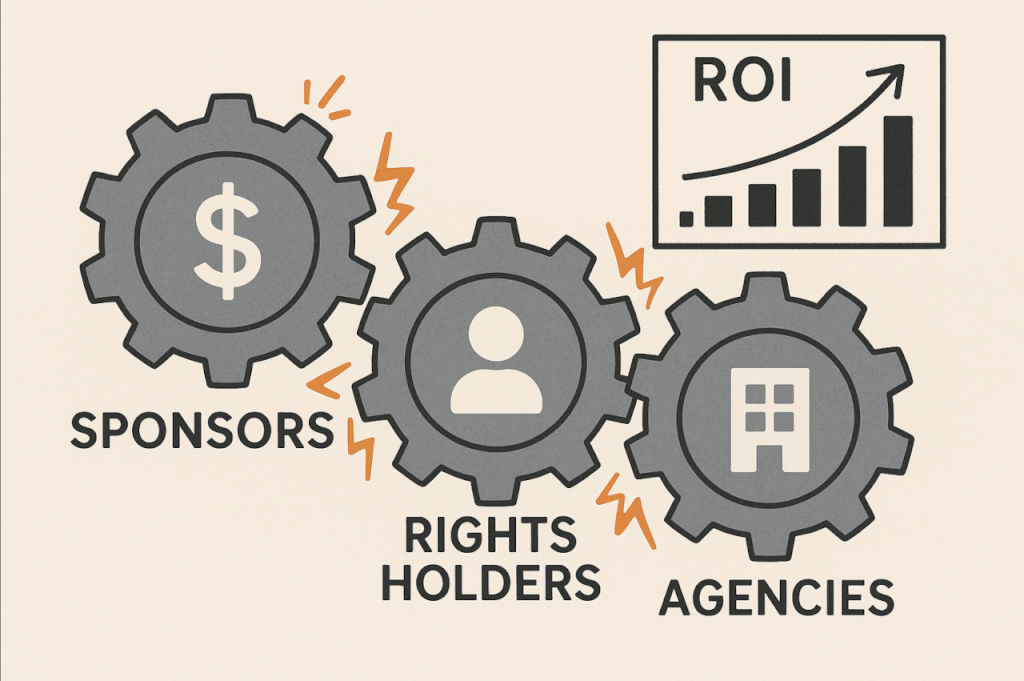
The most significant friction occurs when these distinct concerns fail to align properly. Consider how a sponsor’s demand for measurable ROI[4] collides with a rights holder’s need for maximum revenue generation. This creates what I call the “measurement paradox” – sponsors want concrete data proving their investment works, but many rights holders still struggle to provide sophisticated analytics beyond basic exposure metrics[5][6].
Research shows that despite the sponsorship market’s continued growth to over £70 billion globally in 2025[3], a staggering 60% of chief marketing officers face increasing pressure to prove the financial impact of their sponsorship investments[7]. Meanwhile, brands typically spend just 1% or less of their sponsorship budgets on post-evaluation measurement[8].
This measurement gap creates tension between sponsors demanding accountability and rights holders who may lack the sophisticated data infrastructure to provide it. The result is often a relationship built on assumptions rather than evidence, leading to dissatisfaction on both sides.
Similarly, intermediaries caught between these competing pressures face their own challenges. They must demonstrate value to both sponsors and rights holders whilst maintaining profitable margins in an increasingly competitive market[9]. When commission structures aren’t transparent or when agencies receive compensation from multiple sources within a campaign, as much as 40% of the total budget can disappear through mark-ups and commissions[10].
The Competition Conundrum
Another layer of friction emerges from the competitive marketplace that rights holders inhabit. With over 10,000 brands now involved in sponsorships compared to 7,200 in 2019[11], rights holders face unprecedented competition for sponsor attention. This drives them towards increasingly aggressive revenue targets, sometimes at the expense of delivering genuine value to their partners.
The temptation becomes to oversell rights packages or promise deliverables that cannot realistically be achieved[12]. When rights holders focus primarily on revenue generation without sufficient consideration of sponsor objectives, partnerships become transactional rather than strategic[13]. This creates a vicious cycle where sponsors become more demanding and risk-averse, further complicating the relationship dynamic.
Meanwhile, sponsors facing their own pressures are consolidating their portfolios, choosing fewer partnerships with more focused campaigns[14]. This “fewer but better” approach means rights holders compete more fiercely for a smaller pool of committed partners, intensifying the revenue pressure that drives their initial concerns.
The Trust Deficit
Perhaps the most damaging friction occurs when these competing concerns erode trust between parties. When sponsors cannot see clear evidence of ROI, when rights holders feel pressured to overpromise, and when intermediaries’ compensation structures lack transparency, the foundation for genuine partnership crumbles.
This trust deficit manifests in several ways. Sponsors develop increasingly complex contracts with extensive termination clauses and performance requirements[15][16]. Rights holders respond by becoming more conservative in their promises or more aggressive in their pricing. Intermediaries, caught in the middle, sometimes resort to short-term thinking that prioritises immediate commissions over long-term relationship building.
The legal complexities surrounding sponsorship agreements have grown correspondingly complex, with contracts now requiring extensive provisions for everything from missed rights delivery to reputational risk management[17][16]. This legal arms race, whilst necessary for protection, adds layers of complexity that can inhibit the collaborative spirit essential for successful partnerships.
The Opportunity in Alignment
However, these friction points also represent tremendous opportunities when properly addressed. The most successful sponsorship relationships occur when the different parties’ core concerns complement rather than conflict with each other.
Forward-thinking sponsors are recognising that investing in proper measurement infrastructure benefits everyone[4][18]. When sponsors share their data and insights with rights holders, it enables properties to demonstrate value more effectively and optimise their offerings. This creates a virtuous cycle where better measurement leads to better partnerships, which in turn justifies increased investment.
Similarly, rights holders who invest in understanding their audiences and developing sophisticated analytics capabilities find themselves better positioned to command premium pricing whilst delivering genuine value[5][19]. The most successful properties are those that can prove not just exposure, but actual business impact for their partners.
The Data Revolution
One of the most exciting developments is how technology is beginning to resolve some of these traditional friction points. Advanced analytics platforms now enable real-time tracking of sponsorship performance across multiple channels[2][20]. Artificial intelligence and Bayesian methods are revolutionising how sponsorship ROI is measured, moving beyond simple exposure metrics to sophisticated impact analysis[4].
Belgian startup Wehave.io exemplifies this transformation, enabling sponsors to track actual customer spend directly attributable to sponsorship activities[20]. In one example with Belgian Pro League side Anderlecht, a partner demonstrated 9,000 new customers within 18 months, directly traceable to the club’s fan base, with an estimated value of €7 million. This represents a fundamental shift from estimated impact to proven results.
This technological advancement addresses sponsors’ ROI concerns whilst providing rights holders with compelling value propositions they can confidently present to potential partners. For intermediaries, it creates opportunities to offer more sophisticated services and justify higher fees through demonstrable results.
The Evolution of Partnership Models
The friction between different stakeholders is also driving innovation in partnership structures. Rather than traditional sponsorship models focused primarily on logo visibility, we’re seeing the emergence of more collaborative approaches that align different parties’ interests more effectively[21][22].
Virtual sponsorships and digital-first activations are creating new opportunities for measurement and engagement whilst reducing some traditional risks[21]. Brands can now update creative messaging in real-time, localise content for different markets, and access detailed performance data that was impossible with traditional advertising methods.
Purpose-driven partnerships are becoming increasingly important, with 64% of sponsors now prioritising brand value alignment in their top three partner selection criteria[23]. This evolution addresses rights holders’ need to differentiate themselves whilst meeting sponsors’ desire for authentic brand associations that resonate with target audiences.
The Sustainability Challenge
Looking forward, the sponsorship industry faces additional pressures that could either exacerbate existing friction or create new opportunities for alignment. Environmental, social and governance (ESG) considerations are becoming increasingly important, with almost half of brands not yet using their sponsorships to advance sustainability and social equity agendas[8].
This represents both a challenge and an opportunity. Rights holders who can demonstrate genuine commitment to sustainable practices and social impact may find themselves better positioned to attract sponsors facing their own ESG pressures. However, those who cannot adapt may find themselves increasingly marginalised in a market where purpose-driven partnerships are becoming the norm.
The Path Forward
The friction created by the different fears and concerns of sponsors, rights holders and intermediaries is not inherently negative. Instead, it represents a natural tension that, when properly managed, can drive innovation and improvement across the entire ecosystem.
The key lies in recognising that these different concerns are not mutually exclusive but rather complementary aspects of a healthy sponsorship ecosystem. Sponsors’ demand for ROI drives rights holders to become more professional and data-driven in their approach. Rights holders’ revenue pressures encourage innovation in partnership models and activation strategies. Intermediaries’ focus on profitability ensures that only genuinely valuable services survive in the marketplace.
Success in this environment requires moving beyond zero-sum thinking towards collaborative approaches that address all parties’ core concerns simultaneously. This means sponsors investing in proper measurement infrastructure, rights holders developing sophisticated audience insights and analytics capabilities, and intermediaries focusing on transparent, value-driven service models.
The sponsors who will thrive are those who view their partnerships as investments in long-term brand building rather than short-term visibility purchases. The rights holders who will succeed are those who can demonstrate clear business impact for their partners whilst maintaining the authentic connections with their audiences that make them valuable in the first place. The intermediaries who will prosper are those who can facilitate these deeper, more strategic relationships rather than simply brokering transactions.
The Future of Friction
As we look towards the future of sponsorship, the friction between different stakeholders’ concerns will likely continue to evolve. New technologies will create new opportunities for measurement and engagement whilst also raising new questions about data privacy and audience authenticity. Changing consumer expectations around brand purpose and social responsibility will add new dimensions to partnership evaluation.
However, the fundamental dynamic – where different parties’ fears and concerns create both challenges and opportunities – is likely to persist. The question is not how to eliminate this friction, but how to harness it constructively to drive continued evolution and improvement in sponsorship effectiveness.
The most successful players in this ecosystem will be those who understand that their partners’ concerns are not obstacles to overcome but opportunities to create value. When sponsors, rights holders and intermediaries can align their different but complementary objectives, the result is partnerships that deliver genuine value for all involved whilst creating authentic connections with audiences that drive long-term business success.
In this light, the friction created by different fears and concerns becomes not a problem to solve but a dynamic force that drives the industry forward. The challenge lies not in eliminating these tensions but in learning to dance with them, using the creative energy they generate to build stronger, more effective partnerships that serve everyone’s interests whilst delivering genuine value to the audiences that make it all worthwhile.
References and Further Reading
The insights in this post are drawn from extensive industry research and analysis, including reports from Nielsen Sports, European Sponsorship Association, IEG, Performance Research, and leading sponsorship analytics platforms. Key trends around measurement, partnership consolidation, and the evolution towards purpose-driven sponsorship were particularly influential in shaping these observations.
[1] How to holistically measure return on sponsorship investment https://nielsensports.com/how-to-holistically-measure-return-on-sponsorship-investment/
[2] 7 Key Metrics to Measure Sponsorship ROI – Wehave https://www.wehave.io/insights/7-key-metrics-to-measure-sponsorship-roi
[3] Sports Sponsorship Market Report 2025 https://www.researchandmarkets.com/reports/5820009/sports-sponsorship-market-report
[4] Measuring Sponsorship ROI Using AI and Bayesian Methods – Kantar https://www.kantar.com/inspiration/advertising-media/achieve-gold-for-your-sponsorship
[5] 14 Key Sports Sponsorship Metrics To Measure – VISUA https://visua.com/sponsorship-analysis-the-14-key-metrics-to-measure
[6] Global Sponsorship Trends 2025 – Lumency https://lumency.co/2025/01/22/global-sponsorship-trends-report/
[7] Proving The Financial Contribution Of Sponsorships To The Business https://www.forbes.com/sites/forbesinsights/2020/02/09/proving-the-financial-contribution-of-sponsorships-to-the-business/
[8] Brands missing social opportunities of sponsorship https://wfanet.org/knowledge/item/2023/11/28/Brands-missing-social-opportunities-of-sponsorship
[9] The Top Eight Issues in Sponsorship Sales/Strategy Consulting … https://www.linkedin.com/pulse/big-issues-sponsorship-salesstrategy-consulting-john-dorsey
[10] Supporting marketing procurement for sponsorship https://redmandarin.com/our-sponsorship-services-2/supporting-marketing-procurement-for-sponsorship/
[11] 2025 Sponsorship Research Study: Sponsorship Rising – LinkedIn https://www.linkedin.com/pulse/2025-sponsorship-research-study-rising-sponsorshipassociation-6nacc
[12] Why sports rights holders are losing the sponsorship game https://www.campaignlive.co.uk/article/why-sports-rights-holders-losing-sponsorship-game/1583514
[13] ‘Rights holders should do more to deliver value for sponsors’ https://www.marketingweek.com/rights-holders-should-do-more-to-deliver-value-for-sponsors/
[14] More is less: the risks of a broad sponsorship portfolio that neglects … https://www.thesponsor.com/more-is-less-the-risks-of-a-broad-sponorship-portfolio-that-neglects-brand-alignment/
[15] A legal overview of sponsorship | marketinglaw https://marketinglaw.osborneclarke.com/media-and-ip/a-legal-overview-of-sponsorship/
[16] Sponsorship contracts: What could possibly go wrong? – The Sponsor https://www.thesponsor.com/sponsorship-contracts-what-could-possibly-go-wrong/
[17] Sponsorship Law: A Guide to Dispute Resolution https://www.numberanalytics.com/blog/sponsorship-law-guide-dispute-resolution
[18] Determining sponsorship ROI – Kantar https://www.kantar.com/north-america/inspiration/brands/determining-sponsorship-roi
[19] How to Measure Sponsorship Effectiveness Across the Sports … https://blog.relometrics.com/how-to-measure-sponsorship-effectiveness-across-the-sports-marketing-funnel
[20] Beyond impressions: Measuring sponsorship ROI in real sales https://www.thesponsor.com/beyond-impressions-measuring-sponsorship-roi-in-real-sales/
[21] The Rise of Virtual Sponsorships: Trends for 2025 – Winmo https://www.winmo.com/sponsorship/the-rise-of-virtual-sponsorships-trends-for-2025/
[22] The New Expectations with Sponsorship and Sports Marketing https://www.sd.team/insights/realigning-expectations-in-sports-marketing-and-sponsorship
[23] Football Sponsorship Trends in 2025: What Brands Want – fcbusiness https://fcbusiness.co.uk/news/football-sponsorship-trends-in-2025-what-brands-want/

Leave a Reply