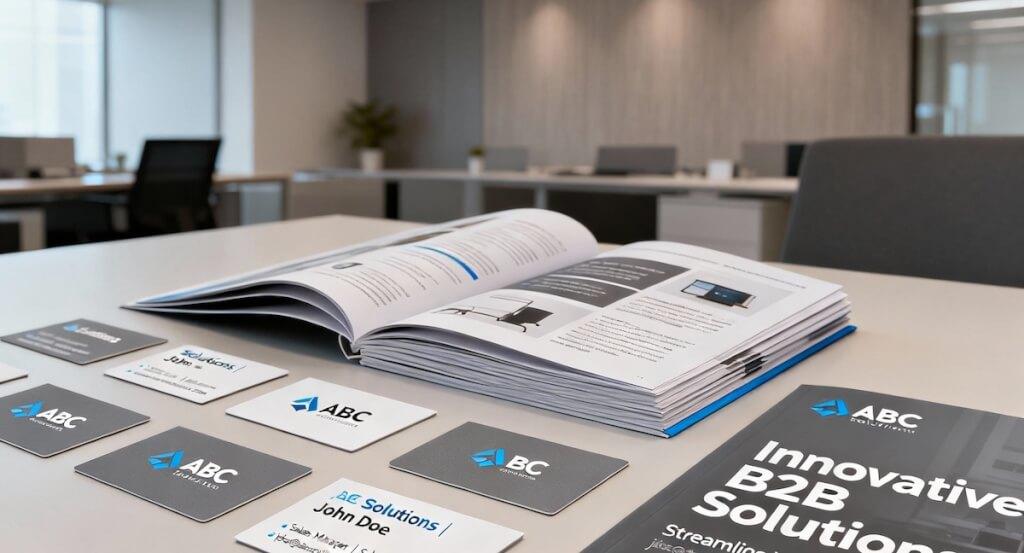
That business card sitting on my desk for four weeks has become more than just contact information. It’s been a constant reminder of a potential partnership, silently advocating for its owner every time I glance at it. This simple observation highlights a crucial gap in our increasingly digital B2B marketing approach – we may be losing the powerful benefits that physical materials provide.
The Science Behind Physical Marketing Impact
The evidence supporting physical marketing materials is compelling and rooted in neuroscience. Research from Millward Brown using fMRI brain scans reveals that tangible materials leave a “deeper footprint” in the brain compared to digital alternatives[1]. Physical materials generate more activity in brain regions associated with visual and spatial information integration, making them feel more “real” to our brains[1].
Studies consistently show that print materials achieve a 78% recall rate, significantly higher than digital’s 30% rate[2]. The Temple University research found that physical direct mail requires 21% less cognitive effort to process than digital advertisements, whilst generating 75% unaided recall compared to just 44% for digital[3].
The Retention Reality
Physical marketing materials demonstrate remarkable staying power in B2B environments. UK market research shows that print marketing materials achieve average retention periods of 17 days in households compared to just 2 seconds for digital advertisements[4]. Physical catalogues drive 15% higher average order values than their digital counterparts[4].
Business cards exemplify this retention advantage perfectly. Whilst 88% of paper business cards are eventually discarded, they typically remain visible for days or weeks before disposal[5]. During this period, they serve as constant brand reminders – exactly what happened with that card on my desk.
The Trust Factor in B2B Relationships
Credibility remains paramount in B2B marketing, where decisions often involve substantial investments and long-term commitments. Research indicates that 87% of UK consumers consider physical mail more believable than email communications[4]. This credibility translates directly to B2B contexts where trust drives purchasing decisions.
Physical materials create what psychologists term the “tangible effect” – when prospects can touch and hold marketing materials, they assign higher perceived value to the brand[6]. This tactile engagement activates haptic memory, leading to stronger emotional connections and improved recall[7].
The Digital Saturation Problem
B2B decision-makers face unprecedented digital overwhelm. The average executive receives hundreds of emails weekly, encounters countless online advertisements, and navigates through saturated LinkedIn feeds. In this environment, physical materials cut through the noise effectively.
Direct mail campaigns achieve a 4.4% response rate compared to digital marketing’s 0.12% average[2]. This dramatic difference reflects growing digital fatigue among B2B audiences who increasingly tune out electronic communications[8].
What B2B Marketing Can Learn
The evidence suggests several key insights for B2B marketers:
Physical materials enhance memory encoding. When prospects physically interact with brochures, business cards, or printed case studies, they engage multiple senses simultaneously. This multi-sensory experience strengthens neural pathways, making brand information more accessible during decision-making moments[9].
Tangible touchpoints extend engagement duration. Unlike digital content that disappears with a scroll or click, physical materials occupy space and demand attention. They create what researchers call “forced exposure” – prospects must physically handle or move them, increasing processing time[8].
Print conveys permanence and investment. High-quality physical materials signal that companies are established and committed to their brand image. This perception particularly matters in B2B contexts where prospects evaluate supplier stability and professionalism[10].
Simple Actions for Immediate Impact
B2B companies can implement straightforward strategies to capture physical marketing benefits:
Strategic business card distribution remains highly effective. Ensure cards feature distinctive design elements, premium paper stock, or unique finishes that encourage retention. Include QR codes linking to digital resources, creating hybrid engagement opportunities[11].
Post-meeting material packets can reinforce key messages. Following important presentations, send physical packages containing case studies, product specifications, or company information. These materials serve as tangible reminders of your discussion whilst prospects evaluate options[12].
Direct mail campaigns targeting key accounts yield impressive returns. Research shows direct mail generates an average ROI of 112%, outperforming email (93%), paid search (88%), and social media advertising (81%)[2].
Printed case studies and testimonials carry enhanced credibility compared to digital versions. Physical documents feel more substantial and trustworthy, particularly when showcasing complex B2B solutions or significant client successes[13].
Trade show materials should emphasise tactile experiences. Provide high-quality brochures, product samples, or branded items that prospects can take away. These materials extend your presence beyond the event duration[14].
The Hybrid Approach
The most effective B2B marketing strategies combine physical and digital touchpoints strategically. Royal Mail research demonstrates that integrated campaigns using both mail and digital channels achieve 40% higher engagement than digital-only approaches[15].
Consider using physical materials to drive digital engagement through QR codes, personalised URLs, or custom discount codes. This approach provides measurable tracking whilst leveraging print’s superior recall and credibility benefits[2].
Physical materials work particularly well for high-value prospects or complex sales cycles where multiple touchpoints influence decisions. They demonstrate investment in the relationship whilst providing lasting reminders of your value proposition.
Making It Work
The key lies in viewing physical materials as relationship investments rather than marketing expenses. That business card on my desk represents exactly this principle – a small physical presence generating ongoing brand awareness and consideration.
Modern B2B marketing shouldn’t abandon digital channels but rather recognise where physical touchpoints add unique value. In an increasingly digital world, tangible materials stand out precisely because they’re unexpected and memorable.
The evidence clearly supports incorporating physical elements into B2B marketing strategies. From enhanced memory retention to improved credibility, physical materials provide benefits that digital alternatives cannot replicate. The question isn’t whether to use physical marketing, but how to integrate it effectively with digital approaches for maximum impact.
Further Reading and References
[1] Paper Beats Digital For Emotion – Neuroscience Marketing https://www.neurosciencemarketing.com/blog/articles/paper-vs-digital.htm
[2] High ROI with Print Marketing: Why Print Still Matters https://vpress.com/blog/high-roi-with-print-marketing-why-print-still-matters
[3] Why Tangible Branding Still Wins in a Digital-First World https://www.noobpreneur.com/2025/09/26/why-tangible-branding-still-wins-in-a-digital-first-world/
[4] Traditional Print in a Digital Age: UK Market Insights https://spectrum-printing.co.uk/blog/blog-post-title-one-5gmxr-d9elt
[5] Best Alternatives to Printed Business Cards in 2025 https://blinq.me/blog/best-alternatives-to-printed-business-cards-in-2025
[6] Why Tangible Marketing Materials Create Stronger … https://metzgers.com/updates/why-tangible-marketing-materials-create-stronger-customer-connections
[7] The Psychology of Print: How Tangible Media Affects Our … https://royercomm.com/the-psychology-of-print-how-tangible-media-affects-our-brains/
[8] 7 Key Advantages Print Marketing has over Digital Marketing https://www.colorvisionprinting.com/blog/7-key-advantages-print-marketing-has-over-digital-marketing
[9] Why Tangible Merchandise Outlasts Digital Ads https://www.synergy-group.uk/the-science-behind-memorable-marketing/
[10] The Role Of Print Marketing Materials In Building Brand … https://www.thinkdesignandprint.com/2023/12/print-marketing-materials-brand-awareness/
[11] Physical vs. Digital Business Cards: Which is Better for You? https://www.qrcodechimp.com/Digital-Business-Cards-vs-Physical-Business-Cards/
[12] From Touchpoints to Turning Points: B2B Experience … https://www.sendoso.com/resources/blog/from-touchpoints-to-turning-points-what-the-experience-economy-means-for-b2b
[13] 16 Essential B2B Marketing Materials That Drive Results … https://cufinder.io/blog/b2b-marketing-materials-your-blueprint-for-industry-influence-and-success/
[14] Why Brochures Are Still Relevant in 2025 https://www.sitecentre.com.au/blog/why-brochures-are-still-relevant
[15] Print vs Digital: Surprising ROI Stats You Need to Know https://www.printlord.co.uk/print-vs-digital-roi-stats/

Leave a Reply