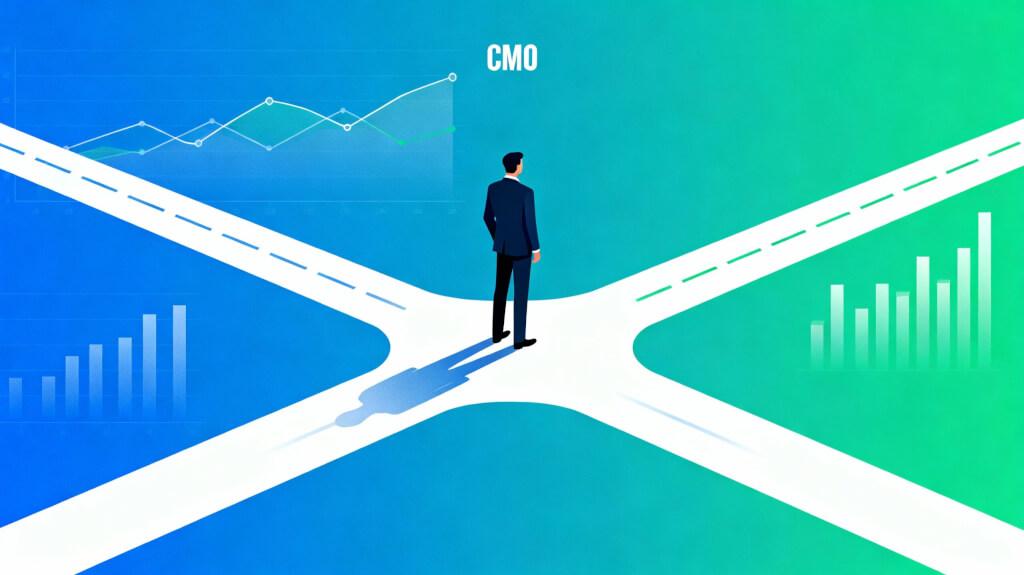
Recognising when your marketing strategy has run its course is one of the hardest calls you’ll make as a CMO in a small or medium-sized enterprise. I’ve been there myself, considering whether to change marketing strategy, staring at underwhelming numbers and wondering whether to persist or pivot. The question isn’t just about the data on your screen – it’s about courage, timing, and knowing the difference between a strategy that needs more time to mature and one that’s fundamentally wrong for your business.
The art of changing marketing strategy in UK SMEs requires both intuition and evidence. Getting it right can unlock growth; getting it wrong can waste precious resources and set you back months. Let me walk you through how to make this critical decision with confidence.
The Reality of Marketing Strategy Change in UK SMEs
Here’s something that might surprise you: recent research reveals that only 31.4% of UK SMEs have a formal marketing action plan in place[1]. That figure has actually fallen from 41.1% in 2020 to just 25.3% by 2024[1]. This tells me that many businesses are operating without a clear strategic framework, which makes recognising when change is needed nearly impossible.
When you don’t have a documented strategy, you’re essentially marketing in the dark[2]. You can’t measure what you haven’t defined, and you certainly can’t know when to change direction if you never set one in the first place.
The challenge for CMOs in SMEs is particularly acute. You’re working with limited budgets – typically between £1,500 and £10,000 per month for most UK SMEs[3] – and you don’t have the luxury of large enterprises that can afford expensive mistakes. Research suggests that up to 60% of marketing budgets can be wasted due to inefficiencies in execution and planning[4], with approximately 25% of PPC budget lost through poor management alone[4].
Understanding When Change Becomes Necessary
Marketing strategy change isn’t about chasing trends or panicking when results dip for a week. It’s about recognising genuine signals that your approach is no longer serving your business goals. Let me share the key indicators I look for.
Performance Plateaus That Won’t Shift
One of the clearest signs is hitting a performance plateau where growth has stalled despite sustained efforts[5]. You’ve tried different marketing tactics, adjusted your spending, and optimised your campaigns, but nothing moves the needle[5]. This plateau often stems from over-reliance on performance-oriented marketing channels[5].
When you reach the point where you cannot drive any more volume through paid channels by increasing spend, it’s time to consider shifting the balance towards brand-building activities[5]. The numbers tell their own story. If your customer acquisition cost (CAC) keeps rising whilst customer lifetime value (LTV) remains flat or falls, you’re fighting a losing battle[5][6].
A healthy LTV to CAC ratio should be at least 3:1[7][8]. If you’re consistently seeing lower ratios despite optimisation efforts, your fundamental strategy may need rethinking, not just tweaking[7].
Metrics That Scream for Attention
The data doesn’t lie, but you need to know which metrics matter. Here’s what I monitor closely.
Conversion rates are perhaps the most revealing metric. If your marketing attracts traffic but those visitors aren’t converting into leads or customers, something is fundamentally wrong with either your targeting or your value proposition[9][10]. You might be attracting the wrong audience entirely – a mismatch between your target clients and those your marketing actually brings in[9].
High bounce rates indicate visitors are leaving your site almost immediately[9]. This usually means bad landing page design, usability problems, or a disconnect between your advertising and what people find when they arrive[9].
Sales velocity is another critical indicator. If you’re seeing inconsistent, unpredictable sales patterns – feast one week, famine the next – your marketing strategy lacks the consistency and systematic approach needed for sustainable growth[11][12].
UK CMOs are increasingly tracking brand awareness as their primary metric, with 62% prioritising it in 2025 compared to just 46% who focused primarily on sales in 2024[13]. This shift reflects a recognition that marketing effectiveness requires both brand-building and performance marketing working in tandem.
Market Conditions That Demand Response
Sometimes the signal comes from outside your organisation. Changes in market demand can render your products or services less relevant[14]. If customer feedback consistently shows your offering isn’t solving a significant problem or that customers are unwilling to pay your asking price, a pivot becomes necessary[15].
Economic downturns create their own pressures. During recession, companies often need to adjust their strategies through cost-cutting, diversification, or shifting focus to more recession-resistant products[14]. The key is responding strategically rather than reactively.
Competitive pressures matter too. If larger players enter your space or a competitor offers something faster, cheaper or better, you may need to narrow your niche or explore underserved markets[15][14].
The Cost of Getting It Wrong
Let’s talk about what concerns most CMOs: the expense of changing direction. Marketing strategy changes aren’t free. They consume time, resources, and opportunity cost.
Opportunity cost is perhaps the most overlooked expense[16][17]. When you invest resources in one marketing approach, you’re implicitly saying no to alternatives[17]. Every choice to persist with an underperforming strategy means you’re not investing those same resources in potentially more effective approaches[16].
The financial implications extend beyond the direct costs of new campaigns or channels. Ineffective marketing strategies lead to lower return on investment, plummeting conversion rates, and potentially a dangerous cycle of increasing spend to try to gain traction[18]. For SMEs with constrained budgets, this can translate into significant financial risk[18].
Brand consistency is another casualty of poorly executed change. When you pivot your strategy too drastically or frequently, you risk confusing your audience and damaging the brand equity you’ve built[19][20]. Tropicana learned this lesson the hard way when a packaging redesign alienated loyal customers[20].
But here’s the counterpoint: the cost of not changing when change is needed can be even higher. Persisting with a failing strategy wastes money, demotivates your team, and allows competitors to capture market share whilst you’re stuck spinning your wheels[18].
Building Confidence in Your Decision
So how do you know when to change and when to persist? Let me share the framework I use.
Give Strategies Time to Work
Marketing isn’t instant. Most marketing experts recommend running a campaign for a minimum of one month, and up to three months, before making significant changes[21]. This allows sufficient time to gather meaningful data and for your marketing efforts to build momentum[21][22].
The concept of adstock – used in marketing mix modelling – demonstrates that advertising effects aren’t immediate or confined to the investment period[22]. There’s a cumulative effect that builds and then decays over time[22]. Stopping and starting creates more work and makes it harder to achieve your goals[22].
Think of marketing as pushing a boulder uphill. It takes significant initial effort to get it moving. Continuous marketing maintains that momentum, making your efforts more efficient and effective[22]. Many businesses see the real benefits emerge in months five and six, after awareness has built, trust has developed, and customers finally feel comfortable taking action[23].
The six-month framework makes sense for most SME marketing strategies[23]. In the first two months, you’re building awareness. Months three and four focus on developing trust. Only in months five and six do you typically see interest converting to action[23].
Test Before You Commit
When you do decide to change direction, don’t stake everything on an untested approach. Smart pivots involve testing new strategies on a smaller scale before full implementation[24][25].
There are numerous inexpensive ways to test creative and messaging before rolling out campaigns at scale[25]. Use social polls on Instagram or LinkedIn to test headlines and value propositions[25]. Send draft campaigns to a small, trusted group of loyal customers for feedback[25]. Even informal coffee chats with customers can provide invaluable insights[25].
Agile marketing methodologies emphasise this iterative approach[26][27]. Rather than planning huge campaigns months in advance, agile marketing focuses on short-term goals, continuous improvement, and many small experiments over a few large bets[26]. This approach allows you to validate learning and respond quickly to what works without massive upfront investment[26].
Run pilot programmes in less costly regions that share characteristics with your target demographic[10]. Test new channels, messaging, or offers with a subset of your audience before committing your full budget[24]. Monitor real-time performance as campaigns go live, looking for unexpected behaviours that might need immediate attention[28].
Review Strategically, Not Constantly
How often should you formally review your marketing strategy? The consensus among marketing professionals suggests a structured approach[29][30][31]:
Monitor performance data weekly to catch any immediate issues[32]. Make tactical adjustments monthly based on performance against your key performance indicators[29][21][32]. Conduct comprehensive quarterly reviews to assess overall strategy effectiveness and consider more significant shifts[29][31][32]. Reserve annual reviews for fundamental strategic direction and long-term goal setting[29][31].
This cadenced approach prevents both the paralysis of over-analysis and the danger of making knee-jerk reactions to short-term fluctuations. Quarterly reviews allow enough time for strategies to demonstrate results whilst providing regular opportunities to course-correct[29].
Some businesses run monthly reviews, but the argument against this frequency is that strategies and campaigns often take longer than a month to become effective[29]. You need to see patterns and trends, not just individual data points[21].
Build a Pivot Framework
When the data and timeline suggest change is necessary, follow a structured pivot framework rather than making impulsive decisions[24][33].
Start by diagnosing the signals[24]. What’s prompting this potential pivot? Has growth slowed despite consistent output? Are engagement and conversions dropping? Has your audience’s behaviour changed? Document the specific indicators that suggest change is needed[24].
Revisit your positioning[24]. Are you clear internally and externally about who you serve and why? Positioning isn’t static, and sometimes a strategic pivot begins with redefining your voice, story, or audience before reworking your channels[24].
Reassess your funnel[24]. Map where prospects are dropping off. Is the issue at the awareness stage, consideration, or decision point? This analysis helps you understand whether you need a wholesale strategy change or targeted improvements to specific funnel stages[24].
Make the decision to pilot and measure rather than pivoting everything at once[24]. Test your new direction with controlled experiments that you can assess objectively before full rollout[24][33].
Only after you’ve tested and validated should you reallocate resources[24]. And even then, reallocation doesn’t necessarily mean abandoning what’s working – it often means refining and realigning your approach[24].
The Art of Pivoting With Purpose
Pivoting isn’t about starting over; it’s about starting smarter[24]. The most successful marketing pivots maintain core brand values and identity whilst evolving the approach to better serve market needs[19].
Think of brands like McDonald’s. The golden arches and core brand message remain consistent, but the company has continuously evolved its offerings – adding salads, all-day breakfast, and healthier options – in response to changing consumer preferences[19]. The brand adapted without losing its identity[19].
Apple provides another example. The company consistently evolves its branding by modernising product design and advertising whilst maintaining its core identity of innovation and simplicity[19]. The essence remains constant even as the expression evolves[19].
Your pivot should anchor in core brand values that remain constant even as messaging and strategies evolve[19]. Use those values as a filter for all decisions, ensuring any adaptations align with your fundamental identity[19].
Communicate the change clearly, both internally and externally[19]. Your team needs to understand the reasoning behind adaptations to represent your brand accurately and consistently[19]. Customers deserve a forward-looking narrative that emphasises evolution rather than desperate reinvention[33].
When to Persist Instead of Pivot
Not every performance dip signals the need for strategic change. Sometimes the right move is to persist with your current approach.
If you’re seeing gradual improvement, even if it’s slower than hoped, persistence may be warranted[34]. Real marketing success takes time, and pulling the plug prematurely wastes the momentum you’ve already built[23].
When your fundamentals are sound – clear value proposition, well-defined target audience, appropriate channels – but execution has been inconsistent, the issue isn’t strategy but implementation[35]. In these cases, improve your execution rather than changing course[35].
If market conditions are temporarily challenging but your long-term positioning remains strong, riding out the difficulty whilst maintaining brand presence often delivers better results than reactive pivoting[34]. Allowing your marketing approach to revert to short-term activation just to show immediate results can fatally undermine long-term commercial effectiveness[34].
The key question is whether your strategy is fundamentally wrong or simply needs more time and refinement to demonstrate its value. That distinction requires both analytical rigour and honest self-assessment.
Making It Work in Practice
Let me bring this together with practical advice for CMOs in UK SMEs.
First, ensure you actually have a documented marketing strategy with clear objectives and measurable KPIs[1][2]. You cannot assess when to change if you haven’t defined what success looks like. Set realistic goals that account for the time required to build awareness and trust before expecting conversions[23].
Track the metrics that matter: customer acquisition cost, customer lifetime value, conversion rates at each stage of your funnel, engagement metrics, and brand awareness[6][36]. But don’t just collect data – analyse it for patterns and insights[4].
Allocate budget strategically across both brand-building and performance marketing[5]. The most effective approaches balance these complementary activities rather than betting everything on immediate response channels[5].
Build flexibility into your planning from the outset[5][26]. Agile marketing methodologies help you stay responsive without constantly reinventing your approach[26][27]. Plan activities monthly or quarterly rather than committing to rigid annual plans[26][27].
Invest in learning what your customers actually need and value[26]. Customer-focused collaboration and validated learning should trump opinions and conventions when making strategic decisions[26].
When you do identify the need to change marketing strategy, act decisively but thoughtfully[24]. Run structured tests, gather evidence, and then commit to the new direction with the same rigour you applied to the original strategy[24][33].
Final Thoughts
Learning when to change marketing strategy is indeed a life skill and a crucial business capability. For CMOs in UK SMEs, this decision carries particular weight because resources are limited and mistakes are costly.
The answer isn’t found in rigid rules or universal timelines. It emerges from the intersection of data, experience, market understanding, and honest assessment of your current position. You need the confidence to give strategies sufficient time to work, the courage to change when evidence demands it, and the wisdom to know the difference.
Yes, changing direction can be expensive. But persisting with a failing strategy wastes resources just as surely whilst delivering even worse outcomes. The goal isn’t to avoid change but to make necessary changes strategically, with purpose, and grounded in evidence rather than panic.
Document your strategy, measure what matters, give your approach time to demonstrate results, test before committing fully, and review your performance on a structured schedule. When the evidence clearly indicates change is needed, pivot with purpose whilst maintaining the core brand values that define who you are.
The art of knowing when to change marketing strategy ultimately comes down to this: stay close to your data, closer to your customers, and honest with yourself about what’s working and what isn’t. Do that, and you’ll make the right call more often than not.
References and Further Reading
[1] Most UK SMEs lack formal marketing plans & lose core focus https://cmotech.uk/story/most-uk-smes-lack-formal-marketing-plans-lose-core-focus
[2] Marketing Maturity in 2024: More than half of UK SMEs are … https://www.themarketingcentre.com/blog/marketing-maturity-in-2024
[3] How Much Does a Marketing Agency Cost in the UK https://www.ysobelle-edwards.co.uk/articles/marketingcosts
[4] SMEs Are Wasting up to 60% of Their Marketing and How to … https://www.epitomise.co.uk/blog/throwing-away-60-percent-of-your-marketing-budget/
[5] Pivot or persevere? Knowing when to change your marketing … https://www.onebite.co.uk/insights/pivot-or-persevere-knowing-when-to-change-your-marketing-strategy/
[6] 18 Marketing KPIs Every CMO Needs To Track [2025] https://digitaldefynd.com/IQ/marketing-kpis-every-cmo-needs-to-track/
[7] Customer acquisition cost: What it means for your business https://www.simon-kucher.com/en/insights/customer-acquisition-cost-what-it-means-your-business
[8] Customer Acquisition Cost vs Lifetime Value https://userpilot.com/blog/customer-acquisition-cost-vs-lifetime-value/
[9] 6 signs your marketing campaigns are failing https://stormid.com/blog/6-signs-your-marketing-campaigns-are-failing/
[10] 12 Clear Signs Your Current Marketing Strategy Isn’t Working https://www.forbes.com/councils/forbesbusinesscouncil/2020/09/02/12-clear-signs-your-current-marketing-strategy-isnt-working/
[11] The empty biscuit tin test: 5 signs your marketing isn’t working https://www.cherryaidmarketing.co.uk/signs-your-marketing-isnt-working/
[12] The signs and causes of a struggling small business and how … https://www.thestrategybuilders.co.uk/post/the-signs-and-causes-of-a-struggling-small-business-and-how-to-get-back-on-track
[13] UK CMOs shift focus from sales to brand awareness in 2025 https://www.linkedin.com/posts/nicky-marks-75841a4_from-2024-to-2025-whats-changed-for-cmos-activity-7389238183479152640-CEVj
[14] When Should a Company Consider Pivoting Its Strategy? https://bizequals.com/blog/when-should-company-consider-pivoting-strategy
[15] When to Pivot Your Startup and How to Refocus … https://entrepreneurship.asu.edu/blog/2025/09/09/when-to-pivot-your-startup-and-how-to-refocus-your-strategy/
[16] Opportunity Cost https://www.stratechi.com/opportunity-cost/
[17] Marketing Opportunity Costs https://thirdeyeinsights.ca/marketing-opportunity-costs/
[18] The High Cost of Poor Marketing Strategies for SMEs https://growthpartners.org/the-high-cost-of-poor-marketing-strategies-for-smes-navigating-financial-risk-and-customer-growth/
[19] How to Maintain a Consistent Brand Message Through Change https://theconcept4.com/how-to-maintain-a-consistent-brand-message-while-adapting-to-market-changes/
[20] How to maintain brand consistency and loyalty https://www.siteimprove.com/blog/maintaining-brand-consistency/
[21] How long to run a campaign before making changes? https://brewdigital.com/resources/article/measuring-success-how-long-should-you-run-a-marketing-campaign-before-making-changes
[22] Stop-Start Marketing Campaigns in 2025: Why Consistency … https://www.dataslayer.ai/blog/stop-start-marketing-campaigns-in-2025
[23] The Power of Persistence: Why Your Marketing Strategy … https://www.linkedin.com/pulse/power-persistence-why-your-marketing-strategy-in74e
[24] When to Pivot: A Strategic Framework for Marketing Teams in … https://www.umlautagency.com/blog/a-strategic-framework-for-marketing-teams-in-transition
[25] How to Test Marketing Campaigns Before You Launch https://www.ampedup-marketing.com/insights/why-test-creative-before-launching-a-campaign
[26] Agile marketing: 6 steps for flexibility and adaptability https://www.ziflow.com/blog/agile-marketing
[27] Agile marketing: definition, benefits and how to use it https://uk.indeed.com/career-advice/career-development/agile-marketing
[28] Marketing Campaigns: Launch Best Practices 2025 https://improvado.io/blog/marketing-campaigns-best-practices
[29] How to Review Your Current Marketing Strategy for the … https://www.chamberofbusiness.co.uk/articles/how-to-review-your-current-marketing-strategy/
[30] How often should I involve my marketing team in strategy … https://www.linkedin.com/pulse/how-often-should-i-involve-my-marketing-team-strategy-hosen-j7drc
[31] How often should I review and update my marketing … https://www.cherrytreeagency.com/post/how-often-should-i-review-and-update-my-marketing-strategy
[32] How Often Should You Adjust Your Marketing Strategy? – Onya https://www.onyamark.com/how-often-should-you-adjust-your-marketing-strategy/
[33] The Data-Driven Pivot Decision Framework – MarketFit https://market-fit.ai/blog/data-driven-pivot-decision-framework
[34] It’s normal to feel doubt in your marketing strategy – but … https://www.marketingweek.com/normal-doubt-strategy-hold-course/
[35] The Effects of a Poor Marketing Strategy https://www.thrivermo.com/insights/5-effects-of-poor-marketing-strategy/
[36] What Are Marketing KPIs https://www.vcmo.uk/resources/glossary/what-are-marketing-kpis



Leave a Reply