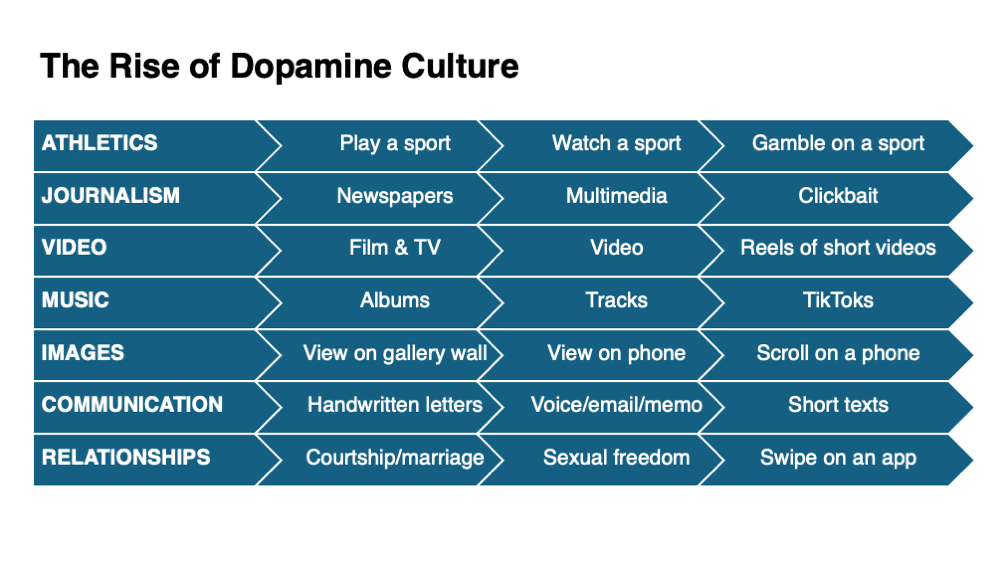
Here is a fascinating topic that’s being talked about in both cultural and marketing circles: the dopamine culture. This concept, brilliantly outlined by Ted Gioia, highlights how our consumption habits have evolved in the digital age, driven by the pursuit of quick, gratifying experiences. As marketers, understanding this shift is crucial for staying relevant and effective in our strategies.
Understanding Dopamine Culture
Dopamine culture refers to the way modern technology and media have conditioned us to seek instant gratification. This phenomenon is driven by the neurotransmitter dopamine, which plays a key role in our brain’s reward system. Every time we receive a notification, watch a short video or scroll through social media, our brain releases dopamine, creating a pleasurable sensation that encourages us to repeat the behaviour.
In his analysis, Gioia categorises our cultural evolution into three stages: slow traditional culture, fast modern culture, and dopamine culture. Each stage represents a shift towards quicker, more immediate forms of engagement:
- Athletics: From playing a sport to watching a sport, and now gambling on a sport.
- Journalism: From reading newspapers to consuming multimedia, and now falling for clickbait.
- Video: From watching films and TV to engaging with short videos, and now reels of short videos.
- Music: From listening to albums to tracks, and now TikToks.
- Images: From viewing art on gallery walls to viewing on phones, and now scrolling endlessly on phones.
- Communication: From handwritten letters to emails and memos, and now short texts.
- Relationships: From courtship and marriage to sexual freedom, and now swiping on apps.
The Marketing Implications
As marketers, we must adapt to this new landscape where attention spans are shorter, and the demand for instant gratification is higher. Here are some key takeaways on how dopamine culture affects our strategies:
1. Embrace Short-Form Content
Short-form videos have become the cornerstone of modern marketing. Platforms like TikTok, Instagram Reels, and YouTube Shorts have revolutionised how we consume content. According to HubSpot’s Marketing Trends Report for 2024, short-form video is the top leveraged media format in marketers’ content strategies, offering the highest return on investment (ROI) [5]. To stay competitive, brands must create engaging, bite-sized content that captures attention quickly.
2. Focus on the Attention Economy
In the attention economy, capturing and retaining consumer attention is paramount. With an abundance of information and stimuli, consumers are more selective about where they focus their attention. Effective marketing strategies must craft compelling narratives and personalised connections to stand out amidst the noise. This means leveraging data-driven insights to tailor messages to specific demographics and behaviours.
3. Prioritise Personalisation
Personalisation is key in a world where generic messaging no longer cuts it. By understanding consumer preferences and behaviours, marketers can create targeted campaigns that resonate with their audience. This personalised approach enhances the likelihood of capturing and retaining attention in a landscape saturated with content [11].
4. Adapt to Changing Consumer Behaviours
Consumer behaviour is constantly evolving, influenced by technological advancements and societal shifts. Marketers must stay attuned to these changes and adapt their strategies accordingly. This agility is crucial for remaining relevant and maintaining a competitive edge [11].
The Role of Dopamine in Marketing
Dopamine’s role in driving consumer behaviour cannot be overstated. Our brains are wired to seek pleasure, and dopamine is the chemical that fuels this pursuit. In the context of marketing, this means creating experiences that trigger dopamine release, encouraging consumers to engage with our content and products.
However, it’s important to recognise the potential downsides of dopamine-driven marketing. Excessive indulgence in instant gratification can lead to diminished enjoyment and heightened dependency on stimuli. As marketers, we have a responsibility to balance the pursuit of engagement with the well-being of our audience [4].
Conclusion
The rise of dopamine culture presents both challenges and opportunities for marketers. By understanding the dynamics of this cultural shift, we can craft strategies that capture attention, foster engagement, and build meaningful connections with our audience. Embracing short-form content, focusing on the attention economy, prioritising personalisation, and adapting to changing consumer behaviours are key steps in navigating this new landscape.
As we move forward, let’s strive to create marketing experiences that not only satisfy the demand for instant gratification but also contribute to the overall well-being of our audience. After all, in the world of dopamine culture, the brands that succeed will be those that can deliver quick hits of pleasure while fostering long-term loyalty and satisfaction.
Thanks for reading! If you found this post insightful, feel free to share your thoughts and experiences in the comments below. And don’t forget to subscribe for more updates on the latest trends in marketing.
Further Reading
[1] https://pplx-res.cloudinary.com/image/upload/v1720183763/user_uploads/aihhkwmcf/dopamine-culture-ted-gioia.jpg
[2] https://www.honest-broker.com/p/how-to-break-free-from-dopamine-culture
[3] https://arnoldkling.substack.com/p/thoughts-on-dopamine-culture
[4] https://www.theguardian.com/global/2021/aug/22/how-digital-media-turned-us-all-into-dopamine-addicts-and-what-we-can-do-to-break-the-cycle
[5] https://blog.hubspot.com/marketing/short-form-video-trends
[6]
[7] https://www.opusagency.com/article/the-rise-of-the-dopamine-culture
[8] https://www.honest-broker.com/p/the-state-of-the-culture-2024
[9] https://www.vox.com/future-perfect/24159087/what-is-dopamine-hacking-fasting-does-it-work-science
[10] https://influencermarketinghub.com/short-form-video/
[11] https://hypervsn.com/blog/the-crucial-role-of-marketing-in-the-attention-economy.html

Leave a Reply