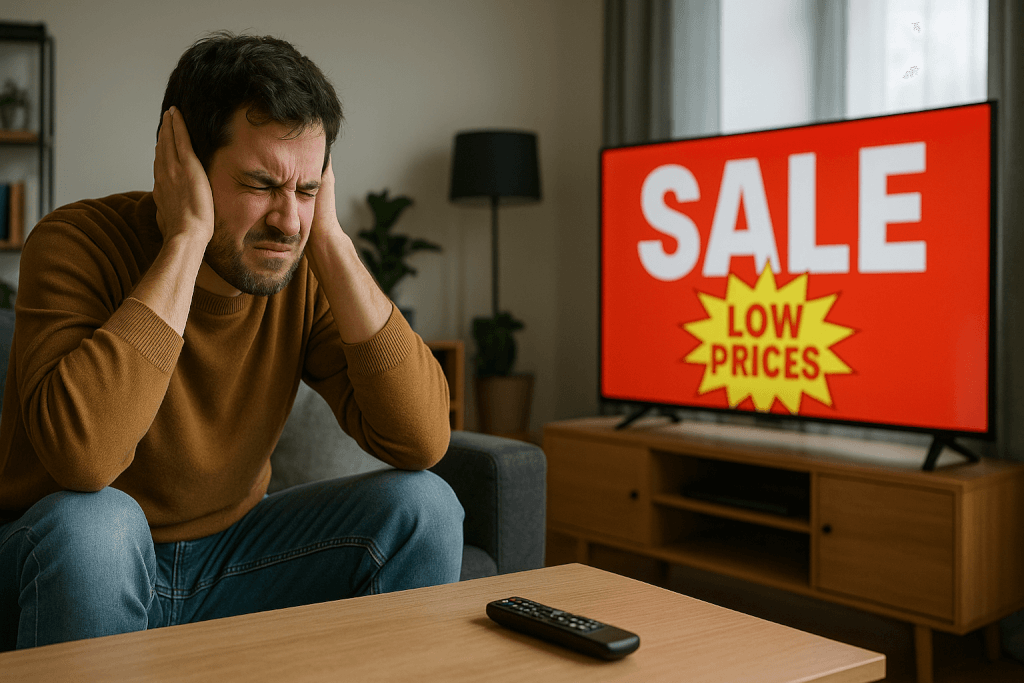
Hello Advertisers – I Now Mute Your Adverts
This is not a huge issue for me, but it might be for you if my actions are commonplace.
I first noticed myself doing this on YouTube and Amazon Prime Video. On both channels, the volume of the adverts was noticeably louder than the programme volume. This is exceptionally irritating.
Why Do Channels Persist in This Naive Action?
Why do channels persist in this approach? Is there any evidence that it increases the success of advertisers’ business? I doubt it – in fact, I think it might even do them harm[1].
Research from the University of Notre Dame examined over 27,000 TV commercials and found that while high-energy content keeps viewers engaged, there’s actually no evidence that loud volume alone improves advertising effectiveness[1][2]. The study focused on energy levels in commercials rather than pure volume, suggesting advertisers should concentrate on content quality rather than shouting at viewers[1].
I think my life is a little better for not listening to the adverts. But here’s the concerning part for advertisers: when consumers actively mute advertising content, brands lose any opportunity to communicate their message effectively.
The Broadcasting Rules Are Clear
There is indeed a broadcasting rule that states programme and advert volumes should be consistent. The UK’s Broadcast Committee of Advertising Practice (BCAP) Code rule 4.7 specifically requires that “the maximum subjective loudness of advertisements must be consistent and in line with the maximum subjective loudness of programmes”[3][4].
The Advertising Standards Authority guidelines state that peak sound levels of advertisements should be limited to +2dBm, which is 6dB less than programme maximum levels[3][4]. This regulation exists because broadcasters “must endeavour to minimise the annoyance that perceived imbalances could cause, with the aim that the audience need not adjust the volume of their television sets during programme breaks”[4].
The Streaming Loophole Problem
However, these regulations primarily apply to traditional broadcast television and cable providers[5][6]. Streaming services like YouTube and Amazon Prime Video operate in a regulatory grey area where loudness standards are less strictly enforced[6].
The US implemented the Commercial Advertisement Loudness Mitigation (CALM) Act in 2012 for broadcast television[6], but streaming platforms have largely escaped similar restrictions. This explains why Prime Video and YouTube advertisements can seem significantly louder than the content you’re watching[7][8][9].
The Amazon Prime Video Problem Gets Worse
My aggravation extends beyond volume levels to Amazon Prime’s insistence on playing adverts before films start. How many times are viewers subjected to two minutes of adverts only to reach the film and realise it wasn’t the programme they wanted? Do we overtly or subconsciously blame the advertising brands for this frustration?
Amazon has doubled its ad load on Prime Video from the initially promised 2-3 minutes per hour to 4-6 minutes per hour[7]. This increase occurred after adding advertising to Prime Video subscriptions that customers had previously paid for as an ad-free service[10].
The placement of these advertisements is particularly problematic. Unlike traditional television, where someone carefully selects ad placement between scenes, streaming services often insert advertisements at random moments, interrupting dialogue or dramatic scenes[10]. This creates negative associations between the advertised brands and the frustrating viewing experience.
The Trust and Effectiveness Problem
Research consistently shows that advertising effectiveness depends heavily on consumer trust and positive emotional responses[11][12]. When advertisements interrupt content abruptly or play at jarring volumes, they generate negative emotions rather than the positive associations brands desperately need[12].
A study examining emotion’s role in advertising effectiveness found that campaigns creating positive emotions saw 8.2% more consumer action, including brand purchases and website visits[12]. Conversely, advertisements that annoy or frustrate viewers are unlikely to drive the desired consumer behaviour[12].
Television advertising traditionally builds brand trust and credibility[11][13]. However, when streaming platforms prioritise advertiser reach over user experience, they risk damaging the very trust that makes advertising effective[11].
A Better Way Forward
Advertisers investing significant sums in streaming platform advertising should demand better placement standards and volume consistency. The current approach of maximising loudness and frequency may actually harm brand perception rather than improve it.
The solution isn’t eliminating advertising entirely – content creators and platforms need revenue streams. Instead, streaming services should adopt broadcast television standards for volume consistency and thoughtful ad placement that respects the viewing experience.
Until then, I’ll keep covering my ears, and you’ll keep losing opportunities to communicate effectively with your potential customers.
Further Reading and References
[1] Loud and clear: High-energy ads keep viewers tuned in, study shows https://news.nd.edu/news/loud-and-clear-high-energy-ads-keep-viewers-tuned-in-study-shows/
[2] [Rant] Why ads are so loud? : r/audioengineering – Reddit https://www.reddit.com/r/audioengineering/comments/17uor13/rant_why_ads_are_so_loud/
[3] [PDF] The revised BCAP TV advertisement sound levels rule https://www.asa.org.uk/asset/EDD42DCC-F9FD-4EFE-B6EA7BD7F1421121/
[4] Sound levels in advertising – ASA https://www.asa.org.uk/static/uploaded/4ea0ae5f-a354-4696-941fa65169afbf54.pdf
[5] Are TV Commercials Too Loud? FCC to Investigate, Eyes Streaming … https://www.reddit.com/r/television/comments/1j0fv0m/are_tv_commercials_too_loud_fcc_to_investigate/
[6] Streaming ads are way too loud. Who’s going to fix it? https://www.marketingbrew.com/stories/2022/07/11/streaming-ads-are-way-too-loud-who-s-going-to-fix-it
[7] Exclusive: Amazon Doubles Ad Load on Prime Video – Adweek https://www.adweek.com/media/amazon-doubles-prime-video-ad-load/
[8] Can we talk about the soul-crushing quantity of YouTube ads … https://www.reddit.com/r/CommercialsIHate/comments/1gawtmm/can_we_talk_about_the_soulcrushing_quantity_of/
[9] Why do the ads have to be so LOUD? : r/amazonprime – Reddit https://www.reddit.com/r/amazonprime/comments/1af5sgd/why_do_the_ads_have_to_be_so_loud/
[10] Amazon Prime Video’s new ads are such a disaster I might cancel https://www.tomsguide.com/entertainment/prime-video/amazon-prime-videos-new-ad-rollout-is-such-a-disaster-i-might-cancel
[11] ‘As seen on TV’ ads strengthen brand perception – WARC https://www.warc.com/newsandopinion/news/as-seen-on-tv-ads-strengthen-brand-perception/en-gb/44144
[12] [PDF] Emotion’s Defining Role in Audio Advertising Effectiveness https://www.rab.com/research/34966.pdf
[13] Why TV advertising still rules brand-building https://www.screenvoice.cz/en/foreign-news/why-tv-advertising-still-rules-brand-building/
[14] Ofcom decides not to increase the number of ads allowed on TV https://www.marketingweek.com/ofcom-decides-not-to-increase-the-number-of-ads-allowed-on-tv/



Leave a Reply