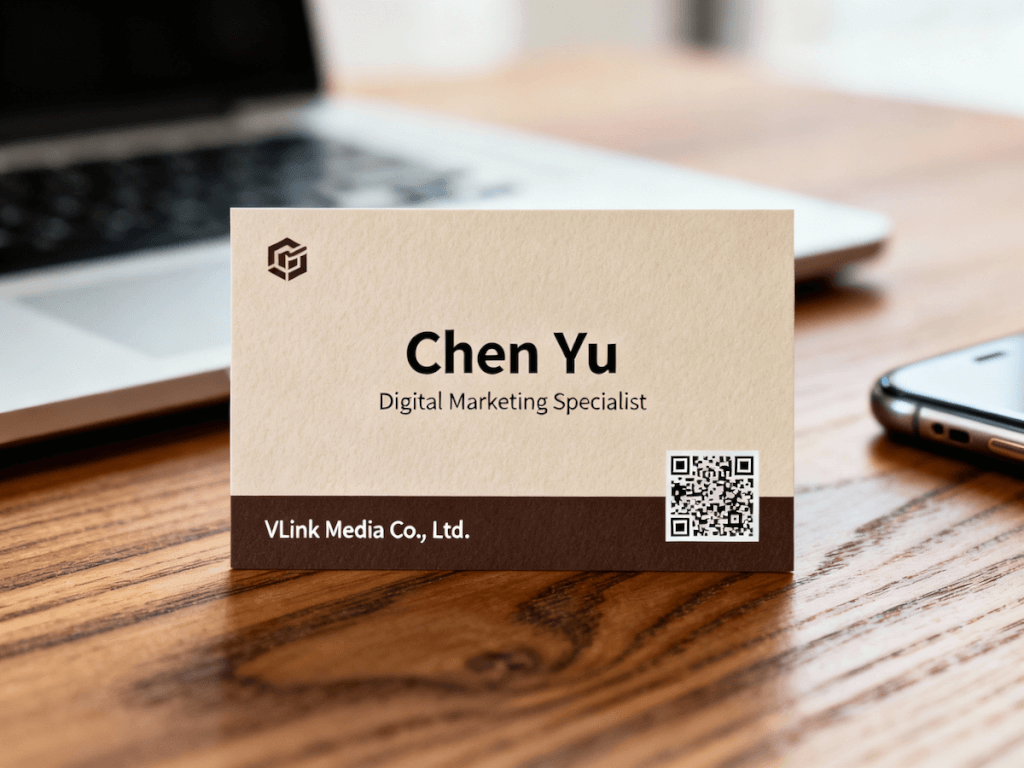
Many people insist business cards are dead, yet the story is more nuanced: physical cards are declining, but card-related products and digital business cards still represent sizeable, growing markets and are far from extinct.[1][2][3] The real shift is that a business card – physical or digital – is now just one touchpoint in a wider digital networking journey, so it must work harder and more strategically than ever.[4][5]
Why business cards fell out of favour
Traditional business cards have lost ground because they no longer match how most professionals actually connect and follow up after meetings.[4][3] In a world where contacts live in CRM systems, email platforms and LinkedIn, a static bit of card can seem slow and wasteful if it is not integrated into a digital workflow.[4][5]
Research in the UK suggests that only a minority of adults have ever handed out a physical business card, and many who used them in the past have stopped in the last few years.[4][6] The main reasons: people feel there is “no need” when it is quicker to connect via mobile or social, cost and environmental concerns, and the fact that most paper cards get discarded within days.[4][3]
Why business cards still matter
So, are business cards still relevant in digital networking? Yes, with a big caveat: they only add value when they support a clear relationship-building process rather than exist as a vanity item.[5][7] At conferences, networking events and chance meetings, a simple, well designed card can still create a small moment of friction-free human contact that is hard to replicate on a screen.[5][8]
There is also evidence that younger professionals are not abandoning cards entirely, but reframing how they use them alongside digital tools.[4][3] The growth of digital business card platforms and NFC or QR-based contact sharing shows that the core idea – a compact way to share who you are and how to reach you – is evolving rather than disappearing.[9][1]
Are business cards still relevant in digital networking?
Because this question is so central to how we use cards today, it deserves its own focus.[4][5] Business cards are still relevant in digital networking when they are treated as part of a joined-up system: card to scan, scan to CRM or contacts app, and contacts app to meaningful follow up.[3][7]
If a card simply carries your name, job title and a generic email address, it is competing with every other card in a drawer.[10][7] If it carries a scannable link, a clear offer and a reason for the other person to keep and act on it, it becomes a tiny, portable landing page in someone’s pocket.[11][10]
Physical, digital and hybrid cards
The choice is no longer binary between “old-school card” and “no card at all”.[5][3] Physical cards can coexist with digital cards that live in a phone wallet or app, with QR codes or NFC chips bridging the gap between paper and pixels.[1][12]
Digital business card platforms are growing steadily, driven by sustainability, cost savings and the ability to update details without reprinting.[9][1] For many professionals, the practical answer is a hybrid approach: a small batch of well crafted physical cards for in-person events, backed up by a digital card they can share via link, code or tap.[5][3]
What a modern business card should include
If business cards are still relevant in digital networking, what belongs on the card itself? The core rule is clarity: the person who receives it should know who you are, what you do and how to act if they want more from you.[10][7]
At a minimum, that usually means: your name, role, company name, email address and one primary phone number, all set in a legible typeface.[13][10] A succinct description or strapline that explains your value in plain language is often more helpful than a long job title that only makes sense internally.[11][7]
Optional but powerful elements
Beyond the basics, there are a few elements that can transform a card from a static label into a tiny marketing asset.[11][10] A QR code that links to a tailored landing page, LinkedIn profile or calendar booking page reduces friction by turning “we should talk” into a simple scan and tap.[11][3]
A short, specific call to action such as “Book a 20-minute strategy chat” or “Download the free guide” makes it clear what happens next.[11][7] You can also use the reverse side of the card for something useful – a simple framework, checklist or reminder that earns a place on someone’s desk rather than in their bin.[10][7]
Less is more: design principles that sell
Good business card design is more about editing than decorating.[13][10] Cramming in every contact channel, accolade and slogan makes the card harder to read and remember, and weakens the one thing you really want it to do: make the next step obvious.[11][10]
Clean typography, adequate white space and a limited colour palette that matches your wider brand footprint all help the card feel intentional rather than generic.[13][14] Treat hierarchy as non-negotiable: the eye should move from logo to name to core message to primary contact detail in a clear sequence.[13][10]
Turning the card into a mini advert
Viewed through a marketing lens, a business card is a tiny piece of direct response media.[7][10] Just like an advert, it needs a clear audience, a clear promise and a clear next step, even if all of that has to sit in a space not much bigger than a credit card.[7][11]
One practical way to approach this: decide on a single primary outcome for the card, such as “get people onto my email list” or “encourage discovery calls”, then design everything around that.[11][7] The call to action, QR code destination and supporting copy should all serve that chosen outcome, rather than trying to keep every channel in play at once.[11][3]
Using business cards in a digital-first networking process
The real win is not in the card itself, but in how it fits into the broader networking routine.[5][8] For example, you might hand over a card with a QR code at an event, encourage the other person to scan it there and then, and have an automated follow up email waiting once they join your list or submit a short form.[11][3]
After events, a simple system of scanning cards into a contacts app or CRM and tagging them by event or theme keeps your database alive rather than leaving a pile of cards to gather dust.[8][7] Used this way, business cards are still relevant in digital networking because they serve as a fast, human trigger for a digital relationship, not an end in themselves.[5][3]
Simple comparison of physical and digital cards
| Aspect | Physical business cards | Digital business cards |
|---|---|---|
| Cost over time | Higher if details change often, due to reprinting.[2][10] | Lower per contact at scale and easy to update without reprint.[9][1] |
| Ease of sharing | Excellent in face-to-face meetings, limited remotely.[5][8] | Works well in both in-person and remote interactions via links, QR or NFC.[12][3] |
| Data capture | Manual entry into CRM or contacts.[7][8] | Often integrates directly with contact apps or CRMs.[9][1] |
| Sustainability | Uses paper and print resources.[2][3] | Often marketed as a more sustainable option.[9][3] |
Used thoughtfully together, both formats can support a networking process that feels human in person and efficient afterwards.[5][3]
References and Further Reading
[1] Digital Business Card Market Size & Share Analysis. https://www.mordorintelligence.com/industry-reports/digital-business-card-market
[2] Digital Business Card Statistics in 2025. https://www.qrcodechimp.com/digital-business-card-statistics/
[3] Digital Business Card Statistics in 2025 https://www.qrcodechimp.com/digital-business-card-statistics/
[4] 11 easy ways to design effective business cards. https://www.adobe.com/express/learn/blog/designing-effective-business-cards
[5] 10 Tips for Designing an Eye-Catching Business Card. https://simpsonscreative.co.uk/10-tips-for-designing-business-card/
[6] Top 35+ Business Card Statistics of All Time | 2025 Edition https://wavecnct.com/blogs/news/business-card-statistics
[7] Developing Effective Marketing Materials: Business Card … https://utia.tennessee.edu/cpa/wp-content/uploads/sites/106/2020/10/cpa177.pdf
[8] Business Cards in 2023 (Survey Conducted) – Helloprint https://www.helloprint.com/en-gb/blog/business-cards-in-2021/
[9] Digital Business Card Market Size, Trends & Forecast 2033. https://www.imarcgroup.com/digital-business-card-market
[10] Top Tips For Creating An Effective Business Card https://www.theplasticcardpeople.co.uk/blog/tips-for-creating-an-effective-business-card/
[11] How to design a business card: 10 golden rules. https://www.vistaprint.co.uk/hub/business-card-design-rules
[12] Top 35+ Business Card Statistics of All Time | 2025 Edition. https://wavecnct.com/blogs/news/business-card-statistics
[13] Business Cards in 2023 (Survey Conducted). https://www.helloprint.com/en-gb/blog/business-cards-in-2021/
[14] Developing Effective Marketing Materials: Business Card. https://utia.tennessee.edu/cpa/wp-content/uploads/sites/106/2020/10/cpa177.pdf
[15] The death of the Business Card? https://www.ipsos.com/en-uk/the-death-of-the-business-card
[16] Business Card Holder Market Forecast 2024-2034. https://www.futuremarketinsights.com/reports/business-card-holder-market
[17] Are Business Cards Still Relevant? https://www.createbusinesshub.co.uk/the-business-card-in-2025-still-essential-or-officially-outdated/
[18] Top Tips For Creating An Effective Business Card. https://www.theplasticcardpeople.co.uk/blog/tips-for-creating-an-effective-business-card/



Leave a Reply