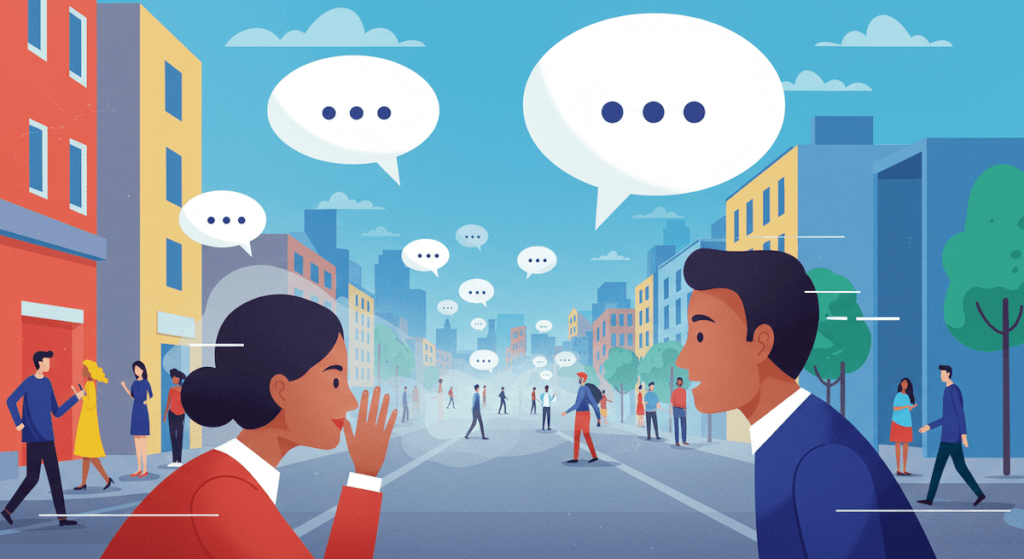
Word of mouth is frequently hailed as if it were some sort of newly created marketing concept. In reality, it is one of the oldest marketing and communication approaches.
Town criers and wandering minstrels would share news and stories in medieval times, from around the 11th to 15th centuries[1][2]. Word of Mouth is not a new thing.
So what is different? What is the same?
The Ancient Art of Spreading the Word
Word of mouth marketing isn’t some brilliant modern invention dreamed up by Silicon Valley startups. It’s as old as humanity itself. Long before we had newspapers, radio, or the internet, people relied on each other to share information, recommendations, and warnings[3][4].
The earliest forms of word of mouth can be traced back thousands of years. In ancient marketplaces across civilisations, traders and merchants relied heavily on reputation and personal recommendations to build their businesses[5][6]. Greek merchants hired town criers to walk through the streets announcing the arrival of ships laden with goods[5]. In ancient Rome, praeco (public criers) made announcements about everything from trial verdicts to lost property[7].
These weren’t just casual conversations over a pint. This was serious business. Your reputation could make or break your livelihood. A bad word about your goods or services could spread through a community faster than you could say “fake news”[3].
Medieval Messengers: The Original Influencers
During medieval times, from roughly the 11th to 15th centuries, two groups of people became the backbone of information distribution: town criers and wandering minstrels[1][8][2].
Town criers were essentially the newspapers of their day. These official messengers, recognisable by their large hand bells and booming voices, would begin their announcements with “Oyez, oyez, oyez!” – meaning “hear ye” in Old French[1][8]. They were protected by law because harming a town crier was considered an act of treason[1][8]. After all, they were delivering the monarch’s messages.
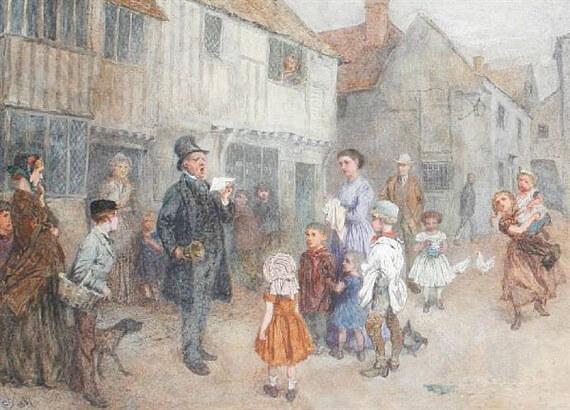
These weren’t just news readers. Town criers were multi-talented professionals who patrolled streets after dark, arrested troublemakers, and ensured fires were properly damped down for the night[8][9]. They were the original community safety officers, news anchors, and public service announcements all rolled into one.
Wandering minstrels operated between the 12th and 17th centuries as professional entertainers, musicians, and storytellers[2][10]. They travelled from town to town, performing in taverns, marketplaces, and noble courts[10][11]. But they weren’t just there for entertainment. Minstrels served as vital news sources, bringing information about events from distant places to isolated communities[10][12].
These travelling performers were essentially the medieval equivalent of social media influencers. They had audiences, they told stories, and people trusted them to bring authentic news from the outside world[10]. The parallel is quite striking when you think about it.
What Remains the Same: The Power of Trust
The fundamental principle underlying word of mouth marketing hasn’t changed in thousands of years: trust[13][14]. People believe recommendations from those they know and trust far more than any form of advertising.
Research consistently shows that 88% to 92% of consumers trust recommendations from friends and family over all other forms of marketing[13][14][15]. This isn’t a new phenomenon – it’s human nature. When a medieval villager heard a minstrel speak positively about a distant merchant’s goods, they were far more likely to seek out that trader than if they’d simply heard a paid announcement[10][12].
The psychology behind this hasn’t evolved. Our brains are wired to trust personal recommendations because they activate reward centres and release feel-good neurotransmitters[13]. When someone we know vouches for something, it provides social validation – a powerful motivator that’s been driving human behaviour for millennia[13].
Word of mouth also operates on the principle of social proof. If others like us are using and recommending something, we feel more confident about trying it ourselves[13][16]. This was true when medieval craftsmen relied on their reputation to attract customers, and it’s equally true today when we check reviews before booking a restaurant[14][16].
What’s Changed: Scale, Speed, and Measurement
While the core principles remain unchanged, the mechanics of word of mouth marketing have been transformed by technology. The key differences lie in reach, speed, and measurability[17][18][19].
Reach has exploded exponentially. Where medieval word of mouth was limited to immediate social circles or the physical presence of a travelling minstrel, today’s digital word of mouth can reach millions instantly[17][18]. A single social media post can potentially influence consumers across the globe[20][19].
Speed has accelerated dramatically. In medieval times, news could take weeks or months to travel between towns[12][21]. Today, a recommendation can spread across social networks in minutes, sometimes going viral within hours[22][20][19].
Measurability has transformed completely. Medieval merchants had no way to track how their reputation spread or measure the impact of word of mouth[12]. Modern businesses can monitor mentions, track sentiment, analyse engagement rates, and calculate return on investment with precision[14][23][16].
The Digital Evolution: From Town Squares to Social Media
Social media has become the modern equivalent of the medieval town square[20][24]. Platforms like Facebook, Instagram, TikTok, and Twitter serve as digital gathering places where people share experiences, recommendations, and opinions[22][20].
But there’s a crucial difference. Unlike the town crier who delivered official proclamations, today’s social media users create their own content. Every person with a smartphone has become a potential town crier with their own audience[20][25].
This democratisation of communication has created new opportunities and challenges. Influencer marketing has emerged as a professionalised form of word of mouth, where individuals with large followings are paid to recommend products[26][27]. It’s remarkably similar to how medieval nobles would employ minstrels to spread particular messages[10][2].
User-generated content (UGC) represents another evolution. When customers post photos, reviews, or testimonials about products, they’re essentially providing the same service as those medieval minstrels – sharing authentic experiences with their audience[26][25].
Electronic word of mouth (eWOM) now encompasses everything from Amazon reviews to Reddit discussions to Instagram stories[19][28]. Unlike traditional word of mouth, eWOM creates permanent, searchable records that can influence purchasing decisions for years[17][19].
The Modern Challenges: Authenticity in an AI World
Today’s word of mouth marketing faces challenges that medieval minstrels never encountered. With artificial intelligence, deepfakes, and paid influencer content, distinguishing authentic recommendations from manufactured ones has become increasingly difficult[29].
This has created a strange paradox. As digital technology has made word of mouth more powerful than ever, it’s also made people more sceptical of what they see online[29]. The result? Personal recommendations from friends and family have actually become more valuable, not less[13][14][15].
In 2025, successful word of mouth marketing requires striking a balance between leveraging digital tools and maintaining authenticity[29]. The brands that thrive are those that focus on creating genuine customer experiences worth talking about, rather than simply paying for endorsements[26][30].
Building Word of Mouth in the Digital Age
Modern businesses can learn valuable lessons from their medieval predecessors. Just as town criers and minstrels built their reputations on reliability and authenticity, today’s brands must focus on earning trust through consistent, positive customer experiences[13][26].
The most effective strategies combine traditional principles with modern tools:
Exceptional customer service remains paramount. Happy customers are still the best advocates, whether they’re telling their neighbours in person or posting reviews online[13][14].
Community building has evolved from the physical marketplaces of old to online communities and social media groups[30][16]. Brands that create spaces for customers to connect and share experiences often see organic word of mouth flourish.
Employee advocacy turns staff members into trusted brand ambassadors, much like how medieval guilds used their members to spread information about their trades[30][2].
Strategic partnerships with influencers and other brands can amplify reach, similar to how travelling minstrels would collaborate to share audiences[26][27].
The Enduring Power of Human Connection
Despite all the technological advances, the most powerful word of mouth marketing still happens in the most ancient setting: person-to-person conversation[14][15]. Whether it’s a recommendation over coffee, a chat in the office, or a message in a family group chat, these intimate communications carry enormous weight[22][20].
Research suggests that 66% of word of mouth marketing still happens offline[15]. This means that while digital channels have expanded our reach, they haven’t replaced the fundamental human need for trusted, personal recommendations[14][15].
The brands that understand this create experiences so remarkable that people can’t help but talk about them. They recognise that word of mouth marketing isn’t about pushing messages – it’s about earning advocacy[26][16].
Looking Forward: The Future of Word of Mouth
As we move further into the digital age, word of mouth marketing will continue evolving. Artificial intelligence is already being used to identify and engage potential brand advocates[29]. Virtual and augmented reality may create new ways for people to share experiences[29].
But regardless of technological advances, the fundamental truth remains unchanged: people trust people. Whether it’s a medieval minstrel sharing news from distant lands or a modern influencer reviewing the latest gadget, authentic human recommendation will always carry more weight than corporate advertising[13][14][29].
The challenge for modern marketers isn’t to replace word of mouth with technology, but to use technology to amplify authentic human connections. Those who master this balance – combining the reach of digital platforms with the authenticity of personal recommendation – will find themselves with the most powerful marketing tool ever created[26][16][29].
Word of mouth marketing has travelled a remarkable journey from ancient marketplaces to digital platforms. Its destination, however, remains the same: creating genuine connections between people who trust each other enough to share honest recommendations. That’s something no algorithm can replicate, and no amount of advertising spend can buy.
References and Further Reading
The historical development of communication systems provides fascinating insights into how word of mouth marketing evolved. For readers interested in exploring this topic further, the British Library holds extensive collections on medieval communication methods, while the Word of Mouth Marketing Association provides contemporary research and best practices. Academic journals such as the Journal of Marketing Research regularly publish studies on the effectiveness of word of mouth versus traditional advertising methods. Local historical societies often have records of town criers and travelling entertainers specific to different regions, offering personalised insights into how information spread in pre-digital communities.
Sources
[1] Town Crier – Whitehill Town Council https://www.whitehilltowncouncil.gov.uk/councillors-and-staff/town-crier
[2] Minstrel | Definition, History, & Facts – Britannica https://www.britannica.com/art/minstrel
[3] Brief History Of Marketing | Oxford College of Marketing Blog https://blog.oxfordcollegeofmarketing.com/2012/11/23/the-6-main-stages-in-marketings-history/
[4] Word-of-Mouth Marketing: Everything You Need to Know to Make It … https://userguiding.com/blog/word-of-mouth
[5] The History of Marketing: From Cave Paintings to Twitter & Facebook https://www.linkedin.com/pulse/history-marketing-from-cave-paintings-twitter-facebook-monpi-lobo
[6] Word of mouth and brand image in ancient Rome – Academia.edu https://www.academia.edu/27928181/Word_of_mouth_and_brand_image_in_ancient_Rome
[7] The History of the Town Crier – Magdalen’s Medieval Miscellany https://suninsplendor.wordpress.com/2017/11/18/https-mail-google-com-mail-u-0-search-wad-15eb30cc4ffbf895projector1/
[8] A History of The Town Crier – Historic UK https://www.historic-uk.com/CultureUK/The-Town-Crier/
[9] Town Criers – a British tradition temporarily silenced https://www.bitesizedbritain.co.uk/town-crier111/
[10] Wandering Minstrels in the Middle Ages (Classroom Activity) https://spartacus-educational.com/EXnormans14.htm
[11] The Minstrel: Musician of the Middle Ages – Medieval History https://historymedieval.com/the-minstrel-musician-of-the-middle-ages/
[12] How Messages were sent in the Middle Ages – Medievalists.net https://www.medievalists.net/2023/06/messages-middle-ages/
[13] The Science Behind The Effectiveness Of Word Of Mouth https://www.thesocialmediahat.com/blog/the-science-behind-the-effectiveness-of-word-of-mouth/
[14] Word-of-Mouth Marketing: Meaning and Uses in Business https://www.investopedia.com/terms/w/word-of-mouth-marketing.asp
[15] 24 Impactful Word-of-Mouth Marketing Stats (2025) – Wiser Notify https://wisernotify.com/blog/word-of-mouth-marketing-stats/
[16] Why Is Word-of-Mouth Marketing Still Important in 2024? – Antavo https://antavo.com/blog/word-of-mouth-marketing/
[17] Digital versus traditional word of mouth marketing | Hummingbirds https://www.hummingbirds.com/blog/digital-traditional-word-of-mouth
[18] What is Digital Word of Mouth Marketing? https://www.wsiworld.com/blog/what-is-digital-word-of-mouth
[19] Intro to eWOM Marketing: Leveraging Electronic Word of Mouth for … https://www.pinmeto.com/blog/electronic-word-of-mouth-ewom
[20] Social Media – The Modern Word of Mouth – Frenik Marketing Group https://www.freniklabs.com/social-media-the-modern-word-of-mouth/
[21] Communication in Medieval Times: How Messages Were Sent https://www.shorthistory.org/middle-ages/communication-in-medieval-times-how-messages-were-sent/
[22] The power of word-of-mouth marketing in the digital age https://www.deadlinenews.co.uk/2025/06/19/the-power-of-word-of-mouth-marketing-in-the-digital-age/
[23] A new way to measure word-of-mouth marketing | McKinsey https://www.mckinsey.com/capabilities/growth-marketing-and-sales/our-insights/a-new-way-to-measure-word-of-mouth-marketing
[24] The Power of Modern Word-of-Mouth Marketing in the Digital Age https://www.visityarravalley.com.au/yarrarangestourism/blog/the-power-of-modern-word-of-mouth-marketing-in-the-digital-age
[25] UGC: The New Word-of-Mouth Revolutionizing Marketing in 2024 https://www.ontogendigital.com/ugc-word-of-mouth-marketing-2024.html
[26] Harnessing the Power of Word-of-Mouth Marketing in 2024 https://brandchamp.io/blog/word-of-mouth-marketing/
[27] Word-of-Mouth Commerce: Redefining Influencer Marketing in the … https://www.aspire.io/blog/word-of-mouth-commerce-redefining-influencer-marketing-in-the-age-of-authenticity
[28] What Is eWOM and Why Does It Matter for Marketers? – Uberall https://uberall.com/en-us/resources/blog/what-is-ewom-and-why-does-it-matter-for-marketers
[29] Psychology Behind Word-of-Mouth Marketing in 2025 – Tremendous https://www.tremendous.com/blog/word-of-mouth-marketing-psychology/
[30] Word of Mouth Marketing Examples for 2024 – Service Provider Pro https://spp.co/blog/word-of-mouth-marketing/
>>> References to Word of Mouth on this site



Leave a Reply